




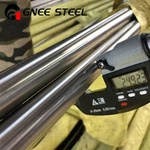

Monel Alloy

Monel Alloy Manufacturer China | Monel 400 / K500 / 401 / 404 / R405 Pipe Plate Bar Flange | UNS N04400 N05500 ASTM ASME NACE Certified
GNEE Alloy is a leading Chinese manufacturer of Monel alloys, maintaining a stock of 200,000 tons and supplying a comprehensive range of seamless pipes, plates, round bars, forged flanges, and pipe fittings in Monel 400, K-500, 401, 404, R405, and 450 grades. Our products comply with ASTM B164/B165, ASME SB163, and NACE MR0175 standards; we provide EN10204 3.1/3.2 material certificates (MTR) and third-party inspection services (SGS/BV), while offering rapid delivery for EPC projects in the global marine engineering, oil & gas, chemical, and power sectors. Please contact us to request free samples and technical data sheets.
Full Batch NDT Inspection
Stock Order Lead Time
Quick Technical Response
Tons Ready Stock of Mainstream Grades
Gnee Alloy Monel Grade Quick Selection Guide
Monel 400 (UNS N04400) – General-purpose corrosion-resistant grade; suitable for static chemical processing/marine equipment and hydrofluoric acid (HF) alkylation unit piping.
Monel K-500 (UNS N05500) – Precipitation-hardened, high-strength grade; suitable for rotating pump shafts, offshore drill collars, and downhole tools for sour gas wells.
Monel R405 (UNS N04405) – Free-machining (sulfur-bearing) grade; suitable for fasteners and small valve components produced on automatic lathes.
Monel 401 (UNS N04401) – Low temperature coefficient of resistance; suitable for precision electronic welding components.
Monel 404 (UNS N04404) – Very low Curie temperature and low magnetic permeability; suitable for transistors and ceramic-to-metal seals.
Monel 450 – High fatigue strength and high thermal conductivity; suitable for seawater condenser and evaporator tubing.


Monel is a family of nickel-copper solid-solution alloys (a registered trademark) primarily composed of ≥63% nickel and 28–34% copper, with trace additions of iron (Fe), manganese (Mn), carbon (C), sulfur (S), aluminum (Al), and titanium (Ti) to tailor mechanical and magnetic properties. Unlike Inconel (nickel-chromium based) and Hastelloy (nickel-molybdenum based), Monel excels in reducing corrosive environments (such as seawater, dilute sulfuric acid, concentrated hydrofluoric acid, brine, and H₂S-containing sour gas).
Key Advantages of Gnee Alloy Monel Alloys
| Core Advantage / Property | Details |
|---|---|
| Unmatched Corrosion Resistance in Reducing Media | Corrosion rate ≤0.025 mm/year in static full‑seawater immersion; service life 5–10 times that of 316L duplex stainless steel. Completely stable in deoxygenated hydrofluoric acid (HF) — the only cost‑effective alloy for refinery alkylation reaction piping. Poor resistance to oxidizing media (e.g., ferric chloride, concentrated nitric acid). |
| Balanced Mechanical Properties Across a Wide Temperature Range (–200°C to 480°C) | Annealed Monel 400: Tensile strength ≥480 MPa. Aged K‑500: Tensile strength up to 1034 MPa, yield strength twice that of 400 — suitable for high‑rotational‑load components. Maintains good toughness under low‑temperature seawater service. |
| Controllable Magnetic Properties | Monel 400: Curie temperature 21–49°C (weakly magnetic at room temperature; not suitable for strictly non‑magnetic projects). K‑500 / 404: Remain non‑magnetic across the full ambient temperature range — suitable for sensors and downhole instruments. |
| Proven Process Adaptability | Supports TIG, MIG, SMAW, and submerged arc welding. Hot working temperature range: 648–1176°C. Monel R405: Optimized sulfide inclusions improve machining efficiency by 40%, reducing secondary processing costs for bulk fastener orders. |
| Total Life‑Cycle Cost Savings | Although raw material cost is higher than carbon steel, equipment maintenance intervals can be extended by 8–12 years for offshore facilities and chemical plants, significantly reducing downtime losses. |
Standard Specifications for Gnee Alloy's Full Range of Monel Grades
Standard Chemical Composition Table for Monel (Weight Percentage)
| Grade | UNS No. | Ni Min | Cu | Fe Max | Mn Max | C Max | Si Max | S | Special Alloy Elements |
|---|---|---|---|---|---|---|---|---|---|
| Monel 400 | N04400 | 63 | 28–34 | 2.5 | 2.0 | 0.30 | 0.50 | ≤0.024 | None |
| Monel K-500 | N05500 | 63 | 27–33 | 2.0 | 1.5 | 0.08 | 0.50 | ≤0.01 | Al 2.3–3.15, Ti 0.35–0.85 |
| Monel R405 | N04405 | 63 | 28–34 | 2.5 | 2.0 | 0.30 | 0.50 | 0.025–0.06 | High sulfur for chip breaking |
| Monel 401 | N04401 | 63 | 28–34 | Low | Low | Low | Low | Ultra low | Stable resistance temperature |
| Monel 404 | N04404 | 63 | Special ratio | Low | Low | Low | Low | Ultra low | Ultra low Curie point |
| Monel 450 | Custom | 64 | 29–33 | Low | Low | Low | Low | ≤0.02 | Optimized fatigue & heat transfer |

Gnee Alloy Nickel Based Alloy PMI Test
Reference values for key mechanical properties of Monel (at room temperature, standard conditions)
| Grade & Temper | Tensile MPa | Yield 0.2% MPa | Elongation % | Hardness | Core Strength Feature |
|---|---|---|---|---|---|
| Monel 400 Annealed | 480–550 | 170–240 | 35–45 | 60–80 HRB | Ductile, easy forming & welding |
| Monel K-500 Aged | 900–1170 | 650–750 | 15–25 | 220–260 HB | High strength for rotating load |
| Monel R405 Annealed | 480–550 | 170–240 | 30–40 | 65–85 HRB | Excellent automatic lathe machinability |
Global Industry Standards for Monel Alloys
| Product Type | Applicable Standards / Certifications |
|---|---|
| Pipe & Tube | ASTM B165, ASME SB163, SB725 |
| Plate & Sheet | ASTM B127, ASME SB127 |
| Bar & Rod | ASTM B164, ASME SB164 |
| Forging & Flange | ASTM B564, ASTM B366 |
| Oilfield Sour Gas | NACE MR0175 / ISO 15156-3 |
| Export Material Certificate | EN10204 3.1 / 3.2 Mill Test Report |
| Third‑Party Inspection Authority | SGS, BV, TUV, DNV, ABS |
Contact us to customize monel products to your project's dimensions
Comprehensive Monel alloy product portfolio (all grades available from stock; custom sizes supported)
All products undergo 100% PMI (Positive Material Identification) spectral analysis, tensile testing, hardness testing, and NDT (UT/MT/PT) prior to shipment; dimensional tolerances are strictly controlled in accordance with ASTM standards.


| Product Form | Applicable Grades | Standards | Dimensions | Surface Condition | Typical Applications |
|---|---|---|---|---|---|
| Seamless Tubes & Capillary Tubes | Monel 400, K-500, 450 | ASME SB163, ASTM B165 | OD: 3mm – 600mm; Wall thickness: 0.5mm – 50mm; Fixed length: 1 – 12m | Pickled black, bright polished, mirror polished | Offshore seawater piping, HF alkylation reaction tubes, power plant evaporator & heat exchanger coils, desalination distillation tubes |
| Plates & Sheets | Monel 400, K500, 450 | ASTM B127, ASME SB127 | Thickness: 0.3mm (thin sheet) – 100mm (hot‑rolled plate) | Pickled, sandblasted, mirror polished | Chemical reactor linings, crude oil tower cladding, marine equipment casings |
| Round, Square & Hexagonal Bars | Monel 400, K500, R405 (free‑machining grade recommended) | ASTM B164, ASME SB164 | Diameter: 3mm – 500mm | Hot‑rolled black, cold‑drawn bright | Marine pump shafts, oilfield drill collars, valve stems, automatic lathe fasteners |
| Forged Flanges & Fittings | Monel 400, K500 | ASTM B564, ASTM B366 | Products: Weld neck flanges, blind flanges, elbows, tees, reducers, threaded fittings | Hot die forging + full solution heat treatment; 100% surface MT inspection | Offshore platform pipeline connections, high‑pressure chemical valve components |
Gnee Alloy Standard Export-Grade Monel Alloy Manufacturing and Quality Control Process
Ingot/Billet Casting: Continuous casting process; 100% pre-inspection for internal porosity and cracks.
Hot Forming (648–1176°C): Hot rolling for plates; hot extrusion for pipes and bars; grain structure refinement.
Cold Forming: Cold drawing for capillary tubes; cold rolling for thin sheets; ensuring strict dimensional tolerances.
Targeted Heat Treatment: Solution annealing for Monel 400; age hardening (precipitation hardening) for Monel K-500 to enhance strength.
Precision Finishing: CNC cutting, polishing, and machining; comprehensive non-destructive testing (UT/MT/PT).
Final Batch Quality Control: Spot checks on chemical composition and mechanical properties; dimensional verification; heat number marking; anti-rust packaging; provision of complete EN 10204 Material Test Reports (MTR).
Key Industrial Applications for Gnee Alloy Monel
| Industry | Primary Grade | Typical Applications / Components | Performance Advantages / Standards |
|---|---|---|---|
| Oil & Gas / Marine Engineering (Largest export demand for Monel alloys) | Monel 400 | Crude oil distillation tower linings, HF alkylation unit piping, wellhead valves & pump bodies, brine cooling lines | Resists high‑salinity seawater and H₂S sour gas corrosion; no pitting under deep‑sea hydrostatic pressure |
| Monel K‑500 | Subsea centrifugal pump shafts, marine propeller shafts, sour‑gas downhole drill collars, non‑magnetic logging tool components | Fully compliant with NACE MR0175 | |
| Marine & Shipbuilding | Monel 400 / K‑500 | Seawater condenser tubes, desalination evaporator tubes, ship ballast water lines, offshore splash‑zone structural components, hull fasteners | Stable supply to 15 shipyards globally; service life exceeds 15 years in full‑seawater immersion |
| Chemical Processing | Monel 400 | Pickling tank heating coils, sulfuric acid scrubbers, fluoride reactors, pumps & valves for chlorinated plastic processing | Irreplaceable in concentrated HF acid production; outperforms all duplex stainless steels in reducing acid environments |
| Power Generation & Nuclear Auxiliary Equipment | Monel 400 | Boiler feedwater heater tubes, steam generator heat exchange coils, deaerator internal components, anticorrosion piping for uranium isotope separation | — |
| Electronics, Precision & Aerospace Components | Monel 401 / 404 | Transistor packaging, ceramic‑to‑metal seals, low‑permeability sensor components | Controlled magnetic properties |
| Monel R405 | Automatic lathe‑machined fasteners for electronic equipment | Optimized for high‑speed machining | |
| Monel K‑500 | High‑strength, lightweight, corrosion‑resistant small aerospace structural components | High strength‑to‑weight ratio |


Contact our experts to recommend the right alloy for your project
Our Factory
| Aspect | Details |
|---|---|
| Ample and Stable Stock | Maintains a standing inventory of 200,000 tons of Monel alloy at Tianjin Port, covering a wide range of standard specifications for pipes, plates, and bars (various outer diameters and wall thicknesses). Serves needs from small 5kg sample orders to large‑scale EPC project orders exceeding 5,000 tons, with no minimum order quantity (MOQ) for material testing orders. |
| Comprehensive Global Export Logistics | Collaborates closely with major shipping lines; supports various trade terms including FOB Tianjin and CIF destinations such as Rotterdam, Singapore, Dubai, and Houston. Each shipment includes a complete set of customs clearance documents (Certificate of Origin, Form A/E certificates, Material Test Reports/MTR, and factory qualification certificates). Uses professional sea‑worthy packaging—anti‑rust film combined with wooden crates—to effectively prevent corrosion and scratches during transit. |
| Independent, Comprehensive Quality Inspection Laboratory | Equipped with professional instruments including spectrometers, tensile testing machines, hardness testers, salt spray corrosion chambers, and ultrasonic flaw detectors. Facilitates on‑site witness inspections by third‑party agencies prior to shipment. All test data are fully traceable via unique Heat Numbers. |
| Professional Technical Support Team | Team of metallurgical engineers with over 18 years of experience provides free material selection recommendations based on medium concentration, operating temperature, pressure, and load conditions. Also offers free guidance on welding process parameters, specifically regarding performance restoration for Monel K500 alloy following aging treatment. |


FAQ
Q1: Main difference between Monel 400 and K-500?
A: Monel 400 is solid-solution strengthened, low cost, easy welding, perfect for static low-load corrosion equipment; Monel K-500 adds Al/Ti for aging hardening, tensile strength doubled, fit rotating high-load components (pump shaft, drill collars). Shortcoming of K-500: higher stress corrosion cracking risk under high temp strong acid environment. Both own identical seawater anti-corrosion performance.
Q2: Is Monel 400 suitable for strict non-magnetic working condition?
A: Not recommended, its Curie temperature is 21–49℃, weak magnetism at room temperature. Choose Monel K-500 or 404 for zero magnetic permeability demand. Q3: How does Monel compare with 316L stainless steel? A: Monel dominates reducing media (HF, brine, dilute sulfuric acid), corrosion rate dozens times lower than 316L; stainless steel performs much better in oxidizing nitric acid & ferric chloride environment. Select based on your actual medium composition.
Q3: What’s your MOQ & lead time?
A: Spot standard sizes: 5kg sample support; bulk order ≥1 ton. In-stock goods ship within 7–15 working days; custom heat treatment & CNC machining 20–35 days.
Q4: Can you provide complete tender documents and third-party inspection?
A: Yes, every batch issues EN10204 3.1/3.2 MTR, support SGS/BV/TUV on-site inspection before loading, full set commercial invoice, packing list, certificate of origin for customs clearance & international bidding. Q3: How large is your permanent Monel inventory? Can you handle 1000+ tons one order? A: 200,000 tons fixed Monel stock in Tianjin warehouse, annual export capacity 80,000 tons, accept single order over 5,000 tons for large offshore & refinery EPC projects.
Q5: Recommended welding methods for Monel alloy?
A: TIG(GTAW), MIG(GMAW), SMAW stick welding, submerged arc welding are preferred. For Monel K-500, post-weld aging heat treatment is required to recover full mechanical strength.
Q6: Why Monel is hard to machine? Any solution?
A: Monel generates severe work hardening during cutting, needs low feed speed & carbide cutting tools. Choose Monel R405 free-machining grade for mass automatic lathe production to reduce processing cost by 40%.
Q7: Why choose Monel instead of duplex steel for long-term seawater pipeline?
A: Duplex steel easily generates pitting & crevice corrosion after 3–5 years continuous seawater service; Monel’s service cycle extends to 12+ years, despite higher unit price, total project operation & maintenance cost is much lower.
Q8: Which industry must adopt Monel alloy with no alternative cheap material?
A: Hydrofluoric acid alkylation refinery equipment, deep sea subsea pump shaft, sour gas downhole tools, desalination evaporator tube, low-permeability electronic sealing parts. No economical stainless steel substitute for above harsh working conditions.