





Incoloy Alloy
in one-stop service
Gnee Alloy is a leading Chinese manufacturer of Incoloy alloys, maintaining an inventory of 1,800 items ready for immediate delivery. The company supplies a comprehensive range of seamless pipes, plates, round bars, forged flanges, and pipe fittings in Incoloy grades 800, 800H, 800HT, and 825. Products comply with ASTM B409/B424/A213 and NACE MR0175 standards; we provide EN10204 3.1/3.2 material certificates (MTR) and facilitate third-party inspections by SGS or BV. We offer rapid delivery for projects in ethylene cracking, oil and gas, chemicals, power generation, and nuclear energy, and provide complimentary technical documentation and laboratory samples.

Quick Selection Guide for Incoloy Grades
Categorized by primary service environment (High-temperature furnaces / Acidic chloride environments / Sour oil & gas fields / Sulfuric acid equipment)
| Grade | UNS / W.Nr Designation | Key Characteristics | Typical Applications |
|---|---|---|---|
| Incoloy 800 | UNS N08800 / W.Nr 1.4876 | General‑purpose high‑temperature grade; oxidation / carburization resistance up to 815°C | Low‑cost furnace spare parts and general heat exchangers |
| Incoloy 800H | UNS N08810 | Controlled carbon content; coarse‑grain grade; excellent creep‑rupture strength | Reformer furnace tubes for long‑term high‑temperature service |
| Incoloy 800HT | UNS N08811 | Optimized Al and Ti content; superior cyclic oxidation resistance and creep performance | Ethylene cracking furnace radiant‑section tubes |
| Incoloy 825 | UNS N08825 / W.Nr 2.4858 | Mo + Cu addition; resists chloride SCC and sulfuric / phosphoric acid corrosion | Seawater and brine transmission pipelines |
Gnee Alloy Incoloy: Key Export Data for Global Buyers
- Incoloy Stock Inventory: 1,800 tonnes (covering all standard specifications for pipes, plates, and bars)
- Total Annual Superalloy Production: 1,000 tonnes; Annual Incoloy Export Volume: 750 tonnes
- Global Market Reach: Over 70 countries; long-term partnerships with 13 ethylene cracking unit contractors, 27 power plant EPC contractors, and 39 offshore oil & gas service companies
- Flexible Minimum Order Quantity (MOQ): From 5kg samples for laboratory testing up to 500-tonne single-batch deliveries for bulk orders
- Lead Times: 7–15 working days for standard stock items; 20–35 days for products requiring custom heat treatment or CNC deep processing
We provide comprehensive, one-stop Incoloy solutions, including raw material smelting, precision alloying, controlled hot working, solution/aging heat treatment, 100% PMI (Positive Material Identification) and NDT (Non-Destructive Testing), seaworthy anti-rust packaging, complete tender documentation, and fr


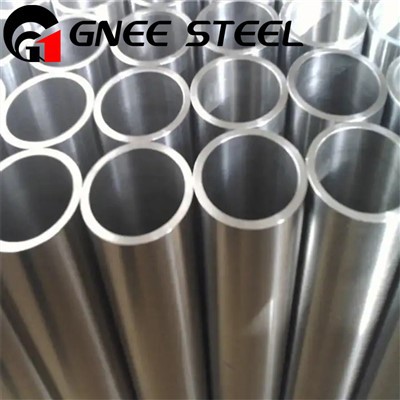


Incoloy is a series of **nickel-iron-chromium austenitic high-temperature alloys** with a core composition of 30%–45% nickel, 19%–23% chromium, and ≥30% iron, supplemented by elements such as molybdenum (Mo), copper (Cu), aluminum (Al), titanium (Ti), and carbon (C) to specifically optimize the material's high-temperature creep resistance or resistance to acid and chloride corrosion.
Key Differences Between Incoloy and Inconel Alloy
| Alloy Family | Main Matrix Core Core Advantages | Main Application Scenarios | |
|---|---|---|---|
| Incoloy | Ni-Fe-Cr (high iron content) | Lower raw cost, balanced high-temp oxidation + aqueous acid resistance | Ethylene furnace, reformer tube, chemical acid equipment, offshore brine piping |
| Inconel | Ni-Cr (low iron, high Ni) | Extreme high-temperature oxidation above 980℃, aerospace gas turbine | Jet engine, ultra-high temp combustion chamber, rocket parts |
Contact our experts to recommend the right alloy for your project
Core Advantages of the Gnee Alloy Incoloy Series (Verified by Third-Party Laboratories)
Dual-Environment Adaptability (Unique Competitive Advantage)
- High-Temperature Environments: Grades 800, 800H, and 800HT are suitable for continuous service at 815–900°C; they exhibit excellent resistance to carburization and sulfidation, with no creep deformation under long-term high-pressure conditions.
- Aqueous Corrosive Environments: Grades 825 and 925 effectively resist chloride-induced stress corrosion cracking (Cl-SCC), with a corrosion rate of ≤0.03 mm/year in stagnant seawater; their service life in sulfuric acid media is 6–10 times that of 316L stainless steel.
Stable Long-Term Mechanical Properties
- Grade 800H (solution-annealed): Creep rupture strength at 700°C is double that of standard stainless steel; Grade 925 (age-hardened): Minimum yield strength reaches 620 MPa, making it suitable for high-load downhole components.
Excellent Processing Adaptability
- Compatible with various welding processes, including TIG, MIG, SMAW, and submerged arc welding; hot working temperature range of 840–1150°C; mature cold rolling, extrusion, and forging processes; exhibits no significant work-hardening compared to pure nickel alloys.
Low Total Lifecycle Operating Costs
- Raw material costs are 25–40% lower than the high-nickel Inconel series; in petrochemical and power plant applications, major equipment overhaul intervals extend to 8–12 years, significantly reducing losses from downtime.
Non-Magnetic Properties and Stable Low-Temperature Toughness
- All Incoloy grades remain non-magnetic across a temperature range of -196°C (cryogenic) to 900°C (high temperature), making them suitable for nuclear power auxiliary facilities and piping systems for precision offshore instrumentation.
Standard Specifications for the Full Range of Incoloy Grades
Standard Chemical Composition Table (Mass Percentage, ASTM Standard Ranges)
| Grade | UNS No. | Ni (%) | Cr (%) | Fe Min (%) | Mo (%) | Cu (%) | Al+Ti (%) | C Range (%) | Core Characteristic Element |
|---|---|---|---|---|---|---|---|---|---|
| Incoloy 800 | N08800 | 30–35 | 19–23 | 39.5 | ≤0.75 | ≤0.75 | 0.3–1.2 | ≤0.10 | Balanced general high‑temp |
| Incoloy 800H | N08810 | 30–35 | 19–23 | 39.5 | ≤0.75 | ≤0.75 | 0.3–1.2 | 0.05–0.10 | Coarse grain for creep strength |
| Incoloy 800HT | N08811 | 30–35 | 19–23 | 39.5 | ≤0.75 | ≤0.75 | 0.85–1.2 | 0.06–0.10 | Optimized cyclic oxidation |
| Incoloy 825 | N08825 | 38–46 | 19.5–23.5 | Remainder | 2.5–3.5 | 1.5–3.0 | ≤0.4 | ≤0.05 | Mo+Cu anti‑acid/chloride |

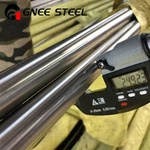
Gnee Alloy Nickel Based Alloy PMI Test
Key Room-Temperature Mechanical Performance Reference (Annealed Standard State)
| Grade | Tensile Strength Min (MPa) | Yield Strength 0.2% Min (MPa) | Elongation Min (%) | Hardness Max (HB) | Main Strength Feature |
|---|---|---|---|---|---|
| Incoloy 800 | 585 | 240 | 30 | 200 | General high temp ductile |
| Incoloy 800H | 550 | 230 | 30 | 190 | Superior creep rupture |
| Incoloy 800HT | 550 | 230 | 30 | 190 | Long cycle oxidation stable |
| Incoloy 825 | 586 | 240 | 30 | 200 | Anti-chloride corrosion |
Gnee Alloy Incoloy Global Industry Standards
1. Seamless Pipes/Tubes: ASTM A213, B423, ASME SB423, SB163
2. Plates and Coils: ASTM B409, ASME SB409, A240
3. Round Bars and Forging Stock: ASTM B408, ASME SB408
4. Forged Flanges and Fittings: ASTM B564, ASME SB564
5. Compliance for Oilfield Sour Service Environments: NACE MR0175 / ISO 15156-3
6. Export Material Inspection Certificates: EN10204 3.1 / 3.2 Mill Test Reports (MTR)
7. Authorized Third-Party Inspections: SGS, BV, TUV, DNV, ABS
GNEE Incoloy Product Portfolio (Full range of grades in stock; custom sizes available)
Prior to shipment, all finished products undergo 100% PMI (spectroscopic chemical analysis), mechanical property testing (tensile and hardness), and non-destructive testing (UT, MT, and PT); dimensional tolerances are strictly controlled in accordance with ASTM standards.
| Product Form | Applicable Grades | Standards | Dimensions | Surface Condition | Typical Applications |
|---|---|---|---|---|---|
| Seamless Tubes & Heat Exchanger Capillary Tubes | 800 / 800H / 800HT / 825 / 925 | ASTM A213, ASME SB423 | OD: 3mm – 720mm; Wall thickness: 0.6mm – 60mm; Fixed length: 1–12m | Pickled (black), bright annealed, mirror polished | Ethylene cracking furnace radiant tubes, reformer furnace pigtail tubes, power plant superheater tubes, offshore seawater heat exchangers, acidic media process piping |
| Plates & Cold‑Rolled Coils | All Incoloy grades | ASTM B409, ASME SB409 | Thickness: 0.2mm (ultra‑thin sheet) – 120mm (hot‑rolled plate) | Pickled, sandblasted, BA bright polished | Chemical reactor linings, furnace muffle linings, power plant boiler pressure vessel shells, desalination equipment casings |
| Round, Square & Hexagonal Bars | 800 / 800H / 825 / 925 (Grade 925 preferred for oilfield fasteners) | ASTM B408, ASME SB408 | Diameter: 4mm – 550mm | Hot‑rolled black, cold‑drawn bright | Furnace fixture shafts, oilfield drill collars, valve stems, high‑strength fasteners for automatic lathe machining |
| Forged Flanges & Welded Fittings | Incoloy 800 / 825 / 925 | ASTM B564, ASME B16.5, B16.47 | Products: Weld neck flanges, blind flanges, elbows, tees, concentric reducers, threaded fittings | Hot die forging + solution heat treatment; 100% MT surface crack inspection | Petrochemical high‑pressure pipeline connections, offshore platform valve components |
Contact us to customize Incoloy products to your project's dimensions
Key Industrial Application Scenarios for Gnee Alloy Incoloy

Petrochemical and Ethylene Cracking Industry (Largest export market for Incoloy)
- Corresponding Grades: 800H / 800HT
- Typical Components: Ethylene cracking furnace radiant section tubes, reformer pigtails, hydrodealkylation furnace tubes, vinyl chloride cracking coils
- Performance Advantages: Stable creep-rupture strength at high temperatures (750–870°C); excellent resistance to carburization and sulfidation; service life exceeding 10 years without replacement

Oil & Gas and Offshore Sour Gas Field Industry
- Corresponding Grades: Incoloy 825 (seawater piping) / Incoloy 925 (high-strength downhole components)
- Typical Components: Subsea brine heat exchanger tubes, sour gas well downhole drill collars, offshore platform valve bodies, high-strength wellhead fasteners
- Compliance: Fully compliant with NACE MR0175 standards; resistant to stress corrosion cracking in H₂S and high-chloride environments

Acidic Chemical Processing Plants
- Corresponding Grades: Incoloy 825 / Incoloy 020
- Typical Components: Sulfuric/phosphoric acid reactor linings, pickling tank heating coils, fluoride scrubber piping, corrosion-resistant equipment for fine chemicals and pharmaceuticals
- Advantages: Superior resistance to pitting and crevice corrosion compared to duplex stainless steel in moderately acidic environments

Power Generation and Nuclear Auxiliary Equipment
- Corresponding Grades: Incoloy 800 / 800H
- Typical Components: Coal/gas-fired boiler superheater tubes, steam generator heat exchange coils, nuclear reactor auxiliary cooling piping, waste incinerator components
- Advantages: Maintains excellent mechanical properties under high-to-low temperature thermal cycling and thermal shock

Industrial Heat Treatment Furnaces and Thermal Equipment
- Corresponding Grades: Full Incoloy 800 series
- Typical components: furnace muffles, radiant tubes, heat treatment fixture trays, annealing furnace rolls
- Advantages: Low oxidation and scaling rates at high temperatures; reduces the frequency of furnace maintenance
Gnee Alloy: Standard Export-Grade Incoloy Alloy Manufacturing and End-to-End Quality Control
1. Melting and Precision Alloying: Vacuum melting using high-purity nickel, chromium, and iron raw materials; precise addition of trace elements (such as Mo, Cu, Al, and Ti) according to grade specifications, followed by thorough homogenization to eliminate compositional segregation.
2. Continuous Casting: Casting into standard ingots or billets, with 100% pre-inspection for internal porosity and cracks.
3. Controlled Hot Forming (840–1150°C): Hot rolling for plates/sheets; hot extrusion for pipes and bars; grain refinement to enhance creep resistance.
4. Cold Forming: Cold drawing for capillary tubes and cold rolling for thin sheets, ensuring superior dimensional accuracy and surface finish.
5. Targeted Heat Treatment: Solution annealing for 800/800H/800HT grades; solution treatment plus age hardening for Incoloy 925 to enhance tensile and yield strength.
6. Precision Finishing: CNC cutting, surface polishing, and comprehensive Non-Destructive Testing (NDT: UT, MT, and PT).
7. Final Batch Quality Review: Sampling and re-verification of chemical composition and mechanical properties, permanent heat number marking, and anti-rust treatment; Material Test Report (MTR) provided prior to packaging and shipment.

GNEE Supply Capabilities
1. Robust and Stable Global Inventory
We maintain a steady stock of finished Incoloy products at our Tianjin bonded warehouse, covering all mainstream specifications for pipes (OD/wall thickness), plates, and bars. We accommodate orders as small as 5kg for laboratory samples (with no minimum order quantity) while also handling large-scale orders exceeding 500 tons for major ethylene plants and offshore EPC projects.
2. Comprehensive Global Export Logistics
We partner with top-tier global shipping companies to support trade terms such as FOB Tianjin and CIF destinations including Rotterdam, Singapore, Dubai, Houston, and Los Angeles. Every shipment comes with a complete set of customs clearance documents: commercial invoice, packing list, certificate of origin, Form A/E certificates, and full MTR (Material Test Reports). We utilize maritime packaging standards—combining professional anti-rust plastic film with fumigated wooden crates—to prevent corrosion or scratches during long-distance ocean transport.
3. Independent Physical and Chemical Quality Inspection Laboratory
Our facility is equipped with advanced testing instruments, including spectrometers, universal tensile testing machines, hardness testers, high-temperature creep testing chambers, salt spray corrosion chambers, and ultrasonic flaw detectors. We facilitate on-site witnessed inspections by third-party agencies prior to loading, and all test data are fully traceable via unique Heat Numbers.
4. Professional Metallurgical Technical Service Team
Our services are backed by a team of nickel alloy metallurgy experts with over 18 years of experience. We provide free, one-on-one alloy grade selection advice tailored to your specific operating conditions (such as media, operating temperature, pressure, chloride/hydrogen sulfide content, and load conditions). Additionally, we offer free welding process guidance for Incoloy 800HT and the age-hardenable Alloy 925.

FAQ
Q1: What are the key differences between Incoloy 800, 800H, and 800HT?
A: These three alloys share the same nickel-chromium-iron (Ni-Cr-Fe) base composition; the primary differences lie in their carbon content and the ratio of aluminum (Al) to titanium (Ti):
1. Incoloy 800: A low-carbon, general-purpose grade suitable for intermittent high-temperature equipment with lower creep load requirements.
2. Incoloy 800H: Features controlled, moderate carbon content and a coarse-grained microstructure; it exhibits excellent long-term creep-rupture strength in static piping applications for reforming furnaces.
3. Incoloy 800HT: Contains higher levels of aluminum (Al) and titanium (Ti) and offers superior cyclic oxidation resistance; it is specifically designed for radiant section furnace tubes in ethylene cracking furnaces subject to frequent temperature fluctuations.
Q2: When should Incoloy 825 be chosen over the 800 series?
A: Choose 825 if the operating medium involves seawater, brine, sulfuric acid, phosphoric acid, or fluids with high chloride ion concentrations. The 800 series excels only in dry, high-temperature furnace atmospheres and offers poor resistance to corrosion from aqueous chloride solutions.
Q3: What is the difference between Incoloy and Inconel alloys for high-temperature projects?
A: Incoloy has a high iron content and lower raw material costs, making it suitable for petrochemical furnaces and equipment handling acidic media at temperatures up to 900°C. Inconel has an extremely high nickel content and remains stable above 980°C; it is recommended only for ultra-high-temperature components in aerospace gas turbines where the budget allows.
Q4: Is Incoloy susceptible to chloride stress corrosion cracking (Cl-SCC)?
A: Grades 800, 800H, and 800HT have poor resistance to chloride stress corrosion cracking and are unsuitable for seawater piping. Incoloy 825 and 925 contain additions of molybdenum (Mo) and copper (Cu), providing complete resistance to chloride-induced stress corrosion cracking.
Q5: What are your Minimum Order Quantity (MOQ) and standard production lead time?
A: For standard stock items, we accept laboratory sample orders as small as 5 kg with no MOQ restriction; the MOQ for bulk orders is 1 metric ton or more. Stock items ship within 7–15 working days, while orders requiring custom heat treatment or special sizing take 20–35 days.
Q6: Can you provide complete tender documentation and third-party witness inspection services?
A: Yes. We provide traceable EN10204 3.1/3.2 material certificates (MTR) for every batch; we facilitate on-site inspections by SGS, BV, or TUV prior to packing; and we provide a full set of customs clearance documents (such as Certificate of Origin, Form A/E, etc.) free of charge.