




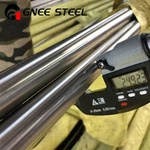

Nickel Alloy
GNEE steel group is a supply chain integrated enterprise including steel plate, coil, profile, outdoor landscape design and processing. Founded in 2008, with 5 million RMB registered capital, Gnee has made impressive progress and development in steel market with Gnee People more than 10 years hard fighting. At present, the total investment amount reaches 30 million RMB, workshop area more than 35000㎡, with over 200 employees. Gnee is becoming the most professional international steel supply chain company in China central plains with explicit strategic framework, integrated governance structure, firm management foundation, abundant fund and human power.
Group has 5 subsidiary corporations, located in Anyang, Tianjin, Hongkong and Singapore countries and districts. Headquarters is in hometown of oracle in Henan province, location of world cultural heritage" Yin Ruin", Anyang city, one of eight ancient capitals of China.
Why Choose Us
High quality
Our products are manufactured or executed to very high standards, using the finest materials and manufacturing processes.
Competitive Price
We offering a higher-quality product or service at an equivalent price. As a result we have a growing and loyal customer base.
Rich experience
Our company has many years of production work experience. The concept of customer-oriented and win-win cooperation makes the company more mature and stronger.
Global shipping
Our products support global shipping and the logistics system is complete, so our customers are all over the world.
After-sale service
Professional and thoughtful after -sales team, let you worry about us after -sales Intimate service, strong after -sales team support.
Advanced equipment
A machine, tool or instrument designed with advanced technology and functionality to perform highly specific tasks with greater precision, efficiency and reliability.


What Is Nickel Alloy?
A nickel alloy is a metal that contains a percentage of nickel in its elemental makeup. Nickel is primarily alloyed with chromium, copper, iron, titanium, and molybdenum. Each of these alloy combinations has specific properties that make it best suited to a certain range of applications.
Excellent corrosion resistance
Nickel alloy has excellent resistance to a wide range of corrosive environments, including acids, alkalis, and saltwater. This makes it ideal for use in harsh environments where other materials may fail.
High-temperature stability
Nickel alloy has excellent high-temperature stability and can withstand exposure to high temperatures without losing its mechanical properties. This makes it suitable for use in applications that require exposure to high temperatures, such as in gas turbines or heat exchangers.
Strength and toughness
Nickel alloy has high strength and toughness, which makes it suitable for use in applications that require exposure to mechanical stress, such as in structural components or fasteners.
Workability
Nickel alloy is easy to machine and fabricate, which makes it suitable for use in complex components that require precise shaping or joining.
Cost-effectiveness
Compared to other high-performance alloys, nickel alloy is relatively inexpensive, which makes it a cost-effective choice for many applications.
Biocompatibility
Nickel alloy is non-toxic and non-allergenic, which makes it suitable for use in medical applications, such as in implantable devices or medical instruments.
Nickel-iron alloys
Nickel-iron alloys function in applications where the desired property is a low rate of thermal expansion. Invar 36®, also sold with trade names of Nilo 6® or Pernifer 6®, exhibits a coefficient of thermal expansion that is about 1/10 that of carbon steel. This high degree of dimensional stability renders nickel-iron alloys useful in applications such as precision measurement equipment or thermostat rods. Other nickel-iron alloys with even greater concentrations of nickel are used in applications where soft magnetic properties are important, such as transformers, inductors, or memory storage devices.
Nickel-copper alloys
Nickel-copper alloys are very resistant to corrosion by salt water or seawater and thus find application in marine applications. As an example, Monel 400®, also sold under the trade names Nickelvac® 400 or Nicorros® 400, can find application in marine piping systems, pump shafts, and seawater valves. This alloy as a minimum concentration of 63% nickel and 28-34% copper.
Nickel-molybdenum alloys
Nickel-molybdenum alloys offer high chemical resistance to strong acids and other reducers such as hydrochloric acid, hydrogen chloride, sulfuric acid, and phosphoric acid. The chemical makeup for an alloy of this type, such as Alloy B-2®, has a concentration of molybdenum of 29-30% and a nickel concentration of between 66-74%. Applications include pumps and valves, gaskets, pressure vessels, heat exchangers, and piping products.
Nickel-chromium alloys
Nickel-chromium alloys are prized for their high corrosion resistance, high-temperature strength, and high electrical resistance. For example, the alloy NiCr 70/30, also designated as Ni70Cr30, Nikrothal 70, Resistohm 70, and X30H70 has a melting point of 1380oC and an electrical resistivity of 1.18 μΩ-m. Heating elements such as in toasters and other electrical resistance heaters make use of nickel-chromium alloys. When produced in wire form they are known as Nichrome® wire.
Nickel-chromium-iron alloys
Nickel-chromium-iron alloys combine these elements to produce alloys that resist oxidation and high-temperature corrosion. Alloy 800, sold under the trade names Incoloy 800®, Ferrochronin® 800, Nickelvac® 800, and Nicrofer® 3220, is used in furnace components such as petrochemical furnace cracker tubes, and as a material for sheathing of electrical heating elements. These alloys generally are also valued for their optimum creep and rupture properties at high temperatures. The composition of these alloys is typically 30-35% Nickel, 19-23% Chromium and a minimum of 39.5% Iron. The high concentration of iron has led to the reclassification of these alloys as stainless steel.
Nickel-chromium-molybdenum alloys
With similar applications to nickel-molybdenum alloys, nickel-chromium-molybdenum alloys also provide high corrosion resistance especially with regard to reducing acids such as hydrochloric acid and sulfuric acid. One of the best known of these alloys is Alloy C-276, also sold under the trade names Hastelloy C276®, Nickelvac® HC-276, Inconel® 276, and Nicrofer® 5716. This alloy is used in pollution control stack liners, ducts, and scrubbers, as well as in chemical processing components such as heat exchangers, evaporators, or reaction vessels. The composition of this alloy is primarily nickel with 15-17% molybdenum, 14.5-16.5% chromium, 4-7% Iron, 3-4.5% tungsten, and smaller concentrations of other elements such as manganese.
Nickel-chromium-cobalt alloys
These alloys of nickel add chromium and molybdenum to add creep rupture strength to the alloy. Alloy 617 is an example, sold under the trade names Inconel 617® and Nicrofer® 617, which has a composition of 20-24% chromium, 10-15% cobalt, and 8-10% molybdenum with a minimum nickel content of 44.5%. Applications for these alloys include industrial furnace components, gas turbines, catalyst grid supports to produce nitric acid, and fossil fuel production facilities.
Nickel-titanium alloys
Nickel-titanium alloys feature shape retention of shape memory properties. By forming a shape from this alloy at a higher temperature and them deforming it from that formed shape at a lower temperature, the alloy will remember the initial shape and reform to that shape once heated to this so-called transition temperature. By controlling the composition of the alloy, the transition temperature can be altered. These alloys have a super-elastic property that can be exploited to provide, among other uses, a shock absorber against earthquake damage to help protect stone buildings.
Application of Nickel Alloy


Aerospace: Nickel alloy is used in various aerospace applications, including jet engine components, exhaust systems, and gas turbine blades. It is also used in the manufacture of aircraft structures and components.
Chemical processing: Nickel alloy is used in the manufacture of chemical processing equipment, such as heat exchangers, reaction vessels, and piping. Its excellent resistance to corrosion makes it ideal for use in harsh chemical environments.
Power generation: Nickel alloy is used in the manufacture of power generation equipment, such as gas turbines, steam turbines, and power transformers. Its high-temperature stability and resistance to oxidation make it ideal for use in high-temperature environments.
Medical: Nickel alloy is used in the manufacture of medical devices, such as stents, orthodontic wires, and surgical instruments. Its excellent biocompatibility and resistance to corrosion make it ideal for use in medical applications.
Automotive: Nickel alloy is used in the manufacture of automotive components, such as exhaust systems, catalytic converters, and spark plugs. Its high-temperature stability and resistance to oxidation and corrosion make it ideal for use in high-temperature and harsh environments.
Oil and gas: Nickel alloy is used in the manufacture of oil and gas drilling equipment, such as drill pipes, well casings, and offshore structures. Its excellent resistance to corrosion and high-temperature stability make it ideal for use in harsh offshore environments.
Process of Nickel Alloy
The process of manufacturing nickel alloy typically involves several steps, including melting, alloying, casting, and heat treatment. Here is a general overview of the process.
Melting: The first step in manufacturing nickel alloy is to melt the primary materials, which typically include nickel and other alloying elements such as chromium, iron, copper, molybdenum, and titanium. The materials are melted in a furnace, typically using an electric arc, until they are fully molten.
Alloying: Once the primary materials are melted, the desired alloying elements are added to the melt to create the desired composition of the nickel alloy. The alloying elements are typically added in the form of wire or powder and are thoroughly mixed into the melt to ensure a uniform distribution.
Casting: The next step is to cast the molten alloy into the desired shape or form. This can be done using a variety of casting methods, including sand casting, investment casting, and die casting. The casting process determines the shape and size of the resulting nickel alloy product.
Heat treatment: After casting, the nickel alloy undergoes heat treatment to achieve the desired properties. This typically involves a process of annealing, which involves heating the alloy to a specific temperature and then cooling it slowly to relieve any internal stresses and improve the ductility and toughness of the alloy.
Finishing: The final step in manufacturing nickel alloy is to finish the product to the desired specifications. This can include machining, grinding, and polishing to achieve the desired shape, size, and surface finish.
How to Maintain Nickel Alloy
Regular inspection: Regularly inspect the nickel alloy for signs of wear, corrosion, or damage. This includes visually inspecting the surface and checking for any cracks or other defects that could compromise the integrity of the alloy.
Clean regularly: Clean the nickel alloy regularly to remove any dirt, oil, or other contaminants that could cause corrosion or damage. Use a mild detergent and water, and avoid using abrasive cleaning materials that could scratch or damage the surface.
Lubricate: If the nickel alloy is used in a application where friction is a concern, lubricate it regularly to reduce wear and prevent corrosion. Use a lubricant that is compatible with the alloy and the environment in which it is used.
Inspect and replace components: If the nickel alloy is used in a mechanical application, regularly inspect and replace any worn or damaged components to ensure optimal performance.
Store properly: When not in use, store the nickel alloy in a dry, clean environment away from sources of moisture, heat, or corrosive materials. Cover the alloy with a protective coating or store it in a protective container to prevent contamination or damage.
Inspect and repair: If the nickel alloy shows signs of damage or corrosion, inspect it promptly and repair any damage as necessary. Depending on the severity of the damage, the alloy may need to be repaired, replaced, or re-finished to maintain its integrity and optimal performance.
How to Choose Nickel Alloy Correctly
What Is the History of Nickel?
Nickel’s history dates back to 3,500 BC in China where it was used in ornamental objects. Its identification as a distinct element was by Swedish chemist Axel Fredrik Cronstedt, who isolated nickel from a mineral called "kupfernickel" in 1751. Initially mistaken for a copper ore, "kupfernickel" proved to be a previously unknown metal. In the early 19th century, it was alloyed with silver to create "nickel silver." Nickel silver is a metal resembling silver in appearance, but considerably tougher and lower cost. Nickel's resistance to corrosion led to its widespread use in electroplating applications. The alloying of nickel in stainless steel by Harry Brearley in 1913 revolutionized various industries and created a whole new class of materials that are still being extended. Nickel's versatility, from adornments to essential industrial applications, has solidified its significance in modern society.
Nickel is primarily obtained from two main sources: sulfide ores and laterite ores. The process of extracting nickel from these ores involves several steps, including mining, concentration, smelting, and refining. Here is a general overview of the process:
Mining: Nickel-containing ores are typically mined from underground or open-pit mines. The ore may contain nickel sulfides or laterite (oxide) ores.
Concentration: Once the ore is extracted, it is crushed and ground to a fine powder. Various techniques, such as flotation or magnetic separation, are used to separate the nickel-bearing minerals from the other minerals in the ore.
Smelting: In the case of sulfide ores, the concentrated nickel ore is then subjected to a smelting process. The ore is heated in a furnace with a reducing agent, such as coke or coal, which reacts with the sulfides to produce a mixture of nickel matte (a crude form of nickel) and slag. The matte contains nickel, copper, and other impurities.
Refining: The nickel matte undergoes further refining to remove impurities and separate the nickel from other metals. This is typically done through a process called "converting," where the matte is heated in the presence of oxygen to oxidize the impurities and convert them into slag. The resulting product is known as "nickel blister," which contains about 99% nickel.
Electrorefining: The nickel blister is then subjected to electrorefining, where it is dissolved in an electrolyte solution and subjected to an electric current. This process helps to purify the nickel and separate it from any remaining impurities. The purified nickel is deposited onto cathodes, while the impurities settle as anode slimes.
Further processing: The refined nickel can undergo additional processes, such as alloying with other metals or further purification, depending on the desired final product.
What Is the Color of Nickel?
The color of nickel is typically described as a silvery-white or grayish-white. It has a metallic luster and reflects light, giving it a shiny appearance. Nickel's color can vary slightly depending on factors such as the presence of impurities or the surface finish. In some cases, nickel can develop a slight yellowish or golden hue when exposed to certain conditions or when alloyed with other metals. However, in its pure form, nickel is primarily known for its silvery-white color.
What Are the Common Commercial Forms of Nickel and Nickel Alloys?
Nickel and nickel alloys are available in various commercial forms, each with its own unique properties and applications. Some of the common commercial forms of nickel and nickel alloys include.
Nickel sheets and plates: These are flat, thin sheets or plates of nickel that are used in various industries, including aerospace, chemical processing, and electronics.
Nickel bars and rods: Nickel bars and rods are solid cylindrical shapes of nickel that are often used in the manufacturing of components for the chemical, petrochemical, and power generation industries.
Nickel wire: Nickel wire is a thin, flexible form of nickel that is commonly used in electrical and electronic applications, such as heating elements, resistance wires, and electrical connectors.
Nickel tubes and pipes: Nickel tubes and pipes are hollow cylindrical structures made of nickel that are used in industries such as oil and gas, chemical processing, and marine applications.
Nickel foil: Nickel foil is a very thin sheet of nickel that is often used in applications requiring high corrosion resistance, such as battery manufacturing and electronic components.
Nickel powder: Nickel powder is a fine, powdered form of nickel that is used in various applications, including metal injection molding, powder metallurgy, and catalysts.
Nickel alloys: Nickel alloys are mixtures of nickel with other elements, such as chromium, iron, copper, and molybdenum, to enhance specific properties. Common nickel alloys include Inconel, Monel, Hastelloy, and Nichrome, which are used in industries such as aerospace, chemical processing, and marine engineering.
Yes, nickel can be welded. Nickel and its alloys have good weldability and can be joined using various welding processes. The choice of welding method depends on factors such as the specific nickel alloy, the thickness of the material, and the desired properties of the welded joint. Some common welding processes used for nickel and nickel alloys include.
Tungsten inert gas (tig) welding: TIG welding, also known as Gas Tungsten Arc Welding (GTAW), is commonly used for welding nickel and its alloys. It uses a non-consumable tungsten electrode and an inert gas shield to protect the weld zone from atmospheric contamination.
Metal inert gas (mig) welding: MIG welding, also known as Gas Metal Arc Welding (GMAW), is another popular method for welding nickel. It uses a consumable wire electrode and an inert gas shield to protect the weld zone.
Shielded metal arc welding (SMAW): SMAW, also known as stick welding, can be used for welding certain nickel alloys. It involves using a coated electrode that provides both the filler metal and the shielding gas.
Plasma Arc welding (PAW): PAW is a high-precision welding process that can be used for welding nickel and its alloys. It uses a concentrated plasma arc and an inert gas shield.
Electron beam welding (EBW): EBW is a specialized welding process that uses a high-energy electron beam to join metals. It is commonly used for welding nickel alloys with high melting points.
Our Factory
Gnee is becoming the most professional international steel supply chain company in China central plains with explicit strategic framework, integrated governance structure, firm management foundation, abundant fund and human power.


FAQ
Q: Why do we use nickel alloy?
Q: Is nickel a good alloy?
Tough and versatile, nickel alloys are resistant to corrosion by a range of media, and stay impressively strong even at temperatures over 1000°C.
Q: Is nickel a metal or alloy?
Q: Is nickel alloy stronger than steel?
Q: Is nickel alloy expensive?
Q: Does nickel alloy rust?
Q: Is nickel alloy better than stainless steel?
Q: Is stainless steel a nickel alloy?
Q: Where is nickel alloy found?
Iron and nickel are the most abundant metals in metallic meteorites and in the dense metal cores of telluric planets, such as Earth. Nickel–iron alloys occur naturally on Earth's surface as telluric iron or meteoric iron.
Q: What are 3 uses of nickel?
Q: Is nickel flammable yes or no?
Q: What's the toughest alloy?
Q: Why is nickel so expensive?
Q: Does nickel alloy turn green?
Q: What is the best nickel alloy?
Q: What is the difference between nickel alloy and steel alloy?
Q: How was stainless steel accidentally invented?
Q: What are the benefits of nickel in the body?
Q: Does nickel react with water?
Q: Why is nickel called Devil's copper?