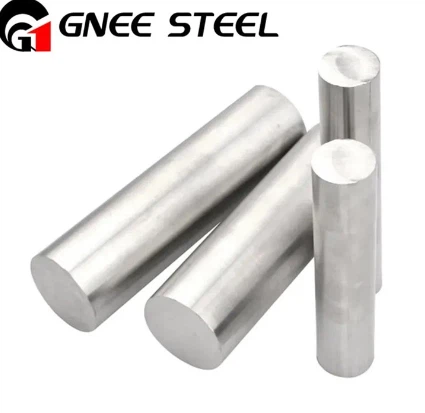
1. Q: What is TA1 titanium bar, and how does its classification and composition define its industrial utility?
A: TA1 titanium bar represents the highest purity grade within the Chinese designation system for commercially pure titanium, corresponding approximately to Grade 1 under ASTM B348 and ISO 5832-2 standards. The "TA" designation signifies titanium alloy (Ti Alloy) in the Chinese GB/T 3620.1–3624 system, with the numeral "1" indicating the highest purity and lowest interstitial content among the commercially pure grades.
The defining characteristic of TA1 lies in its precisely controlled chemical composition, particularly the stringent limits on interstitial elements. Maximum allowable oxygen content is 0.18%, nitrogen 0.03%, carbon 0.08%, hydrogen 0.015%, and iron 0.20%. This minimal interstitial content yields a relatively low tensile strength-typically 240–370 MPa in the annealed condition-but confers exceptional ductility, with elongation typically exceeding 25–30% and reduction of area often surpassing 40%.
This combination of high purity and high ductility produces a material with distinct advantages for industrial applications:
Exceptional formability: TA1 can undergo severe cold deformation-including deep drawing, cold heading, and complex bending-without cracking or requiring intermediate annealing.
Superior corrosion resistance: The high-purity titanium matrix, combined with the stable, self-healing titanium dioxide (TiO₂) passive film, provides outstanding resistance to corrosion in oxidizing environments, including seawater, chlorides, nitric acid, and organic acids.
Excellent weldability: TA1 can be welded autogenously or with matching filler (ERTi-1) without risk of embrittlement, producing sound, ductile welds suitable for pressure-containing and structural applications.
Biological compatibility: The absence of alloying elements such as aluminum or vanadium makes TA1 inherently biocompatible, suitable for applications where incidental human contact occurs.
Industrially, TA1 titanium bar serves as the material of choice for applications where purity, formability, and corrosion resistance take precedence over high strength. Typical applications include chemical processing equipment, heat exchanger tubing, marine hardware, anode assemblies for electrochemical processes, and components requiring extensive cold forming operations.
2. Q: What manufacturing processes are employed to produce TA1 titanium bar, and how do these processes influence final product quality and consistency?
A: The production of TA1 titanium bar involves a carefully controlled sequence of melting, forging, and finishing operations, each of which directly influences the final product's microstructure, mechanical properties, and surface integrity. As a commercially pure grade, TA1's processing is somewhat less complex than that of alloyed grades, yet still demands rigorous controls to preserve purity and achieve consistent properties.
Melting: TA1 ingots are produced primarily through vacuum arc remelting (VAR), typically employing double VAR to ensure compositional homogeneity and eliminate inclusions. Some producers utilize electron beam cold hearth melting, which offers enhanced capability for removing high-density and low-density inclusions, particularly critical for applications requiring absolute purity, such as semiconductor manufacturing or pharmaceutical processing. The melting practice is documented with complete traceability from raw material sponge through finished ingot.
Thermomechanical Processing: The as-cast ingot, typically weighing 2–8 metric tons, undergoes breakdown forging in the alpha phase field (approximately 850°C–950°C). This open-die forging accomplishes several essential objectives:
Structure refinement: Breaks down the coarse as-cast columnar grain structure into a fine, equiaxed alpha grain structure.
Porosity closure: Eliminates internal voids and porosity through plastic deformation.
Grain flow orientation: Establishes a wrought grain flow pattern that enhances mechanical isotropy and ultrasonic inspectability.
Following breakdown, the billet is processed into finished bar through one of several routes:
Rolling: Multi-stand rolling mills progressively reduce the billet to diameters ranging from 6 mm to 150 mm. Rolling offers high productivity and excellent surface finish, making it the preferred method for high-volume commercial products.
Forging: Rotary or precision forging is employed for larger diameters, custom cross-sections, or applications demanding enhanced mechanical properties through additional grain refinement.
Drawing: For small-diameter bar (typically <20 mm), cold drawing combined with intermediate annealing produces precise dimensional tolerances and a smooth surface finish.
Annealing: Final annealing is a critical step for TA1 bar. The material is annealed at 650°C–750°C for 1–4 hours, followed by air cooling. This treatment accomplishes:
Recrystallization: Produces a uniform, fine-grained equiaxed alpha microstructure (typically ASTM grain size 5–8).
Stress relief: Eliminates residual stresses introduced during forming operations.
Property stabilization: Ensures consistent mechanical properties across the product.
Finishing: TA1 bar intended for industrial applications typically undergoes centerless grinding or precision turning to achieve specified diameter tolerances-commonly ±0.05 mm to ±0.10 mm-and to remove any alpha-case or surface contamination. For applications requiring enhanced corrosion resistance or cleanliness, pickling in nitric-hydrofluoric acid solutions removes the surface oxide layer and restores the passive surface condition.
Throughout these processes, quality is verified through ultrasonic testing (per ASTM E2375), eddy current testing for surface integrity, and mechanical testing from each heat lot to confirm compliance with applicable specifications such as GB/T 2965, ASTM B348, or customer-specific requirements.
3. Q: How does the corrosion resistance of TA1 titanium bar perform in industrial environments, and what are its limitations?
A: TA1 titanium bar exhibits exceptional corrosion resistance across a broad spectrum of industrial environments, a property that drives its widespread adoption in chemical processing, marine engineering, and electrochemical applications. However, understanding both the capabilities and limitations of this corrosion performance is essential for appropriate material selection.
Passive Film Behavior: TA1's corrosion resistance derives from the spontaneously forming, thermodynamically stable titanium dioxide (TiO₂) passive film, typically 2–10 nanometers thick. This film forms instantly upon exposure to air or oxidizing environments and exhibits remarkable stability across pH ranges from approximately 3 to 12, at temperatures up to the boiling point in many media. The film's dielectric properties and chemical inertness provide exceptional resistance to uniform corrosion, pitting, and crevice attack.
Environments of Superior Performance: TA1 demonstrates outstanding corrosion resistance in:
Seawater and marine environments: Immune to chloride-induced pitting and crevice corrosion, even at elevated temperatures. Seawater cooling systems, offshore platform components, and marine hardware fabricated from TA1 routinely achieve service lives exceeding 30 years with negligible corrosion.
Oxidizing acids: Excellent resistance to nitric acid across the full concentration range at temperatures up to the boiling point. Similarly, performs well in chromic acid, perchloric acid, and wet chlorine gas.
Organic acids: Resistant to acetic acid, formic acid, citric acid, and most organic acids across a wide range of concentrations and temperatures.
Chlorinated environments: Performs exceptionally in wet chlorine gas, chlorinated brines, and bleaching solutions used in pulp and paper processing.
Alkaline solutions: Demonstrates good resistance in sodium hydroxide, potassium hydroxide, and other alkaline media up to moderate concentrations and temperatures.
Limitations and Susceptibilities: Despite its outstanding performance in many environments, TA1 has specific limitations that must be recognized:
Reducing acids: TA1 exhibits limited resistance in non-oxidizing acids such as hydrochloric, sulfuric, and phosphoric acids, particularly at elevated temperatures and concentrations. In these environments, corrosion rates increase significantly unless oxidizing species (e.g., ferric ions, nitric acid) are present to stabilize the passive film.
Hydrogen embrittlement: In high-temperature, high-pressure hydrogen environments, TA1 can absorb hydrogen, leading to the formation of titanium hydride (TiH₂) and consequent embrittlement. This limits its use in certain petrochemical and hydrogen service applications.
Anodic conditions: In electrochemical applications where TA1 serves as an anode, the passive film can break down at high potentials (typically >10 V in chloride solutions), leading to accelerated corrosion.
Galvanic coupling: When coupled with less noble metals (e.g., carbon steel, aluminum) in conductive electrolytes, TA1's cathodic nature can drive galvanic corrosion of the coupled material. Proper insulation or cathodic protection strategies are required to prevent such effects.
Practical Implications: For industrial users, these corrosion characteristics translate to a clear application framework: TA1 is the preferred material for oxidizing, chloride-rich, and marine environments where its exceptional corrosion resistance justifies its higher initial cost relative to conventional materials. However, for reducing acid service or hydrogen-rich environments, alternative materials such as titanium alloys with enhanced reducing acid resistance (e.g., Ti-Pd alloys) or non-metallic materials may be more appropriate.
4. Q: What are the key fabrication considerations for TA1 titanium bar, particularly regarding machining, forming, and joining?
A: Fabrication of TA1 titanium bar requires specific considerations that differ substantially from those for stainless steel, aluminum, or other common industrial materials. Understanding these requirements is essential for achieving efficient, cost-effective fabrication without compromising material integrity.
Machining Considerations: While TA1 is more machinable than higher-strength titanium alloys such as Gr5, it still presents challenges relative to conventional materials:
Tool selection: Sharp, positive-rake carbide tools are standard. High-speed steel tools may be used for low-volume operations but require careful speed management. Uncoated carbide is often preferred to maintain sharp cutting edges.
Cutting parameters: Recommended cutting speeds of 30–60 m/min for turning, with feed rates of 0.10–0.25 mm/rev. Higher speeds risk rapid tool wear due to titanium's low thermal conductivity and chemical reactivity.
Coolant: Generous flood coolant is essential for heat removal and chip evacuation. High-pressure coolant (HPC) is advantageous for deep-hole drilling or high-production operations.
Chip control: TA1 produces stringy, continuous chips that can tangle around tooling. Chip breakers and proper chip evacuation strategies are important.
Work hardening: While less severe than with alloyed titanium, TA1 does work harden. Avoiding dwell or light finishing cuts that induce surface strain hardening is recommended.
Forming Operations: TA1's exceptional ductility enables extensive cold forming:
Cold heading: TA1 bars can be cold-headed to produce fasteners, rivets, and complex formed components with reductions of 50–70% before requiring intermediate annealing.
Bending: Tight bend radii-typically 1.5–2.5 times the bar diameter-can be achieved at room temperature without cracking.
Deep drawing: Complex cup and shell shapes can be produced through progressive deep drawing operations with interstage annealing.
Springback: TA1 exhibits greater springback than steel due to its lower modulus of elasticity (approximately 105 GPa). Forming tools should incorporate overbend allowances to compensate.
Welding and Joining: TA1 is readily weldable, with GTAW (gas tungsten arc welding) being the predominant process:
Shielding requirements: Absolute protection from atmospheric contamination is mandatory. Primary argon shielding, trailing shields, and back-purging of the weld root are required to prevent embrittlement from oxygen, nitrogen, and hydrogen absorption.
Filler metal: ERTi-1 matching filler is typically used, though autogenous welding is acceptable for many non-critical applications.
Heat input: Moderate heat input with interpass temperatures below 150°C minimizes grain growth in the heat-affected zone.
Post-weld treatment: Stress relief annealing (650°C–700°C) may be specified for pressure-containing or fatigue-critical applications but is not generally required for most industrial fabrications.
Inspection: Visual inspection for discoloration (acceptable silver to straw; unacceptable blue, gray, or white) is the primary quality verification. Radiographic or penetrant testing may be specified for critical applications.
Surface Protection: Throughout fabrication, care must be taken to prevent surface contamination:
Tooling cleanliness: Tools should be free from iron, zinc, and other contaminants that can embed in the titanium surface and promote galvanic corrosion.
Pickling: Final pickling in nitric-hydrofluoric acid solutions removes surface contamination and restores the passive oxide layer.
5. Q: What specifications and quality assurance standards govern TA1 titanium bar for industrial applications, and how should purchasers specify this material?
A: TA1 titanium bar is governed by a comprehensive framework of national and international specifications. Understanding these standards and the appropriate quality assurance requirements is essential for purchasers to ensure material suitability for their intended applications.
Primary Material Specifications: TA1 titanium bar is most commonly supplied to:
GB/T 2965 (Chinese National Standard): The primary specification for TA1, TA2, and TA3 titanium bars within China. This standard defines chemical composition, mechanical properties, dimensional tolerances, and inspection requirements.
ASTM B348 (American Standard): Grade 1 titanium bar under this specification is equivalent to TA1. This is the most widely referenced international standard for commercially pure titanium bar.
ISO 5832-2 (International Standard): Covers unalloyed titanium for surgical implant applications, representing a higher-purity variant of TA1 with tighter composition limits.
Chemical Composition and Mechanical Requirements: The table below summarizes typical requirements:
| Element | GB/T 2965 TA1 | ASTM B348 Grade 1 |
|---|---|---|
| Oxygen (max) | 0.18% | 0.18% |
| Nitrogen (max) | 0.03% | 0.03% |
| Carbon (max) | 0.08% | 0.08% |
| Hydrogen (max) | 0.015% | 0.015% |
| Iron (max) | 0.20% | 0.20% |
| Tensile Strength | 240–370 MPa | 240 MPa min |
| Yield Strength (0.2%) | 140–250 MPa | 170 MPa min |
| Elongation | 25–30% min | 24% min |
Quality Assurance Requirements: For industrial applications, purchasers should specify the following QA elements:
Material traceability: Full traceability from heat lot to finished bar, documented through certified mill test reports (MTRs) that include heat numbers, chemical analysis, and mechanical test results.
Nondestructive testing: While not mandatory for all industrial applications, ultrasonic testing (per ASTM E2375) is recommended for critical structural applications. Eddy current testing provides surface defect detection.
Dimensional tolerances: Specify required diameter tolerance (typically h8, h9, or h11) and straightness requirements.
Surface condition: Specify as-ground, as-turned, as-drawn, or pickled finish based on application requirements.
Supplementary Requirements: For specialized applications, purchasers may specify:
Elevated temperature testing: For applications involving service temperatures above 100°C.
Hydrogen content verification: For applications where hydrogen embrittlement is a concern.
Microstructure examination: Verification of fine, equiaxed alpha grain structure per ASTM E112.
Third-party inspection: Independent verification of compliance, often specified for offshore, nuclear, or international projects.
Purchasing Guidance: When specifying TA1 titanium bar, purchasers should provide:
Applicable specification (e.g., ASTM B348 Grade 1)
Diameter and length requirements
Dimensional tolerances
Surface finish requirements
Quantity and delivery schedule
Required certifications (MTRs, third-party inspection reports)
By clearly specifying these parameters, purchasers can ensure that the supplied TA1 titanium bar meets the quality, consistency, and performance requirements for their intended industrial applications, whether in chemical processing, marine engineering, or general industrial manufacturing.