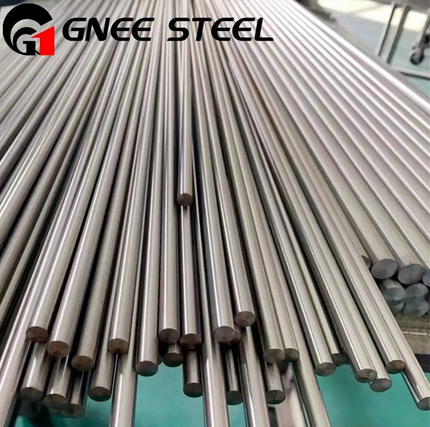
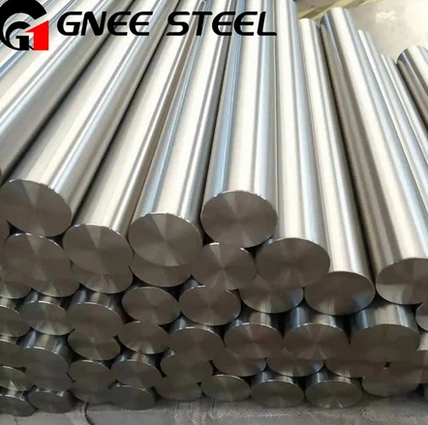
1. Q: What defines Gr5 Ti6Al4V titanium alloy rod, and how does its chemical composition and microstructure determine its mechanical properties?
A: Gr5 Ti6Al4V, designated under ASTM B348 and ASME SB-348 as Grade 5 titanium, is the most widely utilized alpha-beta titanium alloy, accounting for approximately 50% of total titanium consumption globally. Its dominance stems from a precisely balanced chemical composition that yields an exceptional combination of strength, ductility, and fatigue resistance.
The nominal composition consists of 6% aluminum (Al) and 4% vanadium (V), with the balance titanium. Aluminum serves as an alpha stabilizer, raising the beta transus temperature (the temperature at which the alloy transforms completely to beta phase) to approximately 995°C while providing solid-solution strengthening. Vanadium acts as a beta stabilizer, retaining a controlled volume fraction of beta phase at room temperature, which contributes to the alloy's ductility and enables heat treatment responsiveness. Interstitial elements-oxygen (0.20% max), iron (0.40% max), carbon (0.08% max), and hydrogen (0.015% max)-are strictly controlled, as even minor variations significantly influence mechanical behavior.
The defining characteristic of Gr5 rod is its ability to be processed into two distinct microstructures: mill-annealed (alpha-beta) and beta-annealed. In the mill-annealed condition, which represents the majority of commercial rod products, the microstructure consists of primary alpha grains interspersed with transformed beta regions containing fine alpha laths. This structure delivers a typical tensile strength of 860–965 MPa, yield strength of 760–900 MPa, and elongation of 10–15%, with fracture toughness ranging from 50–80 MPa√m. Beta-annealed material, produced by heating above the beta transus followed by controlled cooling, yields a coarser lamellar microstructure that offers improved fracture toughness and creep resistance at elevated temperatures, albeit with slightly reduced ductility.
This combination of properties-strength comparable to many steels at approximately 40% lower density-positions Gr5 rod as the material of choice for applications demanding high specific strength (strength-to-weight ratio), fatigue endurance, and corrosion resistance across aerospace, medical, marine, and high-performance industrial sectors.
2. Q: What manufacturing processes are employed to produce Gr5 Ti6Al4V titanium alloy rod, and how do these processes influence final product quality and consistency?
A: The production of Gr5 Ti6Al4V rod involves a meticulously controlled sequence of melting, forging, and finishing operations, each of which profoundly influences the final rod's microstructure, mechanical properties, and defect tolerance.
The process begins with vacuum arc remelting (VAR) , typically employing a double or triple VAR sequence to ensure compositional homogeneity and eliminate inclusions such as high-density defects (e.g., tungsten or tantalum particles) or low-density defects (e.g., titanium nitride or oxide inclusions). Triple VAR is increasingly specified for critical applications, particularly in aerospace and medical implant sectors, as it minimizes the risk of hard alpha defects-oxygen-stabilized titanium inclusions that act as fatigue crack initiation sites.
Following melting, the ingot-typically weighing 2 to 10 metric tons-undergoes open-die forging at temperatures within the alpha-beta phase field (approximately 950°C–1,000°C). This thermomechanical processing accomplishes several critical objectives: it breaks down the coarse as-cast dendritic structure, closes internal porosity, and imparts a wrought grain flow that enhances ultrasonic inspectability and mechanical isotropy. The reduction ratio (ingot cross-section to billet cross-section) is carefully controlled, with minimum reductions of 3:1 to 5:1 specified to ensure adequate working of the microstructure.
The forged billet is then processed into finished rod through one of several routes:
Rolling: Multi-stand rolling mills progressively reduce the billet to diameters ranging from 6 mm to 150 mm. This method offers high productivity and excellent surface finish but requires precise temperature control to avoid microstructural anomalies.
Forging (Rotary or Precision): For larger diameters or custom shapes, rotary forging (also termed radial forging) provides superior dimensional control and grain refinement.
Centerless Grinding: Virtually all Gr5 rod intended for critical applications undergoes centerless grinding to achieve precise diameter tolerances-typically ±0.05 mm for aerospace and medical grades-and to remove surface decarburization or alpha-case (an oxygen-enriched brittle layer formed during hot working).
Throughout these processes, in-process annealing cycles are employed to restore ductility and enable further reduction. The final solution treatment and aging (STA) -annealing at approximately 950°C followed by aging at 480°C–595°C-is applied when maximum strength is required, yielding tensile strengths exceeding 1,100 MPa. However, for most applications, the mill-annealed condition (700°C–790°C anneal) strikes the optimal balance of strength, ductility, and fracture toughness.
Quality verification includes 100% ultrasonic testing per ASTM E2375 to detect internal defects, eddy current testing for surface integrity, and mechanical testing from each heat lot to verify compliance with applicable specifications such as ASTM B348, AMS 4928, or AMS 6931.
3. Q: What are the critical quality assurance and certification requirements for Gr5 Ti6Al4V rod intended for aerospace applications versus medical implant applications?
A: While both aerospace and medical applications demand exceptional quality from Gr5 Ti6Al4V rod, their certification frameworks, testing protocols, and acceptance criteria diverge significantly due to the distinct failure modes and regulatory environments governing each sector.
Aerospace Applications: Gr5 rod for aerospace structural components-such as landing gear, engine mounts, and airframe fasteners-is typically procured to AMS 4928 (for annealed condition) or AMS 6931 (for solution-treated and aged condition). These specifications mandate:
Ultrasonic testing: 100% inspection per AMS 2630 or ASTM E2375, with acceptance criteria requiring no indications exceeding 0.8 mm equivalent reflectivity for critical rotating components. Hard alpha defect rejection is absolute.
Mechanical property verification: Tensile, creep, and fracture toughness testing performed from each heat lot, with sampling frequency dictated by heat size and product form.
Melting certification: Documentation of double or triple VAR melting with detailed electrode and ingot records.
Traceability: Individual bar-level traceability maintained from ingot through final component fabrication, with heat numbers and melt practice permanently recorded.
Failure modes of primary concern include fatigue crack propagation from subsurface defects (particularly hard alpha) and stress corrosion cracking, leading to rigorous NDE requirements and conservative flaw acceptance criteria.
Medical Applications: Gr5 rod for surgical implants-including spinal rods, trauma nails, and dental abutments-must comply with ASTM F1472 (wrought Ti6Al4V for surgical implant applications). This specification imposes:
Stricter composition limits: Particularly for oxygen (0.20% max vs. 0.13% for high-strength grades) and hydrogen (0.010% max vs. 0.015% for aerospace).
Microstructural requirements: Uniform alpha-beta microstructure with no continuous grain boundary alpha or excessive beta flecking, as these features correlate with reduced fatigue performance.
Surface integrity: Post-machining requirements such as electropolishing or passivation per ASTM F86 to remove surface contaminants and restore the passive oxide layer.
Biocompatibility documentation: ISO 10993-1 biological evaluation compliance, including cytotoxicity, sensitization, and genotoxicity testing.
Unlike aerospace, where 100% ultrasonic testing is standard, medical rod often relies on combined ultrasonic and eddy current inspection plus stringent process controls, as the smaller diameters (typically 3–20 mm) and short lengths used for implants pose different defect detection challenges.
Certification documentation for both sectors includes certified mill test reports (MTRs) detailing chemistry, mechanical properties, and nondestructive examination results. However, medical applications additionally require device master records (DMRs) and, for Class III implants, adherence to 21 CFR Part 820 (FDA Quality System Regulation) throughout the supply chain.
4. Q: How does the machinability of Gr5 Ti6Al4V rod compare to other engineering materials, and what strategies are employed to achieve efficient, high-quality machining?
A: Gr5 Ti6Al4V is widely classified as a difficult-to-machine material, with machinability ratings approximately 20–25% that of mild steel. This classification stems from several intrinsic material properties that conspire to challenge even optimized machining operations.
The primary factors contributing to poor machinability include:
Low thermal conductivity: At approximately 6.7 W/m·K, Gr5 conducts heat away from the cutting zone only about 10% as effectively as steel. Consequently, cutting heat concentrates at the tool-chip interface, accelerating tool wear through diffusion and adhesion mechanisms.
High chemical reactivity: Titanium readily reacts with most tool materials at elevated temperatures, promoting built-up edge (BUE) formation and catastrophic tool failure.
Low modulus of elasticity: Approximately 110 GPa-half that of steel-leads to workpiece deflection and chatter, complicating tight tolerance machining of slender rod components.
Work hardening tendency: The material exhibits significant strain hardening, making interrupted cuts and re-cutting of chips particularly problematic.
Effective machining strategies for Gr5 rod are built upon four pillars: tool selection, cutting parameters, coolant application, and fixture design.
Tooling: Carbide inserts with sharp, positive rake geometries are standard. Advanced coatings-particularly TiAlN (titanium aluminum nitride) or AlCrN (aluminum chromium nitride)-provide thermal barriers and lubricity. Cubic boron nitride (CBN) and polycrystalline diamond (PCD) tools are employed for high-volume finishing operations.
Cutting Parameters: Conservative speeds are essential-typically 30–60 m/min for turning with carbide, compared to 150–200 m/min for stainless steel. Feed rates of 0.10–0.25 mm/rev are typical. The principle of "constant chip load" is critical; dwell or light finishing cuts risk work hardening and surface integrity degradation.
Coolant: High-pressure coolant (HPC)-70–100 bar directed precisely at the cutting zone-is the single most effective intervention, improving tool life by 200–400% compared to flood coolant. The coolant breaks chips, evacuates them from the cutting zone, and mitigates heat concentration.
Surface Integrity Considerations: Beyond tool life, machining parameters must preserve surface integrity. Excessive heat during machining can induce:
Alpha-case: Oxygen-enriched surface layer that embrittles the component and compromises fatigue life.
Residual tensile stress: Reduces fatigue strength and promotes stress corrosion cracking.
Post-machining processes-chemical milling, electropolishing, or tumbling-are often employed to remove the disturbed layer and restore the passive surface condition. For critical aerospace and medical components, machining process validation (including tool life monitoring and periodic surface integrity sampling) is mandated to ensure consistent quality.
5. Q: What role does heat treatment play in optimizing Gr5 Ti6Al4V rod properties, and how are different heat treatment cycles matched to specific application requirements?
A: Heat treatment is a powerful tool for tailoring the mechanical properties of Gr5 Ti6Al4V rod, enabling the same base composition to serve applications ranging from high-toughness structural components to ultra-high-strength fasteners. Unlike many alloy systems, however, Gr5 does not respond to through-hardening via martensitic transformation; instead, property optimization is achieved through controlled annealing and solution treatment processes.
Mill Annealing: The most common condition, mill annealing involves heating to 700°C–790°C for 1–4 hours followed by air cooling. This treatment relieves residual stresses from thermomechanical processing, stabilizes the alpha-beta microstructure, and produces a combination of properties-860–965 MPa tensile strength with 10–15% elongation and 50–80 MPa√m fracture toughness-suitable for approximately 80% of all applications. Mill-annealed rod is the default condition for ASTM B348 and AMS 4928 specifications.
Beta Annealing: Heating above the beta transus (approximately 1,000°C–1,040°C) followed by air cooling produces a coarse lamellar microstructure of transformed beta. This condition offers:
Enhanced fracture toughness: 80–110 MPa√m, critical for damage-tolerant aerospace structures.
Improved creep resistance: Superior performance at elevated temperatures (300°C–450°C).
Reduced fatigue strength: Compared to mill-annealed or duplex structures, a trade-off that limits its application in high-cycle fatigue environments.
Solution Treatment and Aging (STA): The STA cycle-solution treatment at 900°C–955°C (within the alpha-beta field) followed by water quenching and aging at 480°C–595°C-produces the highest strength condition. Tensile strengths of 1,100–1,200 MPa are achievable, with yield strengths exceeding 1,000 MPa. This condition is specified for high-strength fasteners (AMS 4967), springs, and structural components where strength-to-weight ratio is paramount. However, the increased strength comes at the cost of reduced ductility (6–10% elongation) and decreased fracture toughness (40–55 MPa√m).
Duplex Annealing: A two-step process involving a high-temperature anneal followed by a lower-temperature stabilizing treatment. This cycle refines the microstructure, improving the balance of strength and ductility while enhancing stress corrosion cracking resistance. It is increasingly specified for offshore and marine applications where both strength and resistance to aggressive environments are required.
Selection Criteria: The choice of heat treatment is driven by application-specific requirements:
Aerospace fasteners: STA for maximum strength.
Airframe structural components: Mill-annealed or duplex for balanced properties.
Marine risers and offshore equipment: Beta-annealed for fracture toughness and stress corrosion resistance.
Medical implants: Mill-annealed with controlled microstructure to optimize fatigue life under physiological loads.
All heat treatment operations must be performed under controlled atmospheres (typically argon or vacuum) to prevent alpha-case formation-oxygen contamination that embrittles the surface and degrades fatigue performance. Post-heat treatment processing, including pickling or centerless grinding, is often employed to remove any surface-affected layer, ensuring that the final rod delivers the full benefits of the selected thermal cycle.