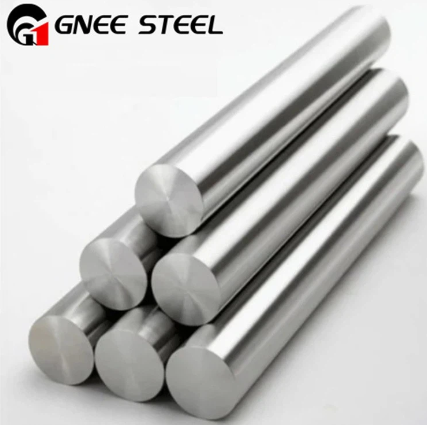
1. Q: What is AMS 5838, and how does it specify Hastelloy S (UNS N06635) nickel alloy rod for aerospace applications?
A: AMS 5838 is the Aerospace Material Specification covering Hastelloy S (UNS N06635) in the form of bars, wire, forgings, and rings. This specification establishes the rigorous requirements for nickel-chromium-molybdenum-iron alloy rod used primarily in gas turbine engine applications where a unique combination of high-temperature strength, thermal stability, and oxidation resistance is required.
Scope of AMS 5838: AMS 5838 specifically addresses Hastelloy S, a nickel-based superalloy developed for applications requiring exceptional thermal stability during prolonged exposure to elevated temperatures. Unlike many other nickel alloys that rely heavily on precipitation hardening, Hastelloy S is primarily solid-solution strengthened, offering a distinct advantage in applications where long-term microstructural stability is essential.
Chemical Composition Requirements: AMS 5838 mandates strict compositional control for UNS N06635:
Nickel (Ni): Balance (approximately 67% to 71%) - provides the austenitic matrix and serves as the base for corrosion resistance
Chromium (Cr): 14.0% to 17.0% - contributes to oxidation resistance and corrosion protection through the formation of a stable chromium oxide scale
Molybdenum (Mo): 14.0% to 16.0% - provides solid-solution strengthening and enhances resistance to reducing environments
Iron (Fe): 3.0% maximum - controlled to maintain the desired phase stability
Tungsten (W): 1.0% maximum - contributes to solid-solution strengthening
Cobalt (Co): 2.0% maximum - limited to maintain stability
Aluminum (Al): 0.10% to 0.50% - contributes to oxidation resistance
Lanthanum (La): 0.01% to 0.10% - a distinctive addition that significantly improves oxidation resistance and scale adhesion
Carbon (C): 0.02% maximum - the low carbon content minimizes carbide precipitation and enhances thermal stability
The Lanthanum Advantage: The controlled addition of lanthanum is a defining characteristic of Hastelloy S. This rare earth element dramatically improves the alloy's oxidation resistance by:
Enhancing the adhesion of the protective chromium oxide scale
Reducing scale spallation during thermal cycling
Extending service life in high-temperature oxidizing environments
Mechanical Property Requirements: AMS 5838 specifies mechanical properties that reflect the alloy's solution-strengthened condition:
Tensile strength: Typically 100 ksi (690 MPa) minimum at room temperature
Yield strength (0.2% offset): 40 ksi (276 MPa) minimum
Elongation: 35% minimum, reflecting excellent ductility
Creep resistance: The alloy maintains useful strength up to approximately 980°C (1800°F), with superior thermal stability compared to precipitation-hardened alloys
Distinction from Precipitation-Hardened Alloys: Unlike alloys such as Inconel 718 (GH4169) that derive strength from gamma-prime or gamma-double-prime precipitates, Hastelloy S achieves its properties through solid-solution strengthening and controlled impurity levels. This offers several advantages:
Thermal stability: No strengthening precipitates to coarsen or transform during prolonged high-temperature exposure
Weldability: Excellent weldability without risk of strain-age cracking
Fabricability: Can be formed and fabricated without complex heat treatment cycles
Aerospace Applications: AMS 5838 Hastelloy S rod is specifically intended for gas turbine engine components including:
Afterburner components: Where thermal cycling and oxidation resistance are critical
Seals and rings: High-temperature seals requiring dimensional stability
Fasteners: Bolts and studs in high-temperature regions
Flame holders and liners: Combustion section components exposed to extreme thermal environments
2. Q: What unique properties does Hastelloy S (UNS N06635) offer for gas turbine engine applications, and how do these properties compare to other aerospace nickel alloys?
A: Hastelloy S (UNS N06635) occupies a unique position in the family of aerospace nickel alloys due to its exceptional thermal stability and oxidation resistance. Unlike precipitation-hardened alloys that can suffer from microstructural degradation at elevated temperatures, Hastelloy S maintains its properties through a combination of solid-solution strengthening and carefully controlled chemistry.
Thermal Stability – The Defining Characteristic: The most distinctive property of Hastelloy S is its resistance to microstructural change during prolonged high-temperature exposure. While precipitation-hardened alloys such as Inconel 718 (GH4169) and Waspaloy rely on gamma-prime (γ') precipitates for strength, these phases can coarsen, transform, or dissolve at temperatures above their operating limits. Hastelloy S contains no intentional strengthening precipitates, meaning:
No precipitate coarsening: The alloy's structure remains stable during extended service at temperatures up to 980°C (1800°F)
No sigma phase formation: Unlike some molybdenum-containing alloys, Hastelloy S resists the formation of embrittling intermetallic phases
Retained ductility: The material maintains good ductility even after thousands of hours of high-temperature exposure
Oxidation Resistance: The addition of lanthanum (0.01% to 0.10%) provides Hastelloy S with exceptional oxidation resistance:
Superior to many nickel alloys: The lanthanum addition improves chromium oxide scale adhesion, reducing spallation during thermal cycling
Performance in combustion environments: In gas turbine engine afterburners and exhaust systems, Hastelloy S resists oxidation far better than alloys lacking lanthanum
Cyclic oxidation: The alloy excels in applications involving repeated thermal cycling, where scale spallation is a common failure mode for other materials
High-Temperature Strength: While not as strong as precipitation-hardened alloys at intermediate temperatures (540°C to 760°C / 1000°F to 1400°F), Hastelloy S offers:
Solid-solution strengthening: Molybdenum and chromium provide significant solid-solution strengthening, maintaining useful strength up to 980°C (1800°F)
Creep resistance: Good creep strength for a solid-solution-strengthened alloy
Stress rupture properties: Excellent long-term stress rupture performance due to thermal stability
Comparison with Other Aerospace Nickel Alloys:
| Property | Hastelloy S (N06635) | Inconel 718 (GH4169) | Waspaloy | Hastelloy X |
|---|---|---|---|---|
| Strengthening Mechanism | Solid-solution | Precipitation (γ''/γ') | Precipitation (γ') | Solid-solution |
| Max Service Temp | 980°C (1800°F) | 650°C (1200°F) | 870°C (1600°F) | 1090°C (2000°F) |
| Thermal Stability | Excellent | Good up to 650°C | Moderate | Excellent |
| Oxidation Resistance | Excellent (with La) | Good | Good | Excellent |
| Weldability | Excellent | Good (requires PWHT) | Fair | Excellent |
Gas Turbine Engine Applications: The unique combination of properties makes Hastelloy S particularly suitable for:
Afterburner components: In military aircraft engines, afterburners operate at extreme temperatures with rapid thermal cycling. Hastelloy S's thermal stability and oxidation resistance are essential for these applications.
Seal rings: High-temperature seals require dimensional stability and resistance to galling.
Flame holders: Components that stabilize the combustion zone must withstand both extreme temperatures and oxidizing atmospheres.
Transition ducts: Components between turbine stages and afterburners experience complex thermal gradients.
Fabrication Advantages: For aerospace manufacturers, Hastelloy S offers significant fabrication advantages:
No post-weld heat treatment required: Unlike precipitation-hardened alloys that require complex heat treatment after welding, Hastelloy S can be used in the as-welded condition
Excellent formability: The alloy can be cold formed and hot worked using conventional techniques
Machinability: While work-hardening, the alloy can be machined with carbide tooling using appropriate parameters
3. Q: What are the critical heat treatment and processing requirements for AMS 5838 Hastelloy S rod, and how do these affect the material's final properties?
A: The heat treatment and processing of AMS 5838 Hastelloy S rod are critical to developing the material's final properties. Unlike precipitation-hardened nickel alloys that require complex multi-stage aging cycles, Hastelloy S is typically used in the solution-annealed condition, relying on solid-solution strengthening and controlled chemistry for its performance characteristics.
Solution Annealing – The Primary Heat Treatment: AMS 5838 specifies solution annealing as the primary heat treatment for Hastelloy S rod:
Temperature range: 1065°C to 1175°C (1950°F to 2150°F)
Holding time: Sufficient time to achieve uniform temperature and complete dissolution of any carbides or intermetallic phases - typically 30 to 60 minutes depending on section size
Cooling: Rapid cooling (water quenching or rapid air cooling) to retain the solution-annealed structure and prevent unwanted phase precipitation
Effect on Microstructure: The solution annealing treatment:
Dissolves any carbides or intermetallic phases that may have formed during processing
Produces a homogeneous austenitic microstructure
Ensures that all alloying elements (chromium, molybdenum, lanthanum) are in solid solution
Prepares the material for service with maximum ductility and corrosion resistance
Hot Working Requirements: For rod products, hot working is typically performed in the temperature range of 1065°C to 1230°C (1950°F to 2250°F):
Uniform heating: The material must be uniformly heated to avoid thermal gradients that can cause cracking
Reduction: Controlled reduction ensures refinement of the grain structure
Cooling after hot working: Air cooling is typically sufficient after final hot working passes
Cold Working: Hastelloy S can be cold worked using conventional techniques:
Work hardening: The alloy work hardens at a moderate rate, similar to austenitic stainless steels
Intermediate annealing: For significant cold work reductions, intermediate solution annealing may be required to restore ductility
Final condition: Cold-drawn rod may be supplied in either the cold-worked or annealed condition, depending on application requirements
Effects on Mechanical Properties: The processing and heat treatment directly influence mechanical properties:
Solution-annealed condition: Maximum ductility and corrosion resistance; tensile strength typically 100 ksi (690 MPa) minimum
Cold-worked condition: Higher strength but reduced ductility; may be specified for applications requiring enhanced yield strength
Thermal stability: Proper solution annealing ensures that the alloy maintains its thermal stability during service
Oxidation Resistance Development: The solution annealing treatment also affects the alloy's oxidation resistance:
Lanthanum distribution: Proper solution annealing ensures uniform distribution of lanthanum, which is essential for optimal oxide scale adhesion
Surface condition: A clean, scale-free surface after heat treatment provides the best starting condition for service in oxidizing environments
Quality Control Requirements: AMS 5838 requires verification of heat treatment:
Temperature recording: Continuous temperature recording during solution annealing
Quench verification: Documentation of cooling method and quenching medium
Test verification: Mechanical testing to confirm that properties meet specification requirements
Post-Fabrication Heat Treatment: For fabricated components:
Stress relief: May be performed at temperatures below 980°C (1800°F) if residual stresses are a concern
No aging required: Unlike precipitation-hardened alloys, Hastelloy S does not require aging treatments to develop strength
Welded assemblies: Can be used in the as-welded condition without post-weld heat treatment, simplifying fabrication
4. Q: In what specific gas turbine engine components is AMS 5838 Hastelloy S rod utilized, and what performance requirements drive its selection over alternative materials?
A: AMS 5838 Hastelloy S rod is specified for critical gas turbine engine components where the combination of high-temperature strength, thermal stability, and oxidation resistance is essential. The material's unique properties-particularly its resistance to microstructural degradation and exceptional oxidation resistance from lanthanum addition-make it the material of choice for specific, demanding applications.
Afterburner Components (Military Aircraft): In military fighter aircraft, afterburners (reheat systems) provide additional thrust during takeoff, combat maneuvers, and supersonic flight. The afterburner environment is one of the most extreme in gas turbine engines:
Operating temperatures: 870°C to 1090°C (1600°F to 2000°F)
Thermal cycling: Rapid heating and cooling during afterburner engagement and disengagement
Oxidizing atmosphere: Combustion gases create a highly oxidizing environment
Hastelloy S rod is used for:
Afterburner spray bars: Fuel injection components must maintain dimensional stability and resist oxidation under extreme thermal cycling
Flame holder support rods: Components that position and support the flame holders must retain strength and resist thermal fatigue
Actuator linkages: Mechanical linkages in the afterburner actuation system require both high-temperature strength and galling resistance
Selection drivers: Superior thermal stability (no precipitation hardening to degrade), exceptional cyclic oxidation resistance (lanthanum addition), and retained ductility after prolonged high-temperature exposure.
High-Temperature Seal Systems: Gas turbine engines utilize various sealing systems to control gas path leakage:
Turbine interstage seals: Seals between turbine stages must maintain clearances at elevated temperatures
Exhaust nozzle seals: In variable exhaust nozzles, seal components experience high temperatures and sliding contact
Bearing compartment seals: High-temperature seals protect bearing compartments from hot gas ingestion
Hastelloy S rod is used for seal rings, seal support structures, and seal carrier components. The material's combination of oxidation resistance and galling resistance-often enhanced by appropriate surface treatments-provides reliable sealing over extended service intervals.
Selection drivers: Dimensional stability at temperature, resistance to oxidation, and compatibility with counterface materials.
Combustion Section Hardware: While the primary combustion section often uses other alloys, certain components benefit from Hastelloy S's properties:
Transition ducts: Components that transition between the high-pressure turbine and afterburner experience complex thermal gradients
Cooling air tubes: Tubes delivering cooling air to high-temperature components must maintain integrity in oxidizing environments
Instrumentation probes: Temperature and pressure probes inserted into the gas path require oxidation resistance and thermal stability
Selection drivers: Ability to withstand oxidizing combustion gases, retained strength at elevated temperatures, and compatibility with welding to other components.
Fasteners and Mechanical Hardware: In high-temperature regions of the engine, conventional fasteners cannot be used:
Bolts and studs: High-temperature fasteners require both strength and oxidation resistance
Threaded rods: For actuation systems and adjustable components
Retaining rings: For securing components in high-temperature zones
Hastelloy S rod is machined into these fastener components. The material's thermal stability ensures that fasteners do not lose their preload due to creep or microstructural change during service.
Selection drivers: High-temperature creep resistance, thermal stability (no strength loss from precipitate coarsening), and consistent properties after fabrication.
Material Selection Rationale: When engineers select Hastelloy S over alternative materials for these components, the decision is typically based on:
Thermal stability: Precipitation-hardened alloys such as Inconel 718 lose strength above 650°C (1200°F) due to precipitate coarsening; Hastelloy S maintains stable properties up to 980°C (1800°F)
Oxidation resistance: The lanthanum addition provides superior cyclic oxidation resistance compared to alloys such as Hastelloy X or Inconel 625
Fabricability: Unlike some high-temperature alloys that are difficult to weld or form, Hastelloy S offers excellent fabricability
Life-cycle cost: While the initial material cost is significant, the extended service life and reliability justify the investment for critical engine components
5. Q: What quality assurance and stock availability considerations should buyers evaluate when procuring AMS 5838 Hastelloy S rod for gas turbine engine applications?
A: The procurement of AMS 5838 Hastelloy S rod for gas turbine engine applications requires rigorous attention to quality assurance, documentation, and supply chain reliability. Given the critical nature of aerospace applications, buyers must evaluate both material quality and stock availability to ensure timely and compliant procurement.
Quality Assurance Requirements: AMS 5838, as an aerospace material specification, imposes stringent quality requirements:
Chemical composition verification: Each heat of material must undergo comprehensive chemical analysis to verify compliance with UNS N06635 composition limits. The presence of lanthanum (0.01% to 0.10%)-a defining characteristic of Hastelloy S-must be confirmed, as this element is critical to the alloy's oxidation resistance.
Mechanical property testing: Tensile testing at room temperature and, when specified, at elevated temperatures must be performed. For rod products, testing is typically conducted per heat and per heat treatment lot.
Nondestructive examination: Depending on the application and final component requirements, ultrasonic testing (UT), eddy current testing (ET), or liquid penetrant testing (PT) may be required to verify internal and surface integrity.
Traceability: AMS specifications require full traceability from the original melt to the finished product. Each bar must be marked with the manufacturer's identification, specification number (AMS 5838), alloy designation, and heat number.
Certification Documentation: The following documentation should be provided for each shipment:
Mill test reports (MTRs): Certifying chemical composition, mechanical properties, and heat treatment
Conformance certificate: Statement of conformance to AMS 5838
Traceability records: Linking finished bars to the original heat
Special process documentation: If applicable, records of nondestructive examination, special cleaning, or other specified processes
Stock Availability Considerations: For gas turbine engine manufacturers and maintenance, repair, and overhaul (MRO) facilities, stock availability is a critical factor:
Common sizes: AMS 5838 Hastelloy S rod is typically stocked in a range of diameters commonly used for aerospace components:
Small diameters: 0.125 inches to 1.000 inches (3.175 mm to 25.4 mm) - for instrumentation, small fasteners, and precision components
Medium diameters: 1.000 inches to 4.000 inches (25.4 mm to 101.6 mm) - for fasteners, actuation components, and structural hardware
Large diameters: 4.000 inches and above - for forging blanks and large-diameter components
Condition: Material is typically available in the solution-annealed condition, which provides maximum ductility for fabrication. Cold-drawn material may be available for applications requiring tighter tolerances or enhanced surface finish.
Lead times: Standard stock sizes may be available for immediate shipment, while non-standard diameters or large quantities may require mill production with lead times of 12 to 20 weeks or longer.
Supplier Qualification: For aerospace applications, suppliers should be qualified to:
AS9100: The aerospace quality management system standard
AMS specification conformance: Demonstrated capability to supply material meeting AMS 5838
Mill source approval: Material should originate from mills approved by major engine manufacturers (OEMs)
Receiving Inspection: Upon receipt, buyers should perform:
Visual inspection: Verification of markings, surface condition, and absence of damage
Documentation review: Confirmation that MTRs match marked material and meet specification requirements
Dimensional verification: Measurement of diameter, straightness, and length against purchase order requirements
Positive Material Identification (PMI): For critical applications, PMI testing verifies alloy composition and confirms that the material is Hastelloy S, not a substitute grade
Application-Specific Considerations: For gas turbine engine applications, additional requirements may include:
Special surface finish: Ground or polished surfaces for seal applications
Special straightness: Tighter straightness tolerances for rod intended for automatic machining
Special packaging: Protection of surfaces during shipment, particularly for material intended for high-purity applications
Third-party inspection: Independent verification for critical components or when specified by the end user
Supply Chain Reliability: For aerospace manufacturers, reliable stock availability is essential:
Consignment stock: Some suppliers offer consignment programs for frequently used sizes
Long-term agreements: Establishing long-term agreements with qualified suppliers ensures priority access to stock
Multiple sources: Where possible, qualifying multiple suppliers provides supply chain redundancy
By carefully evaluating quality assurance documentation, verifying stock availability from qualified sources, and conducting thorough receiving inspection, buyers can ensure that AMS 5838 Hastelloy S rod meets the stringent requirements of gas turbine engine applications. The investment in proper procurement practices is essential for the reliability and safety of aerospace components operating in extreme thermal environments.