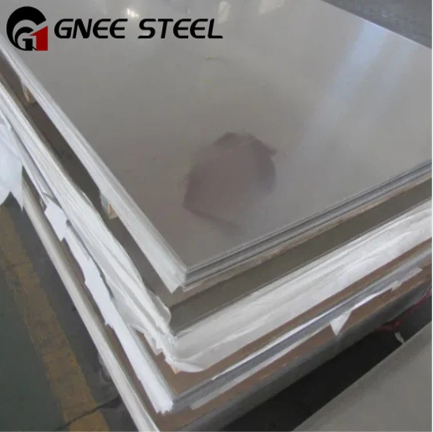
1. Q: What are the key distinctions among Inconel 718, 625, 601, 690, and X-750 nickel alloy plates and sheets, and how do these distinctions guide material selection?
A: The Inconel family of nickel-chromium-based superalloys represents a diverse range of materials, each engineered with specific compositions and strengthening mechanisms to address distinct service environments. Understanding these distinctions is fundamental to proper material selection for plate and sheet applications.
Inconel 718 (UNS N07718): This alloy is characterized by its precipitation-hardening capability through gamma-double-prime (γ'') and gamma-prime (γ') phases. With approximately 50% to 55% nickel, 17% to 21% chromium, and 4.75% to 5.50% niobium, Inconel 718 offers exceptional high-temperature strength up to 650°C to 700°C (1200°F to 1290°F). It is the preferred choice for aerospace components such as gas turbine discs, fasteners, and casings, as well as for oil and gas downhole equipment requiring high strength and corrosion resistance. The alloy's slow aging response makes it weldable in the solution-annealed condition, with post-weld heat treatment restoring full properties.
Inconel 625 (UNS N06625): A solid-solution-strengthened alloy with approximately 58% minimum nickel, 20% to 23% chromium, and 8% to 10% molybdenum. The high molybdenum content provides exceptional resistance to pitting and crevice corrosion, particularly in chloride environments. Inconel 625 is widely used in marine applications, chemical processing equipment, and seawater components. Its excellent weldability and absence of precipitation-hardening sensitivity make it suitable for large fabricated structures such as ducting, heat exchangers, and pressure vessels. The alloy maintains useful strength up to approximately 980°C (1800°F).
Inconel 601 (UNS N06601): A solid-solution-strengthened alloy distinguished by its exceptional oxidation resistance at elevated temperatures, particularly in cyclic oxidation conditions. With approximately 58% to 63% nickel, 21% to 25% chromium, and 1.0% to 1.7% aluminum, Inconel 601 forms a highly adherent, spallation-resistant aluminum oxide scale. It is the material of choice for heat treatment equipment, furnace components, radiant tubes, and thermal processing fixtures operating at temperatures up to 1180°C (2150°F). The aluminum addition also provides resistance to carburization and nitriding environments.
Inconel 690 (UNS N06690): An alloy with exceptionally high chromium content of 27% to 31%, combined with approximately 58% minimum nickel. This high chromium level provides outstanding resistance to high-temperature corrosion, particularly stress corrosion cracking in high-temperature water environments. Inconel 690 is the preferred material for nuclear reactor components, including steam generator tubing, where resistance to primary water stress corrosion cracking (PWSCC) is critical. It also serves in nitric acid service and other strongly oxidizing environments.
Inconel X-750 (UNS N07750): A precipitation-hardening alloy similar to Inconel 718 but with a higher titanium and aluminum content (2.25% to 2.75% titanium, 0.40% to 1.00% aluminum) and no niobium. This composition results in gamma-prime (γ') strengthening. Inconel X-750 offers excellent relaxation resistance at elevated temperatures, making it ideal for high-temperature springs, fasteners, and bolts. It also exhibits good oxidation and corrosion resistance up to 980°C (1800°F). However, its weldability is more limited than Inconel 718, requiring careful heat treatment control.
Selection Framework: For aerospace high-strength applications, Inconel 718 is typically selected. For seawater and chloride-containing chemical environments, Inconel 625 is preferred. For extreme-temperature furnace components, Inconel 601 excels. For nuclear and strong oxidizing environments, Inconel 690 is the standard. For high-temperature fasteners requiring relaxation resistance, Inconel X-750 is the material of choice.
2. Q: What manufacturing processes and quality standards govern high-quality Inconel plate and sheet products, and how do these ensure material integrity?
A: The production of high-quality Inconel plate and sheet involves sophisticated manufacturing processes and adherence to stringent quality standards. The integrity of the final product depends on precise control at every stage of production.
Melting and Refining: The foundation of quality begins with melting. High-quality Inconel plate and sheet are produced using advanced melting techniques:
Vacuum Induction Melting (VIM): Reduces gas content (hydrogen, oxygen, nitrogen) and minimizes non-metallic inclusions
Vacuum Arc Remelting (VAR): Further refines the structure, improves cleanliness, and enhances fatigue properties
Electroslag Remelting (ESR): Provides exceptional cleanliness and homogeneity for critical applications
These secondary refining processes are essential for aerospace, nuclear, and high-performance applications where material consistency and reliability are paramount.
Hot and Cold Rolling: The refined ingots undergo controlled rolling processes:
Hot rolling: Performed at elevated temperatures (typically 980°C to 1175°C / 1800°F to 2150°F) to achieve initial thickness reduction and refine grain structure
Cold rolling: Performed at ambient temperature to achieve final gauge, precise dimensional tolerances, and enhanced surface finish
Intermediate annealing: Required during cold rolling to restore ductility and prevent work hardening-induced cracking
Quality Standards: Inconel plate and sheet are governed by multiple ASTM and AMS specifications:
ASTM B443: Standard specification for nickel-chromium-molybdenum-columbium alloy (UNS N06625) plate, sheet, and strip
ASTM B670: Standard specification for precipitation-hardening nickel-chromium-molybdenum-columbium alloy (UNS N07718) plate, sheet, and strip
ASTM B168: Standard specification for nickel-chromium-iron alloys (UNS N06600, N06601, N06690) plate, sheet, and strip
AMS 5596: Aerospace specification for Inconel 625 sheet and plate
AMS 5590: Aerospace specification for Inconel 718 sheet and plate
Mechanical Property Verification: Quality standards require comprehensive mechanical testing:
Tensile testing: Verification of ultimate tensile strength, yield strength, and elongation
Hardness testing: Quality control verification of consistent heat treatment
Bend testing: For sheet products, ensuring ductility for forming operations
Nondestructive Examination: For critical applications, supplementary NDE requirements apply:
Ultrasonic testing (UT): Detection of internal defects such as laminations and inclusions
Eddy current testing (ET): Surface and near-surface defect detection for sheet products
Liquid penetrant testing (PT): Surface examination for cracks and surface-breaking defects
Dimensional Tolerances: ASTM specifications provide detailed tolerances for thickness, width, length, and flatness. High-quality products consistently meet or exceed these requirements, ensuring predictable fabrication outcomes.
Certification and Traceability: Full traceability from the original heat to the finished plate or sheet is maintained through:
Heat number marking on each plate
Mill test reports (MTRs) documenting chemical analysis and mechanical properties
Positive Material Identification (PMI) verification for critical orders
3. Q: What are the critical fabrication considerations for Inconel plate and sheet, including forming, welding, and heat treatment?
A: The fabrication of Inconel plate and sheet requires specialized techniques that reflect the unique metallurgical characteristics of these nickel-chromium-based alloys. Proper fabrication practices are essential to maintain the corrosion resistance, high-temperature strength, and structural integrity for which these materials are selected.
Forming Considerations: In the annealed condition, Inconel alloys exhibit excellent ductility:
Cold forming: Inconel 625 and 601 can be cold formed using conventional techniques, though work hardening occurs rapidly. For complex shapes or significant deformation, intermediate annealing may be required to restore ductility.
Hot forming: For heavier sections or complex geometries, hot forming at temperatures between 950°C and 1150°C (1740°F to 2100°F) reduces forming forces and minimizes work hardening.
Springback: Inconel alloys exhibit more springback than austenitic stainless steels; allowances must be made in tooling design.
Welding Considerations: Weldability varies among Inconel grades:
Inconel 625: Excellent weldability. Matching filler metal (ERNiCrMo-3) is recommended. No post-weld heat treatment is required for corrosion resistance.
Inconel 718: Good weldability but requires post-weld heat treatment to restore precipitation-hardened properties. Welding in the solution-annealed condition, followed by full aging, is standard practice.
Inconel 601: Good weldability. Matching filler metal (ERNiCr-3 or ENiCrFe-3) is used. Post-weld heat treatment is not typically required.
Inconel X-750: More limited weldability. Post-weld heat treatment is essential to restore properties, and stress relief may be required to prevent cracking.
Key welding practices common to all Inconel alloys:
Cleanliness: Strict cleaning to remove oils, greases, and marking materials that can cause embrittlement
Heat input control: Controlled interpass temperatures (typically below 150°C / 300°F) to minimize distortion and grain growth
Shielding gas: Argon or argon-helium mixtures; back purging for full-penetration welds
Heat Treatment: Heat treatment requirements vary significantly by alloy:
| Alloy | Solution Annealing | Precipitation Hardening | Post-Weld Heat Treatment |
|---|---|---|---|
| Inconel 625 | 1090°C-1205°C (2000°F-2200°F) | None | Not required |
| Inconel 718 | 940°C-1010°C (1725°F-1850°F) | 718°C + 621°C (1325°F + 1150°F) | Required for full strength |
| Inconel 601 | 1150°C-1200°C (2100°F-2190°F) | None | Not required |
| Inconel X-750 | 1090°C-1150°C (2000°F-2100°F) | 845°C + 700°C (1550°F + 1300°F) | Required |
Contamination Prevention: Inconel alloys are sensitive to contamination:
Sulfur: Can cause embrittlement; avoid sulfur-based lubricants and marking materials
Copper, zinc, lead: Low-melting-point metals can cause liquid metal embrittlement
Iron: Cross-contamination from carbon steel tools can create galvanic corrosion sites
Dedicated tools and work surfaces, proper cleaning protocols, and careful handling are essential for maintaining material integrity.
4. Q: In what specific industries and applications are Inconel 718, 625, 601, 690, and X-750 plates and sheets utilized, and what performance characteristics drive these selections?
A: Each Inconel alloy occupies a distinct niche across aerospace, power generation, chemical processing, nuclear, and industrial heating applications. The selection of a specific alloy is driven by the unique performance characteristics required for the service environment.
Aerospace and Gas Turbine Industry:
Inconel 718 plate and sheet: Used for gas turbine engine components including compressor housings, turbine casings, and afterburner components. The alloy's high strength-to-weight ratio, creep resistance, and thermal stability at temperatures up to 650°C (1200°F) make it indispensable. Sheet forms are used for honeycomb seals and thermal shields.
Inconel 625: Selected for exhaust systems, thrust reverser components, and ducting where both high-temperature strength and corrosion resistance are required.
Inconel X-750: Used for high-temperature springs, seal rings, and fasteners requiring relaxation resistance at elevated temperatures.
Chemical Processing Industry:
Inconel 625 plate: The standard material for seawater and chloride-containing environments. Applications include offshore platform equipment, seawater cooling systems, and chemical reactor vessels. The high molybdenum content provides exceptional resistance to pitting and crevice corrosion.
Inconel 690: Selected for nitric acid service, nitric acid-hydrofluoric acid mixtures (used in spent nuclear fuel reprocessing), and high-temperature oxidizing environments where conventional stainless steels fail.
Inconel 625 sheet: Used for lined vessels, ductwork, and cladding where corrosion resistance is critical.
Heat Treatment and Furnace Industry:
Inconel 601 plate and sheet: The premier material for furnace components, radiant tubes, muffles, and retorts. The alloy's exceptional cyclic oxidation resistance, derived from the aluminum addition, provides superior service life in thermal cycling environments. It maintains integrity at temperatures up to 1180°C (2150°F).
Inconel 625: Used for furnace fans and fixtures where a combination of strength and oxidation resistance is required.
Nuclear Power Industry:
Inconel 690 plate and sheet: The standard material for nuclear steam generator tubing and reactor internals. Its high chromium content provides exceptional resistance to primary water stress corrosion cracking (PWSCC), a critical degradation mechanism in pressurized water reactors.
Inconel 718: Used for reactor component fasteners and structural hardware requiring high strength.
Oil and Gas Industry:
Inconel 625: Used for downhole equipment, subsea control lines, and sour service components. The alloy meets NACE MR0175/ISO 15156 requirements for sulfide stress cracking (SSC) resistance in hydrogen sulfide environments.
Inconel 718: Selected for high-strength downhole components including packers, hangers, and completion equipment where both high strength and corrosion resistance are required.
Performance Drivers Summary:
| Alloy | Primary Performance Drivers |
|---|---|
| Inconel 718 | High-temperature strength, precipitation hardening, creep resistance up to 650°C |
| Inconel 625 | Chloride corrosion resistance, pitting resistance, solid-solution strength, weldability |
| Inconel 601 | Cyclic oxidation resistance, high-temperature stability up to 1180°C |
| Inconel 690 | High-temperature corrosion resistance, stress corrosion cracking resistance |
| Inconel X-750 | Relaxation resistance, high-temperature fastener applications |
5. Q: What quality assurance and procurement considerations are essential when sourcing high-quality Inconel plate and sheet for critical applications?
A: Sourcing high-quality Inconel plate and sheet for critical applications requires rigorous attention to material specifications, supplier qualifications, and quality assurance documentation. The consequences of material non-conformance-including premature failure, safety incidents, and unplanned downtime-justify comprehensive procurement practices.
Specification Verification: The foundation of proper procurement is unambiguous specification:
Alloy designation: Specify both the common name (e.g., Inconel 625) and the UNS designation (e.g., N06625) to eliminate ambiguity
Product standard: Specify the applicable ASTM or AMS standard (e.g., ASTM B443 for Inconel 625, AMS 5596 for aerospace-grade sheet)
Condition: Specify the required condition (annealed, solution-annealed, precipitation-hardened)
Dimensions: Thickness, width, length, and tolerances
Surface finish: Mill finish, pickled and passivated, or polished as required
Supplier Qualification: For critical applications, suppliers should demonstrate:
Quality management: ISO 9001 certification as a minimum; AS9100 for aerospace applications
Mill source approval: Material from mills approved by major end-users (e.g., engine manufacturers for aerospace)
Traceability capability: Systems to maintain heat number traceability from melt to finished product
Testing capability: In-house or contracted testing for chemical analysis, mechanical properties, and nondestructive examination
Documentation Requirements: Comprehensive documentation should accompany each shipment:
Mill test reports (MTRs): Documenting chemical composition, mechanical properties, and heat treatment
Certification of conformance: Statement that material meets all specified requirements
Traceability records: Linking finished plates or sheets to the original heat number
NDE reports: If applicable, records of ultrasonic, eddy current, or liquid penetrant examination
Receiving Inspection: Upon receipt, buyers should perform:
Visual inspection: Verification of markings, surface condition, and absence of damage
Documentation review: Confirmation that MTRs match marked material and meet specification requirements
Dimensional verification: Measurement of thickness, width, length, and flatness
Positive Material Identification (PMI): For critical applications, PMI testing of each plate confirms alloy grade and eliminates the risk of material substitution
Corrosion Testing: For chemical processing and marine applications, supplementary corrosion testing may be required:
ASTM G28: Test for intergranular corrosion susceptibility in nickel-chromium-iron alloys
ASTM G48: Test for pitting and crevice corrosion resistance
NACE TM0177: For sour service applications, verification of sulfide stress cracking resistance
Special Surface Requirements: For certain applications, surface condition is critical:
Pharmaceutical and food processing: Specified surface finishes (e.g., #4 polished) to facilitate cleaning and prevent bacterial adhesion
Semiconductor manufacturing: Ultra-clean surfaces with documented contamination levels
Heat treatment fixtures: Surface condition may affect oxidation resistance and service life
Supply Chain Considerations:
Lead times: Inconel plate and sheet, particularly in aerospace grades, may have extended lead times of 12 to 24 weeks
Stock availability: Standard thicknesses and widths are typically stocked; non-standard dimensions require mill production
Minimum order quantities: Mills often require minimum order quantities; distributors can consolidate requirements
Risk Mitigation: For critical projects, consider:
Third-party inspection: Independent verification of material quality
Witnessed testing: Buyer presence during mechanical testing or NDE
Qualified sources list (QSL): Restricting procurement to pre-qualified suppliers
Lot segregation: Ensuring that material from different heats is not mixed without documentation
By adhering to these procurement and quality assurance practices, buyers can ensure that high-quality Inconel plate and sheet meet the demanding requirements of aerospace, chemical processing, nuclear, and other critical applications. The investment in proper procurement practices is essential for reliability, safety, and long-term service performance.