1. Q: What is ASTM B348 Grade 9 titanium alloy, and how does its composition and mechanical properties compare to Grade 2 and Grade 5?
A: ASTM B348 Grade 9 (GR9) is a titanium alloy formally designated as Ti-3Al-2.5V (titanium with approximately 3% aluminum and 2.5% vanadium). It occupies a unique position in the titanium family, bridging the gap between commercially pure grades (such as GR2) and the high-strength alpha-beta alloy GR5 (Ti-6Al-4V). GR9 is often referred to as a "half-strength" or "intermediate-strength" titanium alloy.
Chemical Composition: GR9 contains 2.5–3.5% aluminum and 2.0–3.0% vanadium, with oxygen content controlled to a maximum of 0.15%. The reduced aluminum and vanadium content compared to GR5 (which contains 6% Al and 4% V) results in a material with distinct properties.
Mechanical Properties:
Minimum tensile strength: 620 MPa (90 ksi) - approximately 80% higher than GR2 (345 MPa) and 30% lower than GR5 (895 MPa)
Yield strength: Approximately 520–580 MPa (75–84 ksi)
Elongation: 15–20%, providing significantly better ductility than GR5
Density: 4.48 g/cm³, comparable to other titanium alloys
Comparison with GR2: GR9 offers approximately 80% higher strength than GR2 while maintaining excellent corrosion resistance and weldability. However, GR9 has lower formability than GR2 and is more expensive due to its alloying elements.
Comparison with GR5: GR9 offers approximately 30% lower strength than GR5 but provides superior formability, cold workability, and often better fatigue performance in certain applications. GR9 is also less expensive than GR5 and is easier to process into tubing and complex shapes.
The combination of moderate strength, excellent cold formability, and good weldability makes GR9 the material of choice for applications where commercially pure titanium lacks sufficient strength but the full strength of GR5 is either unnecessary or would compromise formability requirements.
2. Q: What are the key advantages of ASTM B348 Gr9 over Grade 5 (Ti-6Al-4V) for tubing and hydraulic system applications?
A: Grade 9 (Ti-3Al-2.5V) has become the standard material for aerospace hydraulic tubing and related components precisely because it offers distinct advantages over Grade 5 in this specific application category. These advantages stem from the alloy's metallurgical characteristics and processing capabilities.
Cold Formability and Tube Manufacture: The most significant advantage of GR9 is its superior cold formability. GR9 can be cold drawn into seamless tubing with excellent dimensional accuracy and surface finish. This is critical for hydraulic systems, where tubing must maintain tight tolerances and smooth internal surfaces for fluid flow and sealing. GR5, by contrast, is difficult to cold draw due to its higher strength and lower ductility; it typically requires hot working or pilgering followed by extensive annealing.
Weldability: GR9 exhibits excellent weldability, comparable to commercially pure titanium. It can be welded using gas tungsten arc welding (GTAW) without requiring post-weld heat treatment for most applications. GR5 welding, while feasible, requires more careful process control and often demands post-weld stress relief to restore ductility and prevent cracking in the heat-affected zone. For hydraulic tubing systems, where welded joints are common, GR9's superior weldability translates to lower fabrication costs and higher reliability.
Fatigue Performance: In hydraulic applications, components are subjected to cyclic pressure loading. GR9 demonstrates excellent fatigue strength, often comparable to or better than GR5 in the cold-worked condition typical of hydraulic tubing. The combination of cold work from drawing and the alloy's inherent properties creates a material with excellent resistance to fatigue crack initiation.
Bendability: GR9 can be cold bent into complex shapes with relatively tight radii without cracking, a critical requirement for hydraulic tubing routing in aircraft and aerospace structures. GR5 has limited cold bendability and typically requires hot forming for complex geometries.
Cost Considerations: GR9 contains lower percentages of expensive alloying elements (3% Al and 2.5% V versus 6% Al and 4% V in GR5) and is easier to process. This results in a more cost-effective material for applications where the full strength of GR5 is not required.
For these reasons, GR9 is the standard material specified in AMS 4944 and AMS 4945 for aerospace hydraulic tubing, with applications including commercial aircraft (Boeing, Airbus), military aircraft, and spacecraft hydraulic and fuel systems.
3. Q: What are the typical industrial applications for ASTM B348 Gr9 rods beyond aerospace tubing?
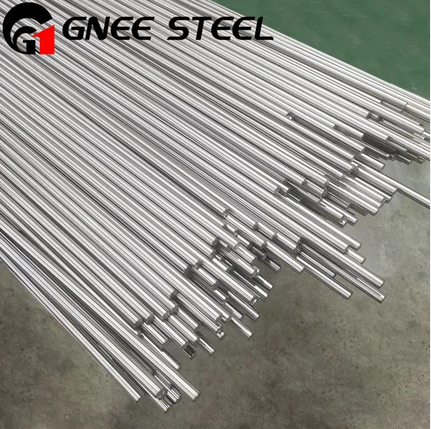
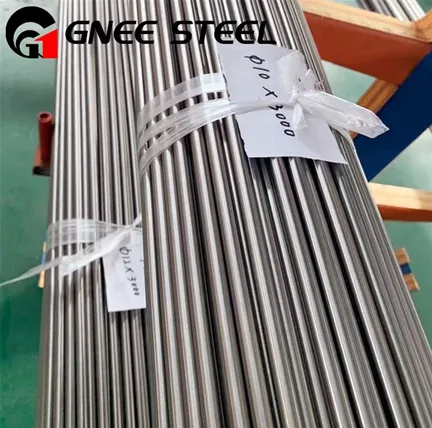
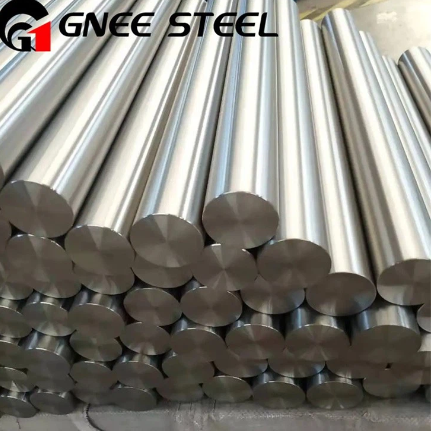
A: While Grade 9 is widely recognized for its dominance in aerospace hydraulic tubing, the rod form of ASTM B348 Gr9 serves a diverse range of industrial applications where the combination of moderate strength, formability, and corrosion resistance is essential.
Aerospace Fasteners and Components: GR9 rod is machined into high-quality fasteners for aerospace applications, including bolts, studs, and threaded components. These fasteners require the strength to withstand flight loads while maintaining corrosion resistance and fatigue performance. GR9 fasteners are commonly used in secondary structures, engine components, and interior applications where the ultimate strength of GR5 fasteners is not required.
Bicycle and Sporting Goods: The bicycle industry extensively utilizes GR9 tubing and rod for high-performance bicycle frames, handlebars, seat posts, and other components. GR9 offers an excellent strength-to-weight ratio that is attractive for premium bicycles, while its cold formability allows for the complex tube shapes and bends required in modern frame design. GR9 is also used in golf club shafts, ski poles, and other sporting equipment where weight savings and durability are valued.
Marine and Offshore Components: GR9's corrosion resistance in seawater is comparable to commercially pure titanium, while its higher strength allows for thinner sections and lighter components. Applications include subsea connector components, ROV (remotely operated vehicle) parts, and marine fasteners. The alloy's resistance to crevice corrosion and stress corrosion cracking makes it suitable for long-term immersion in seawater.
Chemical Processing Equipment: For chemical processing applications requiring higher strength than commercially pure titanium but where GR5 may be over-specified, GR9 serves as an intermediate option. Applications include pump shafts, valve stems, agitator components, and instrumentation fittings. The alloy's resistance to oxidizing and mildly reducing environments makes it suitable for a range of chemical service conditions.
Medical Devices: GR9 is increasingly used in medical applications, particularly for surgical instruments and implantable devices where moderate strength and biocompatibility are required. The alloy's cold formability allows for the manufacture of precision instruments with complex geometries. For implantable applications, GR9 ELI (Extra Low Interstitial) versions are available with tighter control of interstitial elements for enhanced biocompatibility.
Automotive Performance Components: The automotive aftermarket and motorsports industries utilize GR9 for connecting rods, valve train components, and suspension parts where weight reduction is critical. The alloy's combination of moderate strength, good fatigue performance, and corrosion resistance makes it attractive for high-performance applications.
4. Q: What are the critical manufacturing processes and quality control requirements for ASTM B348 Gr9 rods?
A: The manufacturing of ASTM B348 Gr9 rods involves a series of carefully controlled processes from raw material to finished product, with quality control requirements that reflect the alloy's use in demanding applications such as aerospace and medical devices.
Melting and Primary Processing: GR9 is typically produced using vacuum arc remelting (VAR) or plasma arc melting (PAM) to ensure chemical homogeneity and freedom from inclusions. The controlled addition of aluminum and vanadium requires precise melting practices to achieve uniform distribution throughout the ingot. For critical applications, double VAR or triple VAR melting is employed to achieve the highest level of cleanliness and microstructural uniformity.
Hot Working: The ingot is initially forged or rolled at elevated temperatures (typically 900–1050°C) to break down the cast structure and achieve the desired intermediate cross-section. Temperature control is critical; working within the alpha-beta phase field ensures the development of an optimal microstructure. Excessive temperature can lead to grain growth and undesirable coarse structures.
Cold Working: One of GR9's distinctive characteristics is its ability to be cold worked. The rod may undergo cold drawing to achieve precise dimensional tolerances and improved mechanical properties. Cold working increases strength through strain hardening, which is often desirable for specific applications. The degree of cold reduction is carefully controlled to balance strength and ductility.
Annealing: GR9 rods are typically supplied in the annealed condition (designated as "M" in some standards) to ensure uniform properties and optimal machinability. Annealing is performed at temperatures between 650°C and 760°C (1200–1400°F), followed by air cooling. The annealing process relieves internal stresses and produces a stable, equiaxed alpha-beta microstructure.
Finishing Operations:
Peeling or turning: Removes the alpha-case layer (oxygen-enriched surface) that forms during hot working, essential for critical applications
Cold drawing: Produces precise tolerances and improved surface finish for smaller diameter rods
Centerless grinding: Provides the tightest dimensional tolerances (typically ±0.025 mm) and finest surface finish (32 µin Ra or better)
Quality Control Requirements:
For aerospace and medical applications, quality control extends beyond standard ASTM B348 requirements:
Chemical analysis: Verification of aluminum (2.5–3.5%) and vanadium (2.0–3.0%) content within specified limits
Microstructural examination: Verification of equiaxed alpha-beta structure with controlled grain size
Mechanical testing: Tensile, yield, and elongation testing with statistical sampling
Non-destructive testing: 100% ultrasonic inspection for internal flaws; eddy current testing for surface defects
Traceability: Full lot traceability from ingot to finished rod with certified material test reports
5. Q: How does the corrosion resistance of ASTM B348 Gr9 compare to Grade 2 and Grade 5, and what environments are most suitable for its use?
A: Understanding the corrosion performance of Grade 9 relative to other titanium grades is essential for proper material selection. While all titanium grades benefit from the protective titanium dioxide (TiO₂) passive film, the presence of alloying elements creates subtle differences in corrosion behavior.
General Corrosion Resistance: GR9 exhibits corrosion resistance that is broadly comparable to commercially pure titanium (GR2) and Grade 5 (Ti-6Al-4V) in most environments. The passive oxide film forms readily on all titanium grades, providing protection across a wide range of pH levels and temperatures. In oxidizing environments such as nitric acid, wet chlorine, and seawater, all three grades perform excellently.
Seawater and Marine Environments: GR9 demonstrates exceptional resistance to seawater corrosion, comparable to GR2 and GR5. It is immune to pitting and crevice corrosion in marine environments up to elevated temperatures. This makes GR9 suitable for offshore components, subsea equipment, and marine fasteners. However, like all titanium grades, GR9 is susceptible to crevice corrosion in seawater at temperatures above approximately 80°C (175°F) if tight crevices are present.
Reducing Acid Environments: In reducing acids such as hydrochloric acid (HCl) and sulfuric acid (H₂SO₄), GR9 performs similarly to GR5 and better than GR2. The presence of vanadium (2.5%) provides a slight cathodic effect that helps maintain passivity in mildly reducing conditions. However, for aggressive reducing acid service, palladium-stabilized grades (such as GR7 or GR11) are still preferred. GR9 is generally not recommended for concentrated reducing acids at elevated temperatures.
Oxidizing Acid Environments: In oxidizing acids such as nitric acid, GR9 exhibits excellent corrosion resistance, comparable to GR2 and GR5. It is suitable for service in nitric acid concentrations up to boiling point, provided that oxidizing conditions are maintained.
Hydrogen Embrittlement: Like all titanium alloys, GR9 can absorb hydrogen under certain conditions, particularly during cathodic protection or in reducing environments. The alloy's hydrogen absorption behavior is similar to GR5 and better than GR2 in some conditions due to the presence of vanadium. Proper design and operating practices should avoid conditions that promote hydrogen absorption.
Galvanic Corrosion: GR9 is noble (cathodic) relative to most common engineering metals. When coupled with less noble materials such as carbon steel or aluminum, galvanic corrosion of the coupled material can occur. This behavior is consistent across all titanium grades. Proper isolation or coating strategies should be employed in mixed-material assemblies.
Application Suitability:
GR9 is ideally suited for:
Aerospace hydraulic systems (where its corrosion resistance matches GR2 but strength exceeds it)
Marine components exposed to seawater
Chemical processing equipment handling oxidizing media
Medical devices requiring biocompatibility and moderate strength
Automotive and sporting goods where corrosion resistance and weight savings are valued
For environments involving reducing acids at elevated temperatures, designers should consider upgrading to palladium-stabilized grades (GR7, GR11) or higher-performance alloys. For the vast majority of industrial, marine, and aerospace applications, GR9's corrosion resistance combined with its intermediate strength makes it an excellent material choice.