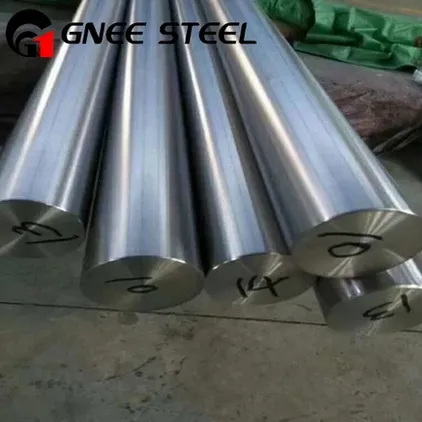
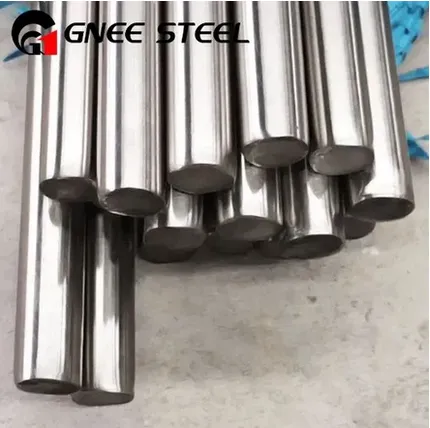
1. Q: What is Ti-6Al-4V ELI titanium alloy, and why is it the preferred material for medical implant applications?
A: Ti-6Al-4V ELI (Extra Low Interstitial) is a specifically engineered version of the standard Ti-6Al-4V titanium alloy, designed to meet the stringent requirements of medical implant applications. The "ELI" designation indicates tighter control over interstitial elements-particularly oxygen, nitrogen, carbon, and iron-resulting in enhanced ductility, fracture toughness, and fatigue performance compared to the standard aerospace-grade material.
The alloy composition consists of 5.5–6.5% aluminum (an alpha stabilizer) and 3.5–4.5% vanadium (a beta stabilizer), with oxygen content strictly limited to 0.13% maximum (compared to 0.20% for standard GR5). This reduced oxygen content yields a minimum tensile strength of approximately 860 MPa (125 ksi) with elongation of 10–15%, providing an optimal balance of strength and ductility for load-bearing implants.
Several factors make Ti-6Al-4V ELI the dominant material for permanent orthopedic implants:
Biocompatibility: Titanium and its alloys exhibit exceptional biocompatibility due to the formation of a stable, inert titanium dioxide (TiO₂) oxide layer on the surface. This layer prevents ion release into the body and promotes osseointegration-the direct structural and functional bonding between living bone and the implant surface. While vanadium in standard Ti-6Al-4V has raised some long-term biocompatibility concerns, the ELI version's reduced interstitial content and the development of alternative alloys (such as Ti-6Al-7Nb) have not displaced Ti-6Al-4V ELI as the industry standard due to its proven clinical track record spanning over three decades.
Mechanical Compatibility: Ti-6Al-4V ELI has an elastic modulus of approximately 110 GPa, significantly lower than stainless steel (200 GPa) or cobalt-chrome alloys (230 GPa) and much closer to human cortical bone (15–30 GPa). This reduced modulus minimizes stress shielding-the phenomenon where a stiff implant bears most of the load, causing adjacent bone to resorb due to lack of mechanical stimulation.
Fatigue Strength: Implants are subjected to millions of cyclic loading cycles during their service life. Ti-6Al-4V ELI exhibits exceptional fatigue strength, with an endurance limit of approximately 500–600 MPa at 10⁷ cycles, making it suitable for high-cycle applications such as hip stems, femoral components, and spinal rods.
Corrosion Resistance: The passive oxide film on Ti-6Al-4V ELI provides outstanding corrosion resistance in the physiological environment (body fluids containing chlorides, proteins, and varying pH levels). The alloy is immune to pitting and crevice corrosion in the body and exhibits minimal ion release.
For these reasons, Ti-6Al-4V ELI is specified under ASTM F136 (Standard Specification for Wrought Titanium-6Aluminum-4Vanadium ELI Alloy for Surgical Implant Applications) and is the material of choice for hip stems, knee components, spinal fixation devices, trauma plates, and dental implants.
2. Q: What are the critical differences between ASTM F136 and ASTM B348 for Ti-6Al-4V medical implant rods?
A: While both ASTM F136 and ASTM B348 cover Ti-6Al-4V alloy, they serve fundamentally different purposes and impose distinct requirements that reflect their respective application domains. Understanding these differences is essential for procurement and quality assurance in medical device manufacturing.
ASTM B348 is the standard specification for titanium and titanium alloy bars and billets for general industrial applications. It covers commercially pure grades (GR1–GR4) and alloy grades including GR5 (Ti-6Al-4V). This specification focuses on basic chemical composition, mechanical properties, and dimensional tolerances suitable for industrial applications such as chemical processing, marine, and aerospace non-critical components. It does not address the specific requirements for surgical implants.
ASTM F136, by contrast, is specifically developed for wrought Ti-6Al-4V ELI alloy intended for surgical implant applications. Key differences include:
Chemical Composition: ASTM F136 imposes significantly tighter limits on interstitial elements:
Oxygen: 0.13% maximum (versus 0.20% for ASTM B348 GR5)
Nitrogen: 0.05% maximum (versus 0.05%-similar, but with stricter lot control)
Carbon: 0.08% maximum (versus 0.10%)
Iron: 0.25% maximum (versus 0.40%)
Hydrogen: 0.012% maximum (versus 0.015%)
These tighter limits enhance ductility, fracture toughness, and fatigue performance-critical properties for load-bearing implants.
Microstructural Requirements: ASTM F136 mandates a specific microstructure: a fine, equiaxed alpha-beta structure with no continuous grain boundary alpha phase. This structure provides optimal fatigue strength and resistance to brittle fracture. ASTM B348 does not have explicit microstructural requirements for GR5.
Mechanical Testing: ASTM F136 requires more comprehensive mechanical testing, including:
Tensile testing with specific elongation requirements (minimum 10% in 4D)
Fatigue testing for certain applications
Hardness testing with specified ranges
Fracture toughness testing for critical applications
Quality System Requirements: Material supplied to ASTM F136 must be manufactured under a quality system compliant with ISO 13485 (Medical Devices) and often requires FDA Device Master File (DMF) documentation. ASTM B348 does not impose medical-specific quality requirements.
Traceability: ASTM F136 requires full lot traceability from the original ingot to the finished rod, with each piece individually marked with heat numbers and lot identification. This level of traceability is essential for medical device regulatory compliance but is not mandated by ASTM B348.
For medical implant applications, ASTM F136 (or its international equivalent, ISO 5832-3) is the mandatory specification, and material supplied to ASTM B348 is not acceptable.
3. Q: What are the critical manufacturing and quality control requirements for Ti-6Al-4V ELI round rods used in medical implants?
A: The manufacturing of Ti-6Al-4V ELI round rods for medical implant applications requires exceptional process control and quality assurance, reflecting the critical nature of implantable devices. Each stage of production must be validated and documented to ensure consistency and reliability.
Melting and Ingot Production: Medical-grade Ti-6Al-4V ELI must be melted using processes that ensure chemical homogeneity and freedom from inclusions. The industry standard is triple vacuum arc remelting (VAR) , a three-step process that progressively refines the material and eliminates high-density inclusions that could become fatigue crack initiation sites. Some manufacturers employ plasma arc melting (PAM) or electron beam melting (EBM) as alternative primary melting methods, followed by VAR. The melting process must be validated to produce a homogeneous distribution of aluminum and vanadium throughout the ingot.
Hot Working and Microstructural Control: The ingot undergoes hot forging or rolling within precisely controlled temperature ranges (typically 900–950°C) to develop the required fine, equiaxed alpha-beta microstructure. Temperature control is critical; working within the alpha-beta phase field ensures recrystallization to the desired grain structure. Deviations-such as excessive temperature leading to beta-phase working-can produce undesirable microstructures that compromise fatigue performance. Process validation and continuous monitoring are essential.
Annealing and Heat Treatment: Medical-grade rods are typically supplied in the annealed condition to ensure uniform properties. Annealing is performed at temperatures between 700°C and 760°C (1300–1400°F) under controlled atmospheres to prevent surface contamination. The heat treatment cycle must be validated to consistently produce the required microstructure and mechanical properties.
Finishing Operations: The finishing process is critical for medical implants, as surface condition directly affects fatigue life and biocompatibility:
Peeling or turning: Removes the alpha-case layer (oxygen-enriched surface) formed during hot working. This brittle layer must be completely eliminated to prevent surface-initiated cracks
Centerless grinding: Provides precise dimensional tolerances (typically ±0.025 mm or tighter) and fine surface finishes (32 µin Ra or better)
Surface inspection: 100% visual and dimensional inspection to detect surface defects such as laps, seams, scratches, or pits
Quality Control Requirements:
Chemical analysis: Verification of all elements per ASTM F136, with oxygen typically controlled to 0.12% maximum (tighter than the 0.13% specification limit)
Microstructural examination: Performed on representative samples to verify equiaxed alpha-beta structure with grain size meeting requirements (typically ASTM 6 or finer)
Mechanical testing: Tensile, yield, elongation, and reduction of area tested from each lot
Non-destructive testing: 100% ultrasonic testing for internal flaws; eddy current testing for surface defects
Traceability: Full lot traceability with individual bar marking (heat number, lot number, specification)
Bioburden and Cleanliness: Medical-grade rods are often supplied with specified cleanliness levels, including bioburden testing to confirm low microbial load. Packaging must protect the material from contamination during storage and transport.
4. Q: What are the typical medical implant applications for Ti-6Al-4V ELI round rods, and what drives material selection for each application?
A: Ti-6Al-4V ELI round rods serve as the raw material for a diverse range of orthopedic, spinal, and trauma implants. Each application leverages specific properties of the alloy to meet clinical requirements.
Orthopedic Hip and Knee Implants: Hip stems, femoral heads, and tibial components are machined from Ti-6Al-4V ELI rod. The material selection is driven by:
High fatigue strength: Hip stems experience millions of loading cycles; the alloy's endurance limit ensures long-term reliability
Modulus compatibility: The 110 GPa modulus reduces stress shielding compared to cobalt-chrome
Osseointegration capability: The surface can be treated (grit-blasted, plasma-sprayed, or porous-coated) to promote bone ingrowth
Corrosion resistance: Essential for long-term performance in the physiological environment
Spinal Fixation Devices: Pedicle screws, spinal rods, and interbody cages are manufactured from Ti-6Al-4V ELI rod. Key selection factors include:
Strength and stiffness balance: Spinal rods must provide stabilization while allowing controlled motion; the alloy's strength allows for smaller cross-sections
Fatigue performance: Spinal constructs are subjected to cyclic loading from patient movement
MRI compatibility: Titanium is non-ferromagnetic, allowing for magnetic resonance imaging post-surgery
Biocompatibility: Critical for long-term spinal implants
Trauma Fixation Devices: Plates, screws, and intramedullary nails for fracture fixation utilize Ti-6Al-4V ELI rod. Selection drivers include:
Strength-to-weight ratio: Allows for robust fixation without excessive implant bulk
Cold formability: The ELI version's enhanced ductility enables the forming of anatomically contoured plates
Corrosion resistance: Essential for temporary implants that may remain in situ indefinitely
Dental Implants: Dental abutments and implant fixtures are precision-machined from Ti-6Al-4V ELI rod. Critical factors include:
Precision machinability: Enables the tight tolerances required for abutment-implant interfaces
Surface treatment response: The alloy responds well to anodization and other surface treatments that enhance soft tissue attachment
Biocompatibility: Essential for direct bone contact and gingival interface
Surgical Instruments: Instrumentation used in orthopedic and spinal surgery is often manufactured from Ti-6Al-4V ELI rod. Selection factors include:
Wear resistance: The alloy provides good wear properties for reusable instruments
Sterilization compatibility: Withstands repeated autoclave sterilization without degradation
Light weight: Reduces surgeon fatigue during procedures
For each application, the specific grade (ASTM F136 ELI) is mandated, and the rod is typically supplied in the annealed condition with precise dimensional tolerances and surface finishes to enable efficient machining of complex implant geometries.
5. Q: What are the regulatory and documentation requirements for Ti-6Al-4V ELI round rods used in medical implants?
A: The supply chain for Ti-6Al-4V ELI medical implant rods operates under an exceptionally stringent regulatory framework that demands complete transparency, traceability, and quality assurance. Compliance with multiple international standards and regulatory requirements is mandatory for market access.
Material Specifications: Medical-grade Ti-6Al-4V ELI rods must conform to one of the recognized implant material specifications:
ASTM F136: Standard Specification for Wrought Titanium-6Aluminum-4Vanadium ELI Alloy for Surgical Implant Applications (primarily used in North America)
ISO 5832-3: Implants for Surgery - Metallic Materials - Part 3: Wrought Titanium 6-Aluminium 4-Vanadium Alloy (internationally recognized)
ASTM F620: Specification for Alpha Plus Beta Titanium Alloy Forgings for Surgical Implants (for forged components)
Quality Management Systems: The material supplier must maintain certifications that demonstrate robust quality systems:
ISO 13485:2016: Medical Devices - Quality Management Systems. This is the fundamental requirement for medical device material suppliers
FDA Registration: Suppliers must be registered with the U.S. Food and Drug Administration if supplying materials for devices marketed in the United States
Medical Device Single Audit Program (MDSAP): Increasingly required for suppliers serving multiple global markets (USA, Canada, Brazil, Australia, Japan)
Traceability Requirements: Full traceability from raw material to finished rod is mandatory:
Each rod must be individually marked with the heat number, lot number, and specification
The Mill Test Report (MTR) must document chemical analysis, mechanical properties, and microstructure for the specific heat
Traceability must extend to the original ingot and all subsequent processing steps
For critical applications, lot control ensures that components manufactured from the same rod lot can be tracked
Regulatory Submissions:
Device Master File (DMF): Material suppliers often maintain a DMF with the FDA, containing proprietary manufacturing information that device manufacturers can reference in their 510(k) or PMA submissions
Master Access File (MAF): Similar to DMF, used for submissions to other regulatory authorities
Biocompatibility Documentation: Suppliers must provide evidence of biocompatibility, typically through:
ISO 10993-5: Biological Evaluation of Medical Devices - Part 5: Tests for In Vitro Cytotoxicity
ISO 10993-10: Tests for Irritation and Skin Sensitization
Certification that materials are free from animal-derived components (if applicable)
Certified Test Reports: Each shipment must include a comprehensive MTR that includes:
Chemical composition with actual values for all elements
Mechanical properties (tensile, yield, elongation, reduction of area)
Microstructure description and grain size
Hardness values (if specified)
Non-destructive testing results (UT, eddy current)
Statement of compliance with applicable specifications
Lot traceability information
Third-Party Inspection: For critical applications, device manufacturers often require:
Third-party laboratory testing: Independent verification of chemistry and mechanical properties
Source inspection: Supplier's quality processes audited by the device manufacturer or their representative
Certified dimensional reports: Verification of rod dimensions and tolerances
Packaging and Labeling: Medical-grade rods require specialized packaging to maintain cleanliness and prevent damage:
Clean packaging with documented cleanliness levels
Bioburden testing for supplied cleanliness
Labels that remain legible through storage and manufacturing processes
Sterilization compatibility if supplied sterile
For any Ti-6Al-4V ELI rod intended for medical implant use, the documentation and quality requirements are not optional-they are fundamental to regulatory compliance and patient safety. Procurement must be conducted only from suppliers who maintain these certifications and can provide the required documentation for each shipment.