

The difference between nickel-based alloy 600 and 617 alloy plates
The difference between nickel-based alloy 600 and 617 alloy plates
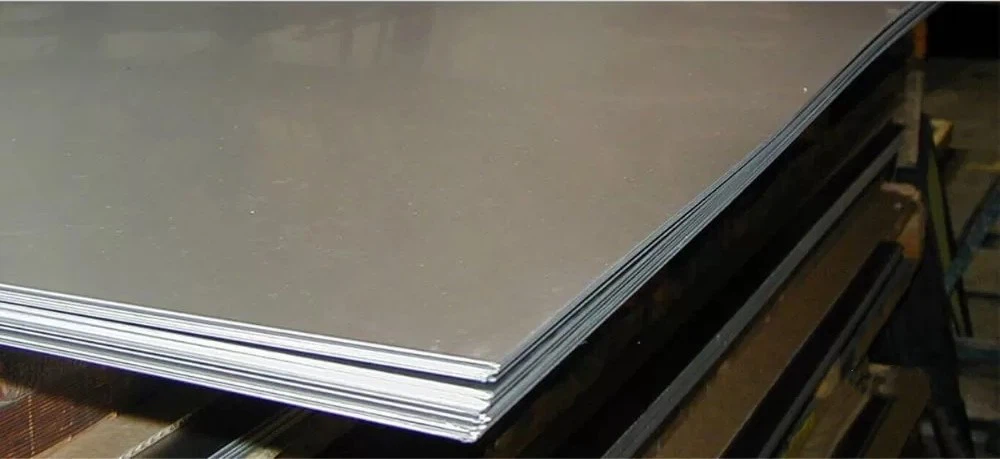
600 alloy plate is a nickel-chromium alloy, ideal for high-temperature oxidation/carburizing (with lower molybdenum/cobalt content). 617 alloy plate, however, contains significantly more cobalt, molybdenum, and aluminum, resulting in superior high-temperature strength, creep resistance, and better resistance to oxidation, carburizing, and sulfur. This makes it more suitable for extreme applications such as aerospace and gas turbines, where medium-thick plates are more focused on general high-temperature strength and resistance to chloride stress corrosion cracking. The main difference lies in the iron content: 600 thin plates contain more iron, while 617 alloy plates contain more chromium, molybdenum, cobalt, aluminum, and titanium, resulting in better performance.
What is Nickel Alloy 600?
Nickel Alloy 600, also sold under the brand name Inconel 600, is a unique nickel-chromium alloy renowned for its oxidation resistance at high temperatures. It has a wide range of applications, from low-temperature applications to high-temperature applications up to 2000°F (1093°C).

What is Alloy 600 Plate?
Nickel-based Alloy 600 plate is a nickel-chromium-iron alloy with good oxidation resistance, also known as UNS N06600 plate. Alloy 600 (UNS N06600/W.Nr. 2.4816) plate is a standard engineering material suitable for applications requiring corrosion and heat resistance. This alloy also has excellent mechanical properties, combining high strength and good machinability. Our Alloy 600 plates are manufactured strictly according to ASTM B168 standards. Alloy 600 is a nickel-chromium alloy widely used in various high-temperature applications, such as the aerospace and chemical industries.
What is Alloy 617 Plate?
Inconel 617 plate (UNS N06617/W.Nr. 2.4663a) is a solid solution strengthened nickel-chromium-cobalt-molybdenum alloy plate with excellent high-temperature strength and oxidation resistance. 617 Alloy plate also has excellent corrosion resistance and can be easily formed and welded using conventional processes.
Inconel 617 sheet metal can be machined using the same conventional methods as iron-based alloys. Commercial coolants are typically used for machining operations. For high-speed machining, such as grinding, milling, or turning, water-based coolants are used. Welding methods for nickel-based alloy 617 sheet metal include tungsten inert gas (TIG) welding, manual arc welding, gas shielded metal arc welding (GSMA), and submerged arc welding (SAW).
Chemical Composition Comparison: Inconel 600 vs. Inconel 617
| Element (% by weight) | Inconel 600 (Plate, Sheet, Coil) | Inconel 617 |
|---|---|---|
| C | 0.15 max | – |
| Mn | 1.00 max | – |
| Si | 0.50 max | ≤ 0.50 (typical; range incomplete) |
| S | 0.015 max | – |
| Cu | 0.50 max | – |
| Fe | 6.00 - 10.00 | ≤ 3.0 (typical) |
| Ni | 72.00 min | 44.5 min |
| Cr | 14.00 - 17.00 | 20.0 - 24.0 |
| Co | – | 10.0 - 15.0 |
| Mo | – | 8.0 - 10.0 |
| Al | – | 0.8 - 1.5 |
| Ti | – | ≤ 0.6 |
| B | – | ≤ 0.006 |
Mechanical properties of Alloy 600 sheet and Inconel 617 sheet
Alloy 600 Sheets Mechanical Properties
| Element | Density | Melting Point | Tensile Strength | Yield Strength (0.2%Offset) | Elongation |
| Inconel 600 Plate | 8.47 g/cm3 | 1413 °C (2580 °F) | Psi – 95,000 , MPa – 655 | Psi – 45,000 , MPa – 310 | 40 % |
Inconel 617 Sheet Mechanical Properties
|
Density |
Melting Point |
Tensile Strength |
Yield Strength (0.2%Offset) |
Elongation |
|
8.3g/cm³ |
1363°C |
≥ 485 MPa |
≥ 275 MPa |
25 % |
Inconel 600 Alloy Plate
Composition: High nickel, chromium (14-17%), high iron (6-10%), low carbon/other elements.
Key Advantages: Excellent resistance to high-temperature oxidation, carburization, and chloride stress corrosion cracking (SCC).
Optimal Applications: Furnaces, heat treatment, chemical processing, and applications requiring strength at high temperatures without the extreme conditions of Alloy 617.
Inconel 617 Alloy Plate
Composition: Nickel, chromium (20-24%), high cobalt (12-15%), molybdenum (8-10%), titanium, aluminum.
Key Advantages: Excellent high-temperature strength, creep resistance, and corrosion/oxidation resistance (even better than Alloy 600).
Best for: Aerospace (jet engines), gas turbines, high-temperature heat exchangers, and high-performance nuclear applications.
Overview of Key Differences Between Inconel 600 and Nickel 617 Steel Plates
Alloying Elements: 617 steel plate contains cobalt (Co), molybdenum (Mo), and titanium (Ti), giving it significantly superior high-temperature performance compared to 600 steel plate.
Properties: Compared to 600 steel plate, 617 steel plate exhibits superior strength, creep resistance, and corrosion resistance at extreme temperatures.
Applications: 600 steel plate is suitable for general high-temperature environments; 617 steel plate is suitable for the most demanding, high-stress, and high-temperature aerospace/energy applications.
Why Choose Gnee as Your Nickel-Based Alloy Supplier
✅ Over 18 years of export experience, products sold to more than 80 countries
✅ Certified by ISO, SGS, and BV
✅ Global inventory of Inconel, Hastelloy, Incoloy, and Monel alloy tubing, plates, and bars
✅ Custom processing services available – including cutting, polishing, CNC machining, and packaging
✅ Fast delivery within 7-15 days, supported by global logistics partners
📦 Packaging and Shipping
All stainless steel products are packaged using the following methods:
Wooden pallets or crates
Moisture-proof packaging
Labels with furnace number, standard, and size labels
Shipped worldwide by sea, air, or express
Gnee Steel also supplies custom Inconel 600 products in various sizes and specifications. Please send us your drawings for a quote!


