Tungsten alloys are renowned for their exceptional mechanical properties, which make them indispensable in a wide range of high - performance applications. As a tungsten alloy supplier, I have witnessed firsthand the critical role that temperature plays in altering these properties. In this blog, we'll delve into how the mechanical properties of tungsten alloy change with temperature and why this knowledge is crucial for various industries.
Understanding Tungsten Alloys
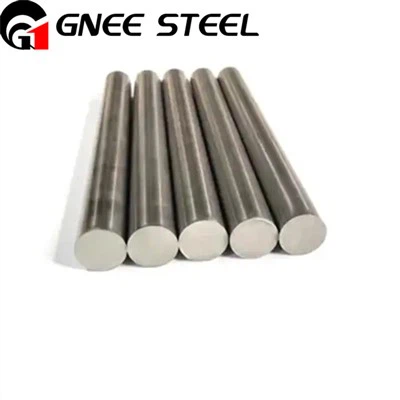
Tungsten alloys are combinations of tungsten with other metals such as nickel, iron, copper, or cobalt. These alloys inherit many of tungsten's remarkable characteristics, including high density, high melting point, excellent hardness, and good corrosion resistance. Tungsten alloys are used in numerous fields, from aerospace and defense to electrical and medical industries. For instance, Tungsten Alloy Round Bars are often employed in high - precision machining due to their consistent mechanical properties.
Room Temperature Mechanical Properties
At room temperature, tungsten alloys exhibit outstanding strength and hardness. The high density of tungsten alloys gives them excellent inertia, which is beneficial in applications where mass is a critical factor, like counterweights and kinetic energy penetrators. The alloy's hardness makes it resistant to wear and deformation, allowing it to maintain its shape and performance over long periods.
The tensile strength of tungsten alloys at room temperature is typically very high. For example, some high - quality tungsten alloys can have a tensile strength of over 1000 MPa. This high strength enables the alloys to withstand significant pulling forces without breaking, making them suitable for structural components in demanding environments.
Effect of Increasing Temperature on Mechanical Properties
Strength and Hardness
As the temperature rises, the strength and hardness of tungsten alloys gradually decrease. This is because at higher temperatures, the atoms in the alloy gain more energy and become more mobile. The increased atomic mobility allows for easier dislocation movement within the crystal lattice of the alloy. Dislocations are line defects in the crystal structure, and their movement is responsible for plastic deformation.
At relatively low elevated temperatures (up to about 500 - 600°C), the decrease in strength and hardness is relatively modest. However, as the temperature approaches the recrystallization temperature of the alloy, which can be around 1000 - 1200°C for some tungsten alloys, the strength and hardness drop more significantly. Recrystallization is a process where new strain - free grains form in the deformed material, replacing the existing deformed grains. This new grain structure is generally softer and weaker than the original deformed structure.
Ductility
Ductility is the ability of a material to deform plastically before fracturing. At room temperature, tungsten alloys are often relatively brittle, especially those with a high tungsten content. However, as the temperature increases, the ductility of tungsten alloys generally improves. The increased atomic mobility at higher temperatures allows for more plastic deformation to occur before the material fractures.
At elevated temperatures, the alloy can undergo processes such as creep, which is a time - dependent deformation under a constant load. Creep becomes more significant as the temperature rises. In applications where long - term stability under load is required, such as in high - temperature furnace components, the creep behavior of tungsten alloys at elevated temperatures must be carefully considered.
Thermal Expansion
Tungsten alloys have a relatively low coefficient of thermal expansion compared to many other metals. This means that they expand less when heated. However, as the temperature increases, the thermal expansion of tungsten alloys still occurs. The change in dimensions due to thermal expansion can be a critical factor in applications where precise dimensional control is required, such as in optical components or high - precision machining.
Impact of Different Alloy Compositions
The mechanical properties of tungsten alloys and their response to temperature changes can vary depending on the alloy composition. For example, CuW 65 Tungsten Alloy, which contains 65% tungsten and 35% copper, has different temperature - dependent properties compared to a tungsten - nickel - iron alloy.
Copper has a relatively high thermal conductivity compared to tungsten. So, CuW 65 Tungsten Alloy has better thermal conductivity than some other tungsten alloys. This can affect its heat dissipation ability and, in turn, its mechanical behavior at high temperatures. The presence of copper also makes the alloy more ductile at room temperature compared to pure tungsten or some high - tungsten - content alloys.
On the other hand, alloys with nickel and iron as alloying elements often have good strength and toughness at room temperature. However, their response to high temperatures may be different from copper - containing alloys. For example, they may have a different recrystallization temperature and creep behavior.
Applications and Temperature Considerations
Aerospace and Defense
In aerospace applications, tungsten alloys are used in components such as turbine blades and rocket nozzles. These components are exposed to extremely high temperatures during operation. Understanding how the mechanical properties of tungsten alloys change with temperature is crucial for ensuring the safety and performance of these components.
For example, in a turbine engine, the blades are subjected to high - temperature gases and rotational forces. The decrease in strength and hardness of the tungsten alloy at high temperatures must be accounted for in the design to prevent blade failure. Similarly, in rocket nozzles, the alloy must be able to withstand the high - temperature exhaust gases without significant deformation or erosion.
Electrical and Electronics
In the electrical and electronics industry, ASTM B777 Class 3 Tungsten Plate is often used in applications such as electrical contacts and heat sinks. Electrical contacts need to maintain good conductivity and mechanical stability over a range of temperatures. As the temperature increases, the change in the mechanical properties of the tungsten alloy can affect the contact resistance and the reliability of the electrical connection.
Heat sinks are used to dissipate heat from electronic components. The thermal expansion of the tungsten alloy used in heat sinks must be compatible with the other materials in the electronic device to prevent thermal stress and potential damage to the components.


Importance for Our Customers
As a tungsten alloy supplier, understanding the temperature - dependent mechanical properties of our products is essential for providing the best solutions to our customers. We can help our customers select the most appropriate tungsten alloy for their specific applications based on the temperature conditions they will encounter.
Whether it's a high - temperature aerospace application or a precision electrical component, we can offer expert advice on alloy composition, heat treatment, and design considerations to ensure optimal performance. By considering the temperature - related changes in mechanical properties, we can help our customers avoid costly failures and ensure the long - term reliability of their products.
Conclusion
The mechanical properties of tungsten alloys are significantly influenced by temperature. From the initial high strength and hardness at room temperature to the changes in strength, ductility, and thermal expansion at elevated temperatures, these changes have a profound impact on the performance of tungsten alloy components in various applications.
As a tungsten alloy supplier, we are committed to providing high - quality products and in - depth technical support. If you are involved in an industry that requires tungsten alloys and have questions about how temperature affects their performance, or if you are looking to source the right tungsten alloy for your application, we encourage you to contact us for a detailed discussion. Our team of experts is ready to assist you in making the best choices for your specific needs.
References
- ASM Handbook Volume 2: Properties and Selection: Nonferrous Alloys and Special - Purpose Materials.
- Tungsten: Properties, Chemistry, Technology of the Element, Alloys, and Chemical Compounds by R. Kieffer and F. Benesovsky.
- "Mechanical Properties of Tungsten Alloys at Elevated Temperatures" - Journal of Materials Science and Engineering.