


A Customized Pipe Fabrication Case for a South Korean Laboratory and Industrial Equipment Manufacturer
Custom Monel 400 tube fabrication often involves more than supplying seamless tubes according to standard dimensions. Some industrial equipment projects require customized internal structures, welded flange connections, specific surface finishes and strict quality inspection requirements. These additional requirements can create challenges in manufacturing feasibility, welding accessibility, production costs and delivery schedules.
Recently, GNEE received a custom Monel 400 seamless tube inquiry from a laboratory and industrial equipment manufacturer in South Korea. The customer initially requested two different tube sizes, each with flanges at both ends and square baffles welded inside the tube. After reviewing the technical drawings and discussing the manufacturing requirements with our factory, we identified that the internal baffle welding operation would be difficult to perform because the available welding equipment could not reach the required positions inside the tubes. This process would also involve additional manufacturing costs.
After communicating the manufacturing limitations to the customer, we discussed an adjusted fabrication plan that removed the internal baffles while retaining the Monel 400 seamless tube body and welded flange connections at both ends. The customer accepted the revised arrangement and proceeded with the order.
This project demonstrates how technical communication, drawing review and manufacturing feasibility assessment can help customers find practical solutions for customized Monel 400 tube assemblies.
1. Customer Background and Initial Procurement Requirements
The customer was a laboratory and industrial equipment manufacturer based in South Korea. The company needed customized Monel 400 seamless tubes for an equipment project and was looking for a supplier capable of meeting both material and fabrication requirements.
Unlike conventional seamless tube procurement, this project involved special structural components and additional welding operations.
During the initial inquiry, the customer requested confirmation of four main purchasing requirements:
Unit Price: Individual product pricing and total order value.
Delivery Time: Estimated production and delivery schedule.
Applicable Standards: Confirmation of ASTM B165 / ASME SB165 requirements.
Material Certification: Availability of a Material Test Certificate (MTC).
The customer also provided detailed dimensional specifications and flange requirements for two different Monel 400 tube assemblies.
Initial Monel 400 Tube Specifications
| Item | Tube 1 | Tube 2 |
|---|---|---|
| Material | Monel 400 / UNS N04400 | Monel 400 / UNS N04400 |
| Product Type | Seamless Tube | Seamless Tube |
| Nominal Size | 150A | 250A |
| Outside Diameter | 165.2 mm | 267.4 mm |
| Wall Thickness | 5.0 mm | 6.5 mm |
| Length | 3,500 mm | 3,500 mm |
| Quantity | 1 piece | 1 piece |
| End Flanges | 150A, 2 pcs | 250A, 2 pcs |
| Requested Standard | ASTM B165 / ASME SB165 | ASTM B165 / ASME SB165 |
The customer required two different tube assemblies, each measuring 3,500 mm in length, with two corresponding flanges.
In addition to these basic specifications, the original design included square baffles welded inside the tubes. This internal structure became the main technical challenge during the manufacturing assessment.
2. Original Design: Internal Baffle Welding and End Flange Connections
According to the customer's original technical drawings, the Monel 400 seamless tubes were required to have internal square baffles as well as welded flanges at both ends.
The drawing showed multiple internal baffle positions along the tube body, with the baffle arrangement specified as part of the original fabrication design.
This was not a standard tube welding operation. It required additional welding work inside the tube, where equipment accessibility and internal positioning could affect the manufacturing process.
The original fabrication requirements included two separate operations:
1. Internal Square Baffle Welding
Square baffles needed to be installed and welded inside the Monel 400 seamless tube according to the customer's drawing.

Original Customer Drawing: Square Baffle Welded Inside Seamless Pipe
2. End Flange Welding
Flanges needed to be welded at both ends of each tube to complete the required connection structure.
Although both operations involved welding, their manufacturing difficulties were significantly different.
The end flange welding positions were externally accessible, while the internal baffle welding required equipment to reach designated positions inside the tube.
Before accepting the original design for production, we needed to confirm whether the internal welding operation could be completed using the available factory equipment.
3. Manufacturing Challenge: Why Internal Baffle Welding Was Difficult
After receiving the drawings, we communicated with our factory and production technicians to evaluate the feasibility of the original fabrication requirements.
The assessment identified one major limitation: the available welding equipment and welding torch could not extend sufficiently into the tube to reach the required internal baffle positions.
This created a practical obstacle to completing the original design.
Limited Welding Equipment Accessibility
Unlike external flange welding, internal baffle welding requires welding equipment to enter the tube and reach specific positions along its internal surface.
For the two specified tube sizes, the available equipment could not provide the required access to complete the internal welding operation under the existing manufacturing conditions.
Simply having the correct material and tube dimensions was therefore not enough to guarantee that the original structure could be manufactured.
Additional Manufacturing Complexity
The original drawing required the square baffles to be positioned and welded inside the tube.
This would require a suitable internal welding arrangement, positioning methods and additional manufacturing procedures.
Without appropriate equipment access, completing the required welds consistently would be difficult.
Higher Fabrication Costs
Even if additional equipment or alternative manufacturing arrangements were considered, the internal welding operation would introduce extra costs.
For this particular order, the technical assessment indicated that implementing the original design would be difficult and economically impractical under the available production conditions.
Rather than promising a manufacturing process that could not be reliably supported, we decided to explain the limitations to the customer and discuss an alternative solution.
4. How We Adjusted the Monel 400 Tube Fabrication Solution
After identifying the internal welding difficulties, we communicated with the customer and explained the actual manufacturing limitations.
Our objective was to find a practical fabrication arrangement that the factory could manufacture and the customer could approve.
The adjustment involved three main steps.
Step 1: Reviewing the Original Technical Drawings
We first reviewed the customer's drawings and separated the main product requirements from the additional fabrication operations.
The main requirements included:
Monel 400 seamless tube material.
Two different tube dimensions.
Customized tube lengths.
Flanges welded at both ends.
Internal square baffle welding.
This review helped identify which manufacturing operations were feasible under the existing conditions and which required further discussion.
Step 2: Explaining the Internal Welding Limitations
After communicating with the factory, we confirmed that the available welding equipment could not reach the required internal baffle welding positions.
We explained this issue to the customer rather than simply rejecting the entire order.
We also discussed the additional manufacturing costs associated with finding alternative equipment or manufacturing methods for the internal welding operation.
This allowed the customer to understand the difference between the original design requirements and the actual manufacturing conditions.
Step 3: Proposing End Flange Welding Only
After technical communication, the fabrication arrangement was adjusted.
The revised solution retained the main Monel 400 seamless tube and the flange connections at both ends while removing the internal square baffles.
The final agreed fabrication requirements were:
Use Monel 400 / UNS N04400 seamless tubes.
Maintain the specified outside diameters and wall thicknesses.
Supply tubes in the required 3,500 mm lengths.
Weld two corresponding flanges at both ends of each tube.
Eliminate the original internal baffle welding operation.
After reviewing the revised arrangement, the customer accepted the adjustment and proceeded with the order.
The key to this project was not simply changing the original drawing. It was identifying the manufacturing difficulty early, communicating it clearly and reaching an agreed alternative before production.
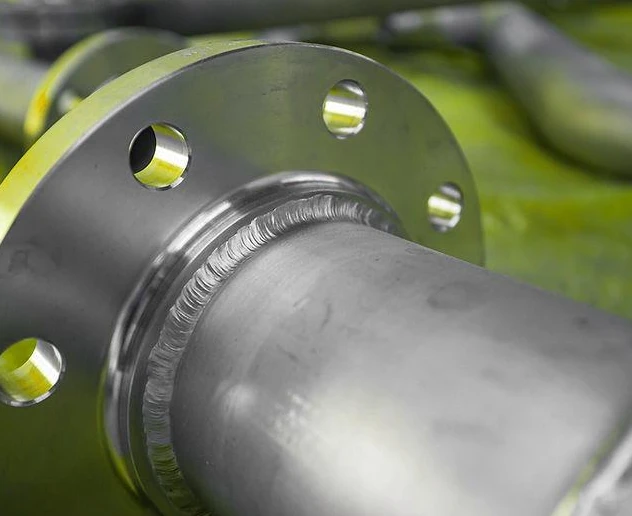
5. Original Design vs. Final Fabrication Arrangement
The following comparison summarizes the main changes made during the technical discussion.
| Fabrication Item | Original Design | Final Agreed Solution |
|---|---|---|
| Main Material | Monel 400 | Monel 400 |
| Product Form | Seamless Tube | Seamless Tube |
| Tube Dimensions | Customer specifications | Customer specifications |
| Internal Structure | Square baffles inside the tube | No internal baffles |
| Internal Welding | Required | Removed |
| End Connections | Two welded flanges | Two welded flanges |
| Fabrication Focus | Internal baffle and flange welding | End flange welding |
| Production Arrangement | Difficult under available equipment conditions | Revised and customer-approved |
The revised arrangement simplified the manufacturing process by eliminating the internal welding operation while retaining the specified tube dimensions and end flange connections.
For customized alloy tube projects, this case highlights an important consideration: manufacturing feasibility should be evaluated before the final production arrangement is confirmed.
Any change to an original engineering drawing must be reviewed and approved by the customer's engineering team to ensure that the revised structure remains suitable for the intended equipment function.
6. Customer's Strict Welding and Surface Finish Requirements
Apart from the structural design, the South Korean customer also provided detailed requirements for welding quality, surface appearance and product inspection.
These requirements were an important part of the procurement specification.
The customer did not simply request that the flanges be attached to the tube. The welded areas and overall tube appearance also needed to meet specific quality expectations.
Same-Material Welding Filler
The customer specified Monel 400 welding filler material matching the base alloy requirements.
Using the specified compatible filler material was part of the customer's welding requirements and needed to be confirmed before fabrication.
Uniform and Smooth Weld Seams
The customer required the weld seams to be:
Uniform and continuous in appearance.
Flat and smooth.
Visually neat and consistent.
Free from visible leakage or unacceptable welding defects.
The welded areas also needed to be ground and polished after welding.
Bright and Clean Surface Finish
The customer requested a bright and clean appearance for the entire tube assembly, including the tube body, flanges and welded areas.
After welding, the weld areas needed grinding and polishing to achieve a smooth surface finish consistent with the customer's requirements.
Straight Tubes Without Visible Surface Defects
The customer also specified that the tubes should remain straight and free from visible defects affecting appearance and quality.
The main requirements included:
No visible stains.
No scratches.
No inclusions or foreign material affecting the surface.
No unacceptable surface irregularities.
A clean and consistent overall appearance.
These requirements show that customized Monel 400 tube procurement may involve strict expectations for both manufacturing accuracy and finished product appearance.
7. Airtightness Testing and Pre-Shipment Quality Inspection
One of the most important requirements in this project was airtightness.
The customer specified that the completed tube assemblies needed to pass an airtightness test and be suitable for vacuum service.
This meant that the quality requirements extended beyond dimensional accuracy and visual appearance.
The main inspection and acceptance requirements included:
| Inspection Item | Customer Requirement |
|---|---|
| Material Verification | Monel 400 / UNS N04400 |
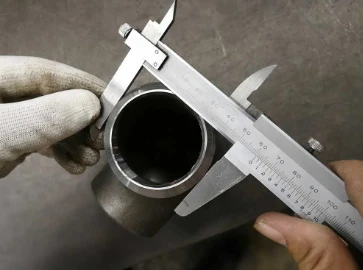
| Dimensional Inspection | Verify tube dimensions against the approved drawings |
| Weld Appearance | Uniform, smooth and visually acceptable weld seams |
| Surface Finish | Grinding and polishing after welding |
| Straightness | Tubes must remain straight |
| Surface Quality | No unacceptable stains, scratches or inclusions |
| Airtightness | Pass the specified airtightness test |
| Documentation | Material Test Certificate (MTC) |
| Inspection Records | Dimensional inspection report requested |
| Pre-Shipment Evidence | Inspection photographs and videos requested |
The customer specifically emphasized careful quality inspection before shipment.
They also requested that production follow the confirmed drawings and that photographs and videos be provided to demonstrate the manufacturing and inspection results.
For the material documentation, the customer requested an MTC before shipment. The dimensional inspection report was also raised as a separate documentation requirement.
It is important to distinguish material certification from dimensional inspection: an MTC documents material test information, while a dimensional inspection report records the measured product dimensions.
For vacuum-service applications, the airtightness test method and acceptance criteria should also be confirmed in the technical specification before inspection.
8. Applicable Standards and Material Documentation
The customer initially requested confirmation of ASTM B165 / ASME SB165 as the applicable product standard.
Monel 400 is a nickel-copper alloy identified by UNS N04400. It is commonly selected for industrial applications requiring corrosion resistance in various service environments.
ASTM B165 is a relevant specification covering seamless nickel-copper alloy pipe and tube products. ASME SB165 is the corresponding ASME material specification reference.
For this type of customized tube assembly, buyers should distinguish between material standard compliance and additional fabrication requirements.
The material standard defines applicable product and material requirements, while the approved drawings and purchase specifications define additional requirements such as:
Tube dimensions and lengths.
Flange dimensions and connection details.
Welding procedures and filler material.
Surface finishing requirements.
Airtightness testing.
Inspection and documentation.
The customer also requested an MTC to verify the supplied material information.
For customized Monel 400 tube orders, confirming these requirements before production helps ensure that both the material supply and additional fabrication work are clearly defined.
9. Why Technical Communication Matters in Custom Monel 400 Tube Fabrication
This South Korean order demonstrates that customized alloy tube procurement requires more than material availability.
When a project involves internal structures, welded connections and strict inspection requirements, buyers need a supplier who can communicate with manufacturing teams and evaluate the practical feasibility of the proposed design.
At GNEE, we focus on three important aspects when handling customized nickel alloy tube inquiries.
Manufacturing Feasibility Assessment
We review customer drawings and fabrication requirements and communicate with production technicians to identify potential manufacturing limitations before production begins.
Customized Fabrication Discussions
For special requirements such as welded flanges, internal components and customized tube configurations, we discuss the available manufacturing options with customers and help clarify the production requirements.
Quality and Documentation Requirements
We pay attention to customer-specific requirements involving welding appearance, surface finishing, dimensional inspection, material certification and additional testing.
By addressing these issues during the quotation and technical confirmation stages, both parties can establish a clearer manufacturing arrangement before the order enters production.
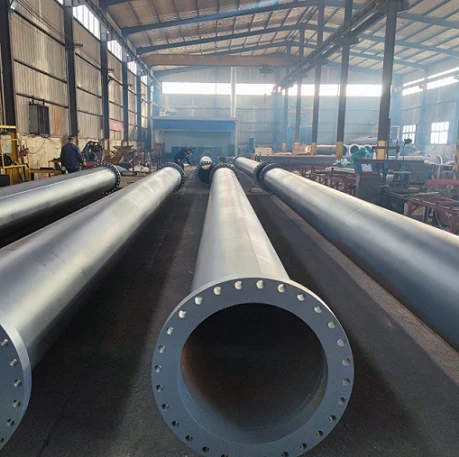
Final Product Photo of Monel 400 Pipe End Welded Flanges
10. Looking for a Custom Monel 400 Tube Supplier?
Are you sourcing Monel 400 seamless tubes with welded end flanges, customized dimensions or special fabrication requirements?
Whether your project involves standard seamless tubes or customized tube assemblies, confirming the material grade, dimensions, welding requirements and inspection criteria at the beginning of the project is essential.
GNEE welcomes inquiries from international buyers looking for Monel 400 tubes and customized nickel alloy products.
To help us evaluate your project and prepare an accurate quotation, please provide:
Material Grade: Monel 400 / UNS N04400.
Applicable Standard: ASTM B165 / ASME SB165 or your specified product standard.
Tube Dimensions: Outside diameter, wall thickness and required length.
Flange Details: Nominal size, dimensions and connection requirements.
Fabrication Requirements: Welding details, internal structures and surface finishing.
Quality Requirements: Airtightness testing, dimensional inspection and other specified tests.
Documentation: MTC and required inspection reports.
Order Quantity: Required quantity and delivery destination.
Technical Drawings: Approved drawings or sketches showing the required configuration.
Send us your Monel 400 tube specifications or technical drawings. Our team can review the material and fabrication requirements, discuss manufacturing feasibility and provide a quotation based on your project needs.
Contact GNEE today for a customized Monel 400 tube quotation and fabrication consultation.



