

Material density of inconel 600
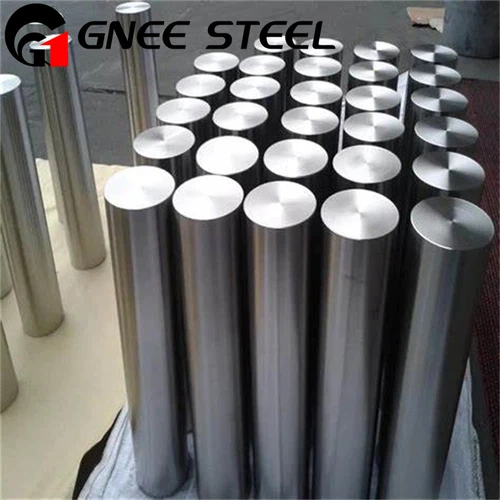
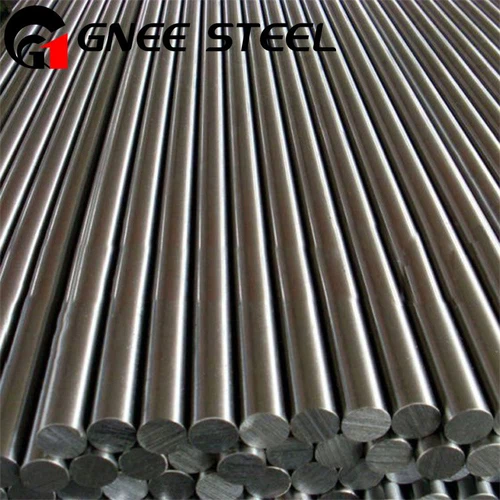
Inconel 600 is a nickel-chromium-iron alloy with excellent corrosion resistance, high temperature strength and oxidation resistance. It is widely used in chemical, aerospace, nuclear industry and other fields. Its density, as one of the basic physical properties of the material, directly affects the design, manufacturing and application performance of the product. This article will elaborate on the density characteristics of Inconel 600, influencing factors, comparison with other materials and considerations in practical applications.
1. Density characteristics of Inconel 600
The density of Inconel 600 is usually around 8.47 g/cm³, which is between ordinary stainless steel (about 7.9 g/cm³) and pure nickel (8.9 g/cm³). As a nickel-based alloy, its high density is mainly due to the high atomic mass of nickel (accounting for about 72%), while the addition of chromium (14-17%) and iron (6-10%) further adjusts the comprehensive performance and density of the material. It is worth noting that the density will fluctuate slightly due to the production process (such as casting, forging or rolling) and the heat treatment state (annealing or cold working), but it is generally controlled within the range of ±0.05 g/cm³.
2. Factors affecting density
1. Chemical composition: A slight change in the nickel content will directly affect the density. For example, a 1% increase in nickel content may increase the density by about 0.03 g/cm³. In addition, trace elements that may exist in the alloy (such as copper and manganese) will also have a slight effect on the density.
2. Processing technology: Cold working may cause lattice distortion and slightly increase the material density; while annealing will restore the lattice integrity and make the density approach the theoretical value.
3. Temperature change: Inconel 600 will increase in volume due to thermal expansion at high temperatures (such as 1000°C), and the density will decrease by about 3-5%, but it will remain stable at room temperature.
3. Density comparison with other materials
Compared with stainless steel: The density of 304 stainless steel is 7.93 g/cm³, which is about 6.4% lower than that of Inconel 600. This means that for the same volume, Inconel 600 parts are heavier but stronger.
Compared with titanium alloy: The density of titanium alloy (such as Ti-6Al-4V) is only 4.43 g/cm³, which is more suitable for weight-sensitive aviation structural parts, but its high temperature resistance is not as good as Inconel 600.
Compared with Hastelloy alloy: The density of Hastelloy alloy C-276 is 8.89 g/cm³, slightly higher than Inconel 600, but the two have different focuses on corrosion resistance.
4. Considerations of density in practical applications
1. Structural design: In aviation engine components, high density means that weight needs to be reduced by optimizing the structure (such as hollow design) while taking advantage of its high temperature strength advantages.
2. Cost control: Fluctuations in nickel prices directly affect material costs. High density leads to an increase in the cost of raw materials per unit weight, and materials need to be accurately calculated.
3. Adaptation to the corrosive environment: In chemical equipment, despite its high density, its resistance to chloride ion stress corrosion (better than 304 stainless steel) is often the key to selection.
4. Processing performance: The high hardness brought by high density will increase the wear of cutting tools. It is recommended to use low-speed and high-feed processing parameters and use tungsten carbide tools.
5. Density performance of special forms
Powder metallurgy products: Inconel 600 parts formed by sintering may have a porosity of 3-5%, and the density can be reduced to 8.0-8.2 g/cm³.
Composite materials: After compounding with ceramic fibers, the density can be reduced to less than 7.5 g/cm³, while maintaining more than 80% of the matrix strength.
6. Future development trends
With the popularization of 3D printing technology, Inconel 600 parts designed by topological optimization can reduce the amount of material while maintaining functionality, indirectly reducing the impact of density on total weight. For example, GE Aviation has successfully reduced the density-related weight of fuel nozzles by 25%, while improving fatigue resistance.
In summary, the density of Inconel 600 is an important indicator of its material properties and needs to be comprehensively evaluated in combination with specific application scenarios. In harsh environments such as high temperature and strong corrosion, the weight disadvantage brought by its density is often offset by its excellent performance, and modern manufacturing technology is constantly breaking through traditional density limitations and expanding its application boundaries.


