


In high-temperature engineering, "heat resistance" is a continuous spectrum. For purchasing managers and thermal designers, the most challenging issue is material softening (overaging).
The Pitfalls of GH3030: Many engineers default to GH3030 (equivalent to Nimonic 75) due to its excellent oxidation resistance. However, GH3030 is a solid solution-strengthened alloy. Once the temperature exceeds 800°C (1472°F), it reaches its metallurgical limit. The metal begins to "stretch" under stress, causing furnace components to sag and engine parts to deform.
The Solution for GH4141: When your application reaches temperatures of 870°C (1600°F) under load, you need the precipitation hardening properties of GH4141 (equivalent to Rene 41). It maintains structural rigidity while other materials become ductile.
At Gnee Alloy, we help you overcome thermal barriers with certified superalloy solutions tailored to your specific operating environment.
Click to get a GH3030 product quote
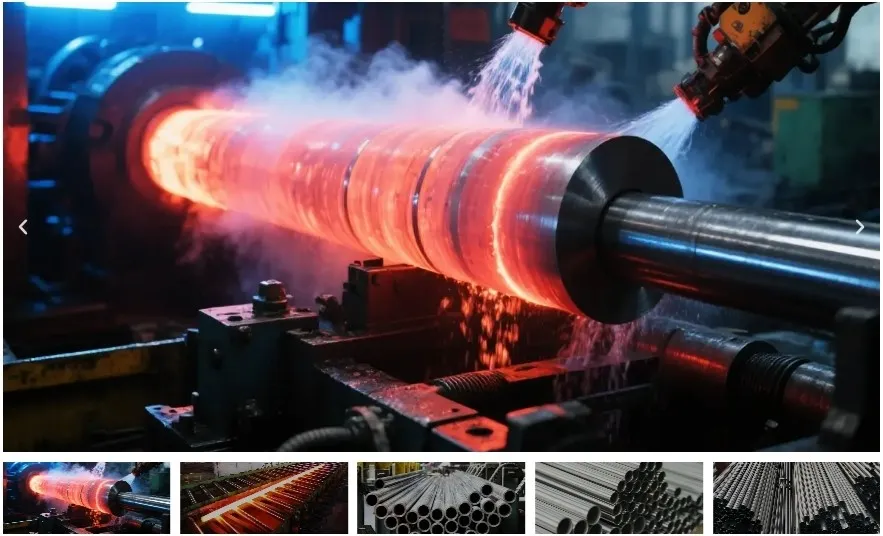
GH3030 vs. GH4141 (Rene 41): How to Choose
For general high-temperature applications with temperatures up to 900°C, choose GH3030 if excellent corrosion resistance and ease of processing are required. For extremely high-stress aerospace environments, choose GH4141 (René 41) if ultra-high yield strength is required in a temperature range of 650°C to 980°C.
What is GH3030 material?
GH3030 is a high-temperature nickel-based alloy, renowned for its excellent oxidation resistance, good thermal stability, and high-strength mechanical properties at high temperatures.
1. Overview of GH3030 and GH4141 alloy
| Parameter | GH3030 | GH4141 |
|---|---|---|
| Material Type | Wrought Nickel-based Superalloy | Wrought Nickel-based Superalloy |
| International Equivalent | – | Waspaloy |
| Strengthening Mechanism | Solid-solution strengthening (Cr + trace Ti) | Precipitation hardening (γ′) |
| Product Forms | Bar, plate, tube, strip, wire | Bar, forging, plate, ring |
| Typical Applications | Combustion chambers, furnace components, high-temperature tubing | Turbine discs, turbine blades, high-temperature fasteners, gas turbine components |
| Maximum Service Temperature (Load-Bearing) | ~800°C | ~750 – 815°C |
2. Comparison of chemical composition of GH3030 and GH4141 (wt%)
| Element | GH3030 | GH4141 (Waspaloy) | Key Difference |
|---|---|---|---|
| Nickel (Ni) | Balance (≥ 75.0) | Balance (~55-60) | GH3030 has higher Ni |
| Cobalt (Co) | – | 10.0 – 15.0 | GH4141 contains significant Co |
| Chromium (Cr) | 19.0 – 22.0 | 18.0 – 21.0 | Similar |
| Molybdenum (Mo) | – | 3.50 – 5.00 | GH4141 contains Mo |
| Titanium (Ti) | 0.15 – 0.35 | 2.75 – 3.25 | GH4141 has much higher Ti |
| Aluminum (Al) | ≤ 0.15 | 1.20 – 1.60 | GH4141 contains Al |
| Iron (Fe) | ≤ 1.5 | ≤ 2.0 | Similar |
| Carbon (C) | ≤ 0.12 | 0.02 – 0.10 | Similar |
| Boron (B) | – | 0.003 – 0.010 | GH4141 contains B |
| Zirconium (Zr) | – | 0.02 – 0.12 | GH4141 contains Zr |
| Manganese (Mn) | ≤ 0.70 | ≤ 0.10 | GH3030 higher |
| Silicon (Si) | ≤ 0.80 | ≤ 0.15 | GH3030 higher |
| Phosphorus (P) | ≤ 0.030 | ≤ 0.015 | – |
| Sulfur (S) | ≤ 0.020 | ≤ 0.015 | – |
| Copper (Cu) | ≤ 0.20 | ≤ 0.10 | – |
Click to download the GH3030 alloy PDF file now
3. Performance of GH3030 and GH4141 at temperature limits
| Technical Feature | GH3030 (The Standard) | GH4141 (The Upgrade) | Commercial Impact |
| Strengthening Method | Solid Solution (Ni-Cr-Ti) | Precipitation (Al-Ti-Co) | GH4141 is much "stiffer." |
| Max Continuous Load | 800°C (1472°F) | 870°C (1600°F) | GH4141 handles more heat. |
| Over-aging Risk | High above 800°C | Minimal below 900°C | GH4141 prevents thermal sagging. |
| Oxidation Resistance | Excellent | Superior (High Co content) | GH4141 survives fire longer. |
| Yield Strength at 800°C | ~ 100 MPa (Softens) | **~ 600 MPa (Elite)** | GH4141 is 6x Stronger. |
| Weldability | Superior | Good (Requires care) | GH3030 is easier to weld. |
4. Comparison of high-temperature mechanical properties of GH3030 and GH4141
| Temp (°C) | Property | GH3030 | GH4141 |
|---|---|---|---|
| 500 | Tensile (MPa) | ~560 | ~1050 |
| Yield (MPa) | ~250 | ~800 | |
| 600 | Tensile (MPa) | ~520 | ~1000 |
| Yield (MPa) | ~240 | ~750 | |
| 650 | Tensile (MPa) | ~500 | ~950 |
| Yield (MPa) | ~240 | ~700 | |
| 700 | Tensile (MPa) | ~450 – 500 | ~900 |
| Yield (MPa) | ~220 | ~650 | |
| 760 | Tensile (MPa) | ~380 | ~800 |
| Yield (MPa) | ~180 | ~600 | |
| 800 | Tensile (MPa) | ~350 | ~700 |
| Yield (MPa) | ~180 | ~550 | |
| 870 | Tensile (MPa) | – | ~550 |
| Yield (MPa) | – | ~450 |
GH4141 (René 41): A high-quality precipitation-hardening nickel-chromium superalloy with high cobalt and molybdenum content. It possesses extremely high tensile and fracture strength, making it ideal for components subjected to high stress.
GH3030: A solid solution-strengthened nickel-chromium alloy. While it exhibits good heat resistance, its mechanical strength at maximum operating temperatures is inferior to that of René 41.
5. Comparison of corrosion resistance between GH3030 and GH4141
| Environment | GH3030 | GH4141 |
|---|---|---|
| Oxidizing Atmospheres (to 1000°C) | Excellent | Good |
| High-Temperature Oxidation | Excellent to 1000°C | Good to 900°C |
| Reducing Acids | Poor | Poor |
| Chloride Environments | Limited | Limited |
GH4141: Exhibits excellent oxidation resistance at temperatures up to 871°C, performing perfectly in afterburners and rocket engine components.
GH3030: Offers superior high-temperature corrosion resistance and high stability in oxidizing combustion gas atmospheres, making it ideal for general-purpose furnace components and combustion chambers.
6. When should you choose between GH3030 and GH4141?
As a reliable supplier, Gnee Alloy offers advice on specific "upgrade" points for your structural components:
If your application involves stationary components such as furnace baffles, heat shields, or support rods, and the primary objective is oxidation resistance below 800°C, we recommend ordering GH3030 bars. This is the most cost-effective solution.


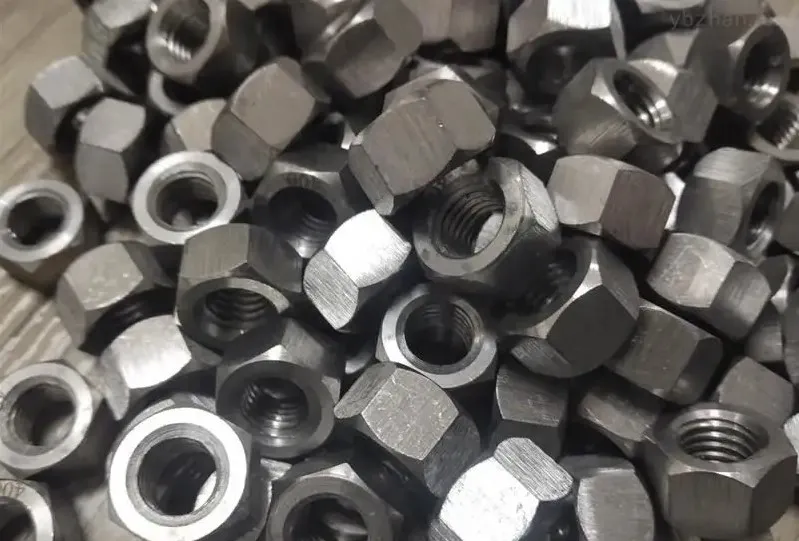
If you are designing turbine blades, nozzle guide vanes, high-strength engine bolts, or structural components exposed to direct combustion gases at 850°C to 900°C, we recommend upgrading to GH4141 (Rene 41) bars. GH4141 provides structural integrity unmatched by solid solution alloys.


7. Cost comparison between GH3030 and GH4141
| Aspect | GH3030 | GH4141 |
|---|---|---|
| Raw Material Cost | Moderate | Very High (high Co content) |
| Manufacturing Cost | Low | High |
| Heat Treatment Cost | Low | High |
| Relative Cost | Lower | 5-10× GH3030 |
GH4141: Due to its high cobalt, molybdenum, titanium, and aluminum content, its price per kilogram is significantly higher.
GH3030: For components that do not require the extreme mechanical loads of René 41, it is a more economical and readily available option.
Why Choose Gnee as Your Nickel-Based Alloy Supplier
✅️VIM + ESR Melting: Ensuring ultra-pure raw material for both grades to maximize fatigue life.
✅️MTC 3.1 Traceability: Full EN 10204 3.1 certificates documenting exact high-temperature tensile and creep-rupture data.
✅️Wholesale Inventory: Massive stock of forged and rolled rods ready for Fast Global Shipping.
✅️Custom Fabrication: We offer precision centerless grinding (h8-h11) and specialized heat treatment services.
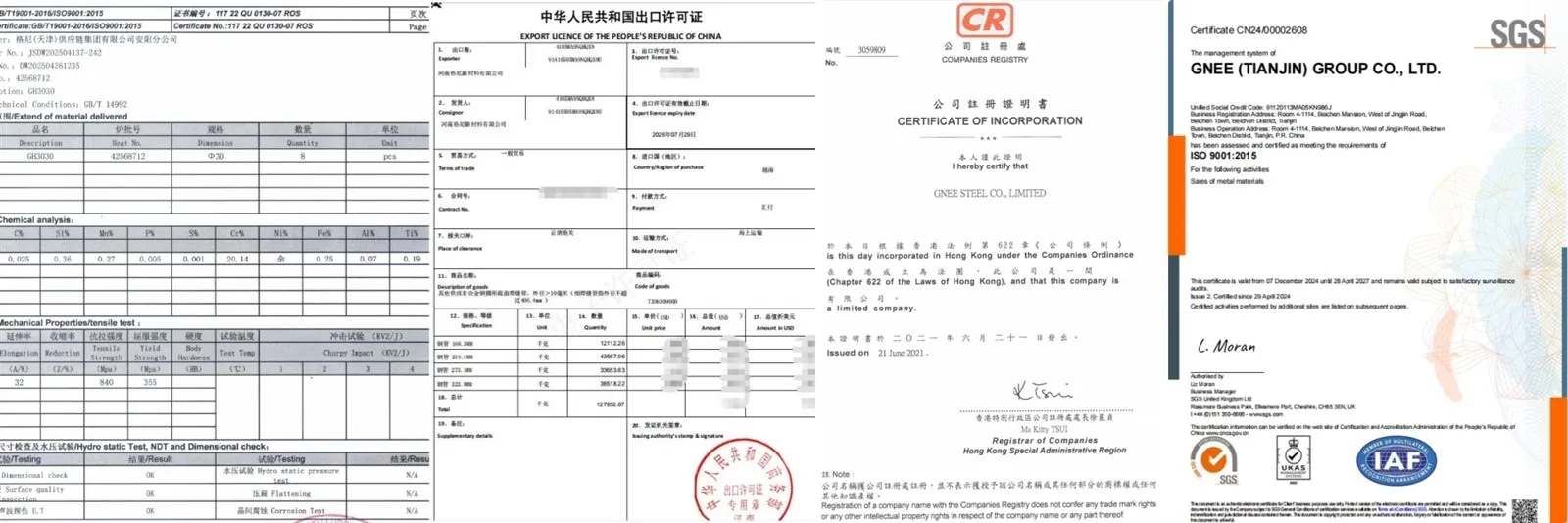
Gnee Alloy GH3030 Certificate
📦 Packaging and Shipping
All Nickel Based Alloy products are packaged using the following methods:
Wooden pallets or crates
Moisture-proof packaging
Labels with furnace number, standard, and size labels
Shipped worldwide by sea, air, or express
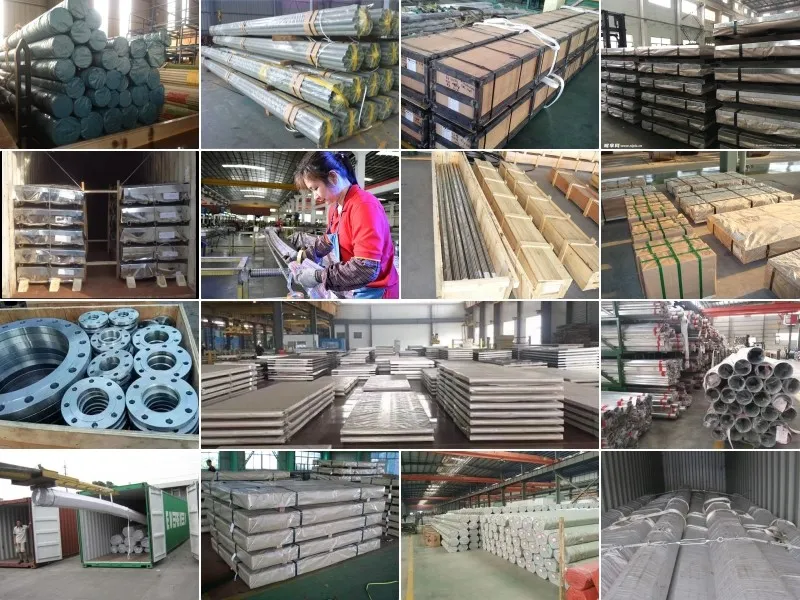
Gnee Alloy GH3030 Product Packing
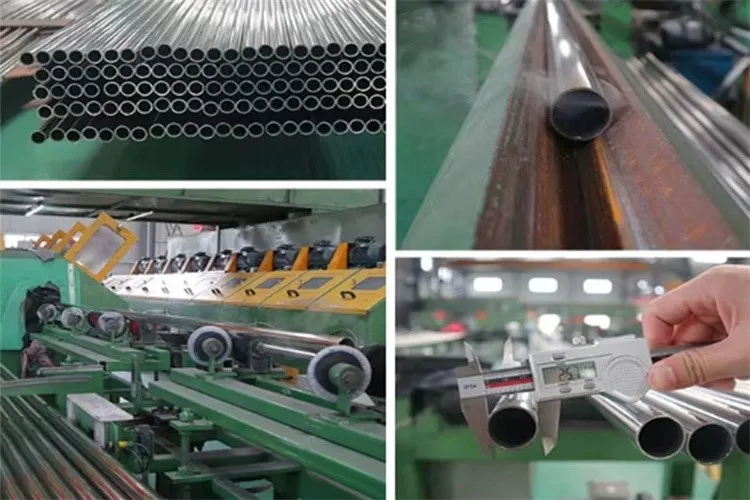
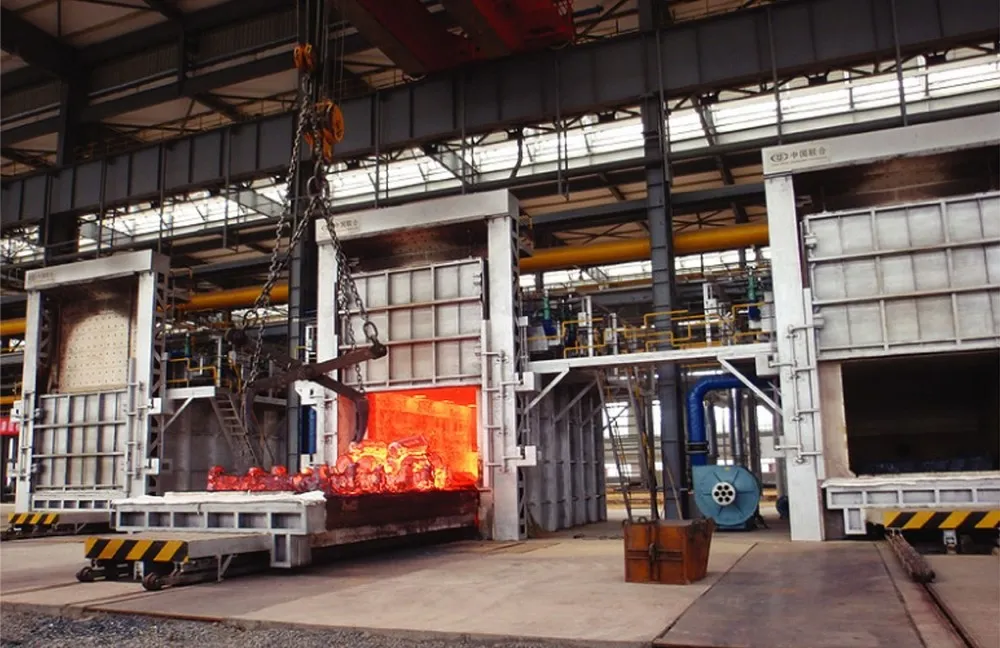
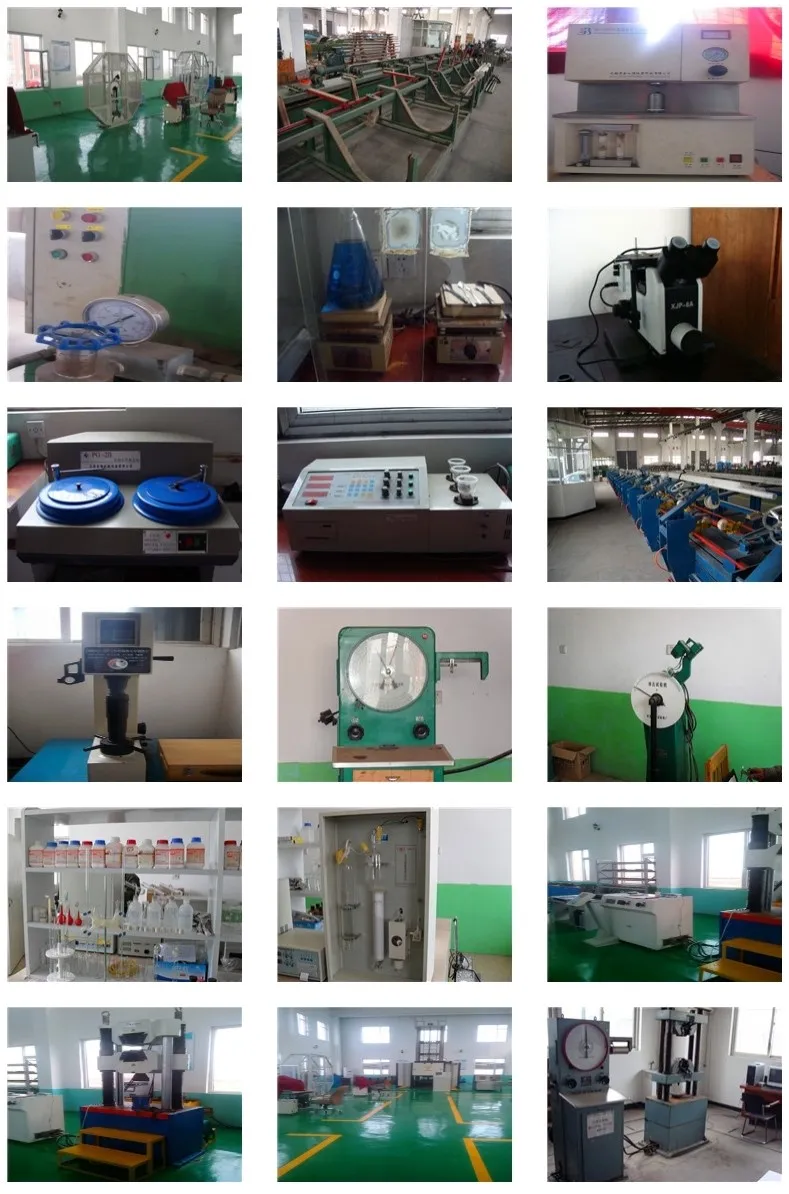
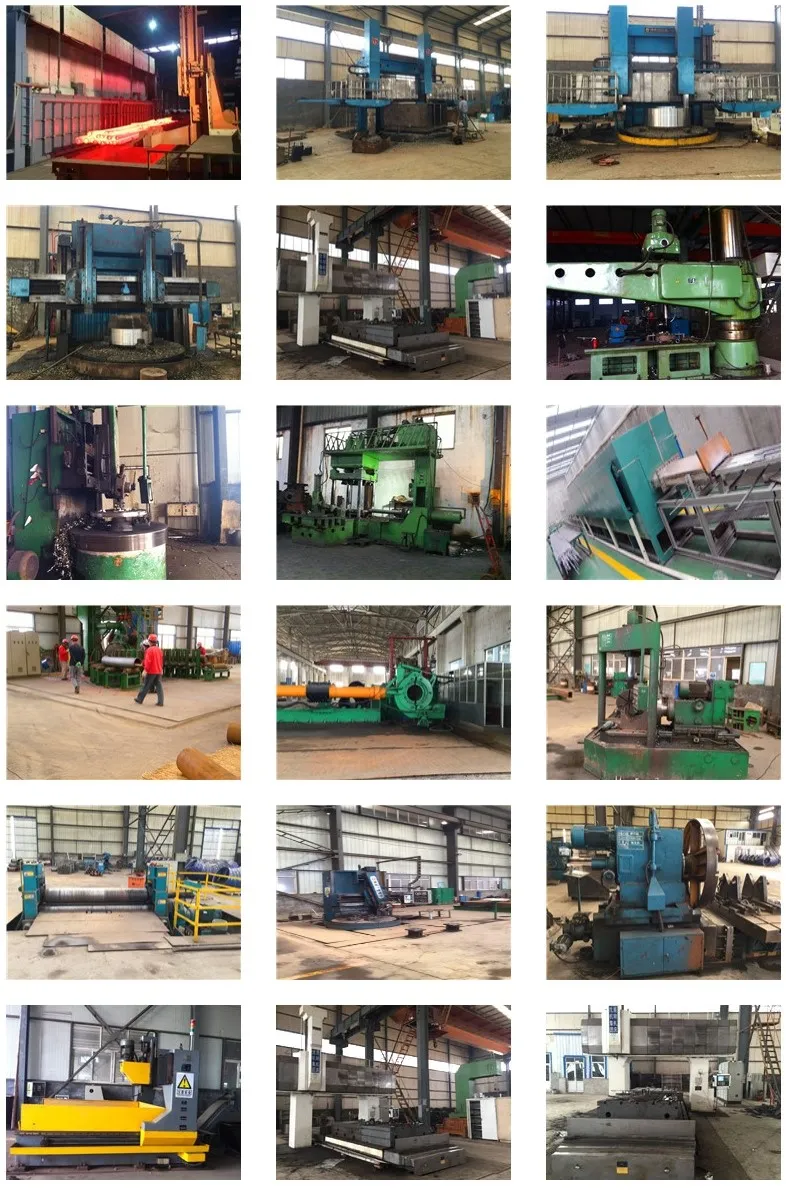
⚒️Gnee Alloy Production Line Equipment and Product Testing
Contact us for the latest export price quote for GH3030 Alloy
FAQ
Q1: Can GH4141 replace GH3030 in existing furnace designs?
A: Yes, and it will significantly extend your Material Life Cycle. However, GH4141 is harder to machine. We recommend purchasing GH4141 in our Solution Treated state to minimize tool wear during roughing.
Q2: Is GH4141 equivalent to Rene 41?
A: Absolutely. GH4141 is the Tamil name for the globally used metallurgical system Rene 41 (UNS N07041). It is globally interchangeable in aerospace and energy blueprints.
Q3: Which alloy has better corrosion resistance?
A: For pure oxidation at 900°C, GH4141 is superior due to its complex alloying (adding Cobalt and Molybdenum). For general chemical corrosion at lower temps, GH3030 is often sufficient.
Q4: Do you offer trial orders for material validation?
A: Yes. As a Tier-1 Manufacturer, we support Innovation. We offer flexible MOQs for certified specimens and test coupons of both grades.


