1. Q: What is the fundamental difference between Nickel 200 (Ni200) and Nickel 201 (Ni201), and why is this distinction critical for industrial applications?
A: While both Nickel 200 and Nickel 201 are commercially pure wrought nickel alloys (typically containing 99.0% to 99.6% nickel), their primary distinction lies in the carbon content. Nickel 200 has a maximum carbon content of 0.15%, whereas Nickel 201 is a low-carbon variant with a maximum of 0.02% carbon.
This seemingly minor metallurgical difference has profound implications for industrial application. In high-temperature environments, specifically between 300°C and 600°C (572°F to 1112°F), Nickel 200 is susceptible to a phenomenon known as "graphitization." The carbon present in the alloy precipitates into graphite particles at grain boundaries, which severely embrittles the material, leading to catastrophic failure under stress.
Consequently, Nickel 201 was developed to provide the same corrosion resistance and mechanical properties as Nickel 200 but with stability at elevated temperatures. In industrial settings-such as chemical processing plants manufacturing caustic soda (NaOH) or synthetic fibers-engineers strictly specify Nickel 201 for equipment operating above 315°C to ensure structural integrity. Nickel 200 is typically reserved for applications below this temperature threshold, such as electrical components or room-temperature caustic handling. Using the wrong grade can result in premature equipment failure, making the distinction a critical factor in procurement and engineering design.
2. Q: What are the specific chemical purity requirements that define N4 and N6 grades, and how do they align with international standards like ASTM B160?
A: In the context of pure nickel bars, N4 and N6 are Chinese GB/T 5235 standards that correspond closely to international designations. N4 is the equivalent of Nickel 200 (UNS N02200), while N6 aligns with Nickel 201 (UNS N02201). However, the technical nuance lies in the permissible impurity thresholds, which dictate performance in sensitive industrial applications.
For N6 (Ni201 grade), the purity is typically required to be no less than 99.5% nickel plus cobalt, with extremely tight controls on trace elements. Specifically, the carbon content for N6 must remain below 0.02%, silicon below 0.10%, and iron below 0.20% to meet the GB/T 4435 standard. For N4 (Ni200 grade), the carbon limit is higher (≤ 0.10%), but the sum of impurities (including copper, manganese, and sulfur) must be kept under 0.5%.
These purity levels are critical for industries requiring strict compliance with ASTM B160 (Standard Specification for Nickel Rod and Bar). When a factory claims "factory price" for high-purity nickel alloys, adherence to these chemical specifications ensures that the material retains its characteristic properties: low vapor pressure, high magnetic permeability, and exceptional resistance to caustic alkalis. Any deviation from these impurity limits-particularly elevated sulfur or lead-can compromise the alloy's ability to withstand corrosive environments or affect its performance in electronic components like battery tabs or vacuum seals.
3. Q: Why is pure nickel bar (Ni200/Ni201) considered the material of choice for handling caustic soda (NaOH) in industrial chemical plants?
A: Pure nickel exhibits a unique electrochemical passivity in concentrated caustic soda (sodium hydroxide) environments that is unmatched by stainless steel or even nickel-copper alloys like Monel. In industrial chemical plants, such as those producing chlor-alkali or alumina (Bayer process), the handling of sodium hydroxide at high concentrations (50% to 100%) and elevated temperatures is routine.
Nickel's superiority stems from its ability to form a stable, protective oxide film (primarily nickel oxide) on its surface in caustic environments. This film is resistant to caustic embrittlement and stress-corrosion cracking (SCC), which commonly afflicts austenitic stainless steels (e.g., 304L or 316L) under the same conditions. Furthermore, pure nickel bars are used to fabricate evaporators, heat exchangers, and piping systems because they maintain ductility even at temperatures up to 400°C.
For industrial buyers sourcing at "factory price," it is important to note that while Nickel 200 is suitable for most caustic applications at moderate temperatures, Nickel 201 is mandatory for service in caustic environments where the temperature exceeds 315°C (600°F). The use of high-purity, non-contaminated nickel ensures that no galvanic corrosion occurs in welded joints, which is a common failure point in caustic concentration plants.
4. Q: How does the mechanical performance of pure nickel bars (N4/N6) compare to austenitic stainless steel, and in which industrial applications does this justify the cost premium?
A: Although pure nickel bars often carry a higher upfront cost than standard stainless steel, their selection is justified by a combination of mechanical and physical properties that stainless steel cannot replicate in specific industrial niches.
From a mechanical standpoint, pure nickel in the annealed condition offers relatively low yield strength (typically 15–40 ksi) compared to 316 stainless steel (25–45 ksi). However, nickel's advantage lies in its exceptional ductility and elongation (typically 40–60% in 2 inches). This high ductility makes it ideal for severe deep drawing, spin forming, and cold heading operations-processes commonly required in the manufacture of electronic components, spark plug electrodes, and chemical processing vessel heads.
Furthermore, pure nickel exhibits unique physical properties: it is ferromagnetic (with a Curie temperature around 360°C) and has a high thermal conductivity relative to stainless steel. In the electronics industry, these properties are critical for battery contacts, lead frames, and electromagnetic shields. In the aerospace and food processing industries, the material's ability to maintain a non-reactive, easily cleanable surface without corrosion makes it superior to coated steels.
For industrial factories, purchasing N4 or Ni200 at competitive factory pricing becomes economically viable when the application requires these specific attributes-particularly when component longevity in corrosive or high-purity environments reduces long-term maintenance costs compared to frequently replacing inferior stainless steel components.
5. Q: What surface finishes and processing states are typically available for pure nickel bars in industrial supply chains, and how do these affect fabrication and cost?
A: In the industrial supply chain for pure nickel bars (N4, N6, Ni200, Ni201), the processing state and surface finish are critical variables that directly influence both the material's fabricability and the final landed cost.
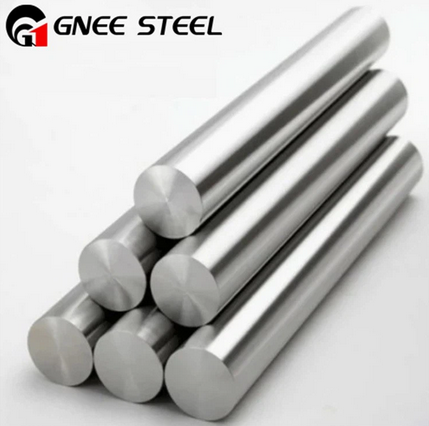
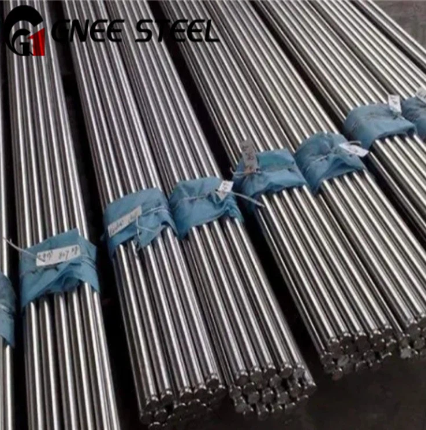
Pure nickel bars are typically available in three primary processing states: Hot-Finished (Hot-Rolled), Cold-Finished (Cold-Drawn), and Annealed. Cold-finished bars offer tighter dimensional tolerances, improved surface finish, and higher tensile strength due to work hardening. However, for severe forming operations-such as flanging or deep drawing-the annealed state is often required to restore maximum ductility, as cold-worked nickel can exhibit reduced corrosion resistance in certain aggressive environments if not properly stress-relieved.
Regarding surface finishes, industrial suppliers offer Black Oxide (as-rolled), Pickled (chemically cleaned to remove scale), Bright (cold-drawn or polished), and Ground/Polished. For applications in semiconductor manufacturing or pharmaceutical processing, a polished finish is mandatory to eliminate crevices where contamination could accumulate. Conversely, for structural components in caustic service, a pickled finish is often sufficient to remove surface iron contamination, which is crucial because iron particles on the surface can create galvanic cells that initiate localized corrosion.
When evaluating "factory price" quotes, industrial buyers must compare these specifications carefully. Cold-drawn, polished bars require significantly more processing steps than hot-rolled, black bars. Selecting the appropriate combination-such as annealed and pickled for chemical vessel fabrication versus cold-drawn and bright for electronic contacts-ensures that the buyer does not overpay for unnecessary finishing while still meeting the specific engineering requirements of the application.