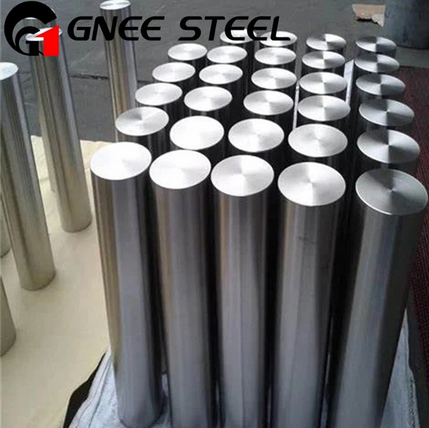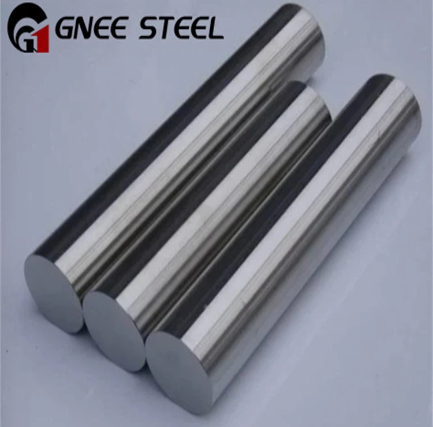
1. Q: What is the scope of ASTM A638, and how does it apply to nickel-based alloy round bars such as Incoloy A-286, 800, 825, and 925?
A: ASTM A638 is the standard specification for "Hot-Wrought and Cold-Finished Age-Hardening Stainless Steel and Nickel Alloy Bars, Rods, and Forgings." It specifically covers materials that are capable of being strengthened by precipitation hardening (age-hardening) heat treatments. While the standard's title references stainless steel, it encompasses several nickel-based superalloys that derive their high-temperature strength from controlled precipitation of intermetallic phases.
The alloys commonly supplied under ASTM A638 include:
A-286 (UNS S66286) : An iron-nickel-chromium alloy with additions of molybdenum, titanium, and aluminum. It is strengthened by gamma prime (Ni₃(Al,Ti)) precipitation and is widely used for high-temperature fasteners, turbine components, and jet engine parts requiring strength up to 1300°F (700°C).
Incoloy 800 (UNS N08800) : While Incoloy 800 is primarily a solid-solution strengthened alloy, it is sometimes supplied under ASTM A638 when specified in the age-hardenable condition. However, it is important to note that Incoloy 800 is not inherently precipitation-hardening; the age-hardenable variant is typically Incoloy 800H or 800HT, which have controlled carbon content and can develop some precipitation strengthening.
Incoloy 825 (UNS N08825) : A nickel-iron-chromium alloy with molybdenum, copper, and titanium additions. Incoloy 825 is precipitation-hardenable and can be age-hardened to achieve enhanced mechanical properties, making it suitable for high-strength applications in corrosive environments.
Incoloy 925 (UNS N09925) : Specifically designed as a precipitation-hardenable version of Alloy 825, Incoloy 925 is heat treated to achieve high yield strengths (typically 110–130 ksi) while maintaining excellent resistance to sulfide stress corrosion cracking and sour gas environments.
ASTM A638 imposes requirements for chemical composition, tensile properties (both in the solution-treated and aged conditions), grain size, and nondestructive testing. The specification allows for both hot-wrought and cold-finished product forms, with round bars typically available in diameters ranging from small rod sizes (less than 1 inch) to large bar stock exceeding 8 inches, depending on the specific alloy and mill capabilities.
2. Q: What are the distinct characteristics and typical applications of each Incoloy grade-A-286, 800, 825, and 925-when supplied as round bar or rod under ASTM A638?
A: Each of these nickel-based alloys offers a unique combination of mechanical properties, corrosion resistance, and thermal stability. Understanding these distinctions is essential for selecting the appropriate material for a given industrial application.
A-286 (UNS S66286): This alloy is an iron-based superalloy containing approximately 25% nickel, 15% chromium, with molybdenum, titanium, and aluminum. It is precipitation-hardened through a two-step aging treatment to achieve yield strengths of 90–110 ksi or higher. A-286 exhibits exceptional high-temperature tensile strength, creep resistance, and oxidation resistance up to 1300°F (700°C). Common applications for A-286 round bars and rods include: gas turbine engine components (turbine blades, discs, and shafts), high-temperature fasteners (bolts, nuts, and studs for aerospace and automotive applications), afterburner components, and supercharger parts for high-performance engines.
Incoloy 800 (UNS N08800) and 800H/800HT: These alloys contain approximately 32–35% nickel and 19–23% chromium, providing excellent resistance to oxidation, carburization, and high-temperature corrosion. Incoloy 800 is solid-solution strengthened and is typically used in the annealed condition. The "H" and "HT" variants have controlled carbon content (0.05–0.10%) and finer grain structures to enhance creep rupture strength. Under ASTM A638, these alloys may be specified for applications requiring high-temperature strength with corrosion resistance. Typical applications include: heat exchanger tubing and piping (when supplied as bar for flanges and fittings), furnace components, petrochemical reformer tubes, and nuclear steam generator components.
Incoloy 825 (UNS N08825): With 38–46% nickel, 19.5–23.5% chromium, plus molybdenum, copper, and titanium, Incoloy 825 offers outstanding resistance to reducing and oxidizing acids, particularly sulfuric and phosphoric acids. While often used in the solution-annealed condition, it can be precipitation-hardened to achieve enhanced strength. Applications for Incoloy 825 round bars include: pump shafts and valve stems in chemical processing, fasteners for acid service, downhole tooling for sour gas wells, and components in pickling operations.
Incoloy 925 (UNS N09925): This alloy is essentially a precipitation-hardened version of Alloy 825, with titanium and aluminum additions that enable age-hardening to yield strengths exceeding 110 ksi (760 MPa). It maintains the excellent corrosion resistance of Alloy 825 while offering significantly higher mechanical properties. Typical applications for Incoloy 925 round bars include: downhole casing and tubing for sour gas (H₂S/CO₂) environments, high-strength fasteners for subsea and offshore applications, pump shafts and valve components requiring both corrosion resistance and high strength, and heat exchanger hardware in aggressive chemical service.
3. Q: What heat treatment processes are specified under ASTM A638 for these nickel-based alloys, and how do they affect the mechanical properties of round bars?
A: The heat treatment protocols under ASTM A638 vary by alloy, but they generally follow a two-stage process: solution annealing followed by precipitation hardening (aging) . The specific temperatures and durations are critical to achieving the desired mechanical properties.
For A-286 (UNS S66286):
The standard heat treatment per ASTM A638 consists of:
Solution annealing: 1800°F (982°C) for a minimum of 1 hour, followed by rapid cooling (oil or water)
Precipitation hardening (aging): 1325°F (718°C) for 16 hours, followed by air cooling
This treatment yields typical properties of: Tensile strength 130–160 ksi, yield strength 90–110 ksi, elongation 15–25%, and hardness 30–35 HRC. The aging treatment precipitates gamma prime (Ni₃(Al,Ti)) particles, which serve as obstacles to dislocation movement, dramatically increasing strength while retaining adequate ductility.
For Incoloy 825 and 925:
Incoloy 825 (UNS N08825): Typically supplied in the solution-annealed condition at 1700–1900°F (925–1040°C) followed by rapid cooling. When age-hardened is required, a two-step aging process is employed, typically 1350°F (732°C) for 8 hours followed by 1150°F (621°C) for 8 hours, then air cooling. This yields tensile strengths of 100–120 ksi and yield strengths of 70–90 ksi in the aged condition.
Incoloy 925 (UNS N09925): Requires a more controlled aging sequence: solution anneal at 1800°F (982°C) for 30 minutes, water quench, then age at 1350°F (732°C) for 8 hours, furnace cool to 1150°F (621°C), hold for 8 hours, then air cool. This produces yield strengths of 110–130 ksi, tensile strengths of 150–170 ksi, and elongations of 15–25%, making it the highest-strength alloy among this group.
For Incoloy 800 Series:
Incoloy 800 is primarily used in the solution-annealed condition and does not typically undergo precipitation hardening. However, when specified under ASTM A638 for age-hardenable applications, the 800H/800HT variants may be given a "stabilizing anneal" at approximately 2100°F (1150°C) followed by rapid cooling to achieve a coarse grain structure that enhances creep rupture strength.
The selection of heat treatment directly influences the material's performance. Over-aging (excessive time or temperature) can lead to coarsening of precipitates, resulting in reduced strength. Conversely, under-aging may result in incomplete precipitation, failing to achieve the specified mechanical properties.
4. Q: How do the mechanical properties of these nickel-based alloy round bars compare, and what factors should guide material selection for high-strength versus corrosion-resistant applications?
A: The selection among A-286, Incoloy 800, 825, and 925 for round bar applications requires balancing mechanical strength, corrosion resistance, and operating temperature. The table below summarizes typical mechanical properties in the age-hardened condition:
| Alloy | Tensile Strength (ksi) | Yield Strength (ksi) | Elongation (%) | Hardness (HRC) |
|---|---|---|---|---|
| A-286 | 130–160 | 90–110 | 15–25 | 30–35 |
| Incoloy 800 | 80–100 (annealed) | 35–55 (annealed) | 30–50 | Not applicable |
| Incoloy 825 | 100–120 | 70–90 | 25–35 | 20–25 |
| Incoloy 925 | 150–170 | 110–130 | 15–25 | 30–38 |
Guidelines for Material Selection:
High-Temperature Strength (up to 1300°F / 700°C): A-286 is the preferred choice. Its combination of high-temperature tensile strength, creep resistance, and oxidation resistance makes it the standard for aerospace fasteners, turbine hardware, and automotive supercharger components. Incoloy 800 is suitable for high-temperature applications up to 1800°F (982°C) where moderate strength is acceptable, primarily for structural components rather than highly stressed parts.
Corrosion Resistance with Moderate Strength: Incoloy 825 is the material of choice for chemical processing applications where resistance to sulfuric, phosphoric, and nitric acids is required. It offers excellent pitting and crevice corrosion resistance, particularly in chloride-containing environments. Its strength is adequate for most pump shafts, valve stems, and fasteners in corrosive service.
Corrosion Resistance with High Strength: Incoloy 925 bridges the gap between corrosion-resistant alloys and high-strength materials. For downhole oil and gas tools, subsea fasteners, and high-pressure chemical processing equipment, Incoloy 925 provides the necessary strength (110–130 ksi yield) while maintaining resistance to sulfide stress corrosion cracking (SSC) and chloride stress-corrosion cracking (SCC). A-286, while strong, does not offer the same level of corrosion resistance in sour gas (H₂S) environments.
Cost Considerations: Incoloy 800 is generally the most cost-effective option, suitable for moderate-corrosion and high-temperature applications where high strength is not critical. A-286 falls in the mid-range, while Incoloy 825 and 925 command higher prices due to their nickel content and specialized melting practices. For applications requiring both high strength and exceptional corrosion resistance, Incoloy 925 offers the best value proposition compared to higher-alloyed alternatives like Alloy C-276 or Inconel 718 in specific sour service environments.
5. Q: What manufacturing and processing considerations are critical when fabricating round bars and rods of these nickel-based alloys for end-use components?
A: Fabrication of nickel-based alloy round bars into finished components-whether through machining, forging, or welding-requires careful attention to the unique characteristics of each alloy.
Machining Considerations:
These nickel-based alloys are generally considered difficult to machine due to their high strength, work-hardening rates, and low thermal conductivity. Key recommendations include:
Tooling: Use carbide tooling with sharp, positive-rake geometries to minimize work hardening
Surface Speeds: For A-286 and Incoloy 925, surface speeds of 50–100 SFM are typical; for Incoloy 800 and 825, speeds of 80–150 SFM are acceptable
Coolant: High-pressure coolant is essential to manage heat generation and prevent tool wear
Rigidity: Machine setups must be rigid to prevent chatter, which can accelerate work hardening
Forging:
All four alloys can be hot forged, but temperature ranges vary:
A-286: Forging temperature range of 1800–2100°F (982–1149°C), with final finish above 1800°F to avoid cracking
Incoloy 800: Forging range of 1700–2100°F (927–1149°C), with rapid cooling after forging
Incoloy 825/925: Forging range of 1750–2150°F (954–1177°C), with post-forge annealing required to restore corrosion resistance
After forging, components must be solution annealed to dissolve any precipitates that formed during cooling and to restore ductility and corrosion resistance.
Welding:
Welding of these alloys requires proper filler metal selection and heat input control:
A-286: Use matching filler (A-286) for high-temperature applications; require post-weld aging to restore properties
Incoloy 800: Use ERNiCr-3 or ERNiFeCr-2 filler metals; no post-weld heat treatment typically required
Incoloy 825/925: Use ERNiFeCr-1 (INCOLOY® 65) filler; for 925, post-weld solution annealing and aging are necessary to maintain strength
Quality Assurance and Testing:
ASTM A638 requires specific testing to verify conformance:
Tensile testing: Both solution-treated and aged conditions must meet specified properties
Hardness testing: Typically performed on the aged condition
Nondestructive testing: Ultrasonic or eddy current examination may be specified for critical applications
Grain size determination: For A-286 and Incoloy 925, grain size requirements ensure consistent mechanical properties
For end-users, sourcing ASTM A638-certified material from mills with established quality systems ensures traceability and compliance with industry standards. Given the high value and critical nature of applications-ranging from aerospace fasteners to downhole oilfield tools-material certifications documenting heat analysis, mechanical properties, and heat treatment cycles are essential components of procurement specifications.