1. Q: What is the fundamental metallurgical distinction between Ti-6Al-7Nb and Ti-6Al-4V ELI, and why has Ti-6Al-7Nb become the preferred material for permanent orthopedic implants?
A: The fundamental distinction lies in the alloying elements used to stabilize the beta phase and the resulting biocompatibility profile. Ti-6Al-4V ELI (Extra Low Interstitial) has been the longstanding workhorse for medical implants, utilizing vanadium (V) as its primary beta stabilizer. However, extensive biological research over the past two decades has revealed that vanadium ions, when released through long-term corrosion or wear processes in vivo, can exhibit cytotoxic behavior and have been associated with adverse tissue reactions in a small percentage of patients.
Ti-6Al-7Nb was developed specifically to address these biocompatibility concerns by replacing vanadium with niobium (Nb). Niobium is a beta-stabilizing element that is considered physiologically inert, non-toxic, and highly corrosion-resistant. It does not trigger the same adverse biological responses associated with vanadium. From a metallurgical perspective, both alloys achieve similar mechanical properties: a tensile strength of approximately 900–1000 MPa, a yield strength of 800–900 MPa, and an elastic modulus (around 110 GPa) that is significantly closer to human cortical bone (15–30 GPa) than stainless steel (200 GPa) or cobalt-chrome alloys (230 GPa).
The shift toward Ti-6Al-7Nb in markets such as the European Union (where it is specified under ISO 5832-11) and increasingly in global orthopedic standards reflects a design philosophy that prioritizes long-term biological safety over legacy material familiarity. For permanent implants such as hip stems, spinal rods, and trauma plates, the elimination of vanadium provides an additional margin of safety against potential hypersensitivity or long-term ion toxicity, making it the material of choice for high-reliability, long-duration medical devices.
2. Q: What are the critical requirements for the manufacturing process and microstructure control of Ti-6Al-7Nb bars to ensure compliance with ISO 5832-11?
A: Compliance with ISO 5832-11 (Implants for Surgery - Metallic Materials - Part 11: Wrought Titanium 6-Aluminum 7-Niobium Alloy) imposes stringent controls over both the melting practice and the thermomechanical processing of the bar. The standard mandates that the alloy be melted using methods that ensure a homogeneous, fine-grained microstructure free from deleterious segregations or inclusions. The most widely accepted method is triple vacuum arc remelting (VAR) or a combination of vacuum induction melting (VIM) followed by VAR. This multi-step process is critical for eliminating high-density inclusions (such as niobium-rich regions) that could act as fatigue crack initiation sites in a load-bearing implant.
Regarding microstructure, ISO 5832-11 requires that the final bar possess a fully recrystallized, fine-grained structure. Typically, this is specified as a fine equiaxed alpha-beta microstructure, with the alpha phase (hexagonal close-packed) uniformly distributed within a transformed beta matrix. The average grain size is generally controlled to an ASTM grain size number of 6 or finer. This structure is achieved through careful forging or rolling within the alpha-beta phase field, followed by a controlled annealing process.
Manufacturing deviations are critical: if the bar is processed at temperatures too high (into the beta phase field) and not subsequently recrystallized, a coarse, lamellar "basket-weave" structure can result. While such a structure offers excellent fracture toughness, it compromises fatigue strength and ductility-properties that are paramount for spinal pedicle screws or long bone fixation devices. Therefore, certified medical bar stock must include documented evidence of process validation demonstrating that the thermomechanical history consistently yields the required equiaxed microstructure, ensuring predictable fatigue performance in the final implant.
3. Q: How does the machinability and workability of Ti-6Al-7Nb compare to other medical titanium alloys, and what specialized manufacturing strategies are required to produce high-quality implant components?
A: Ti-6Al-7Nb is generally considered more challenging to machine than commercially pure (CP) titanium but is comparable to, or slightly more difficult than, Ti-6Al-4V ELI due to the presence of niobium. Niobium is a refractory metal that contributes to the alloy's work-hardening tendency. During machining, titanium alloys exhibit a low thermal conductivity, causing heat to concentrate at the cutting tool interface rather than dissipating into the chip. For Ti-6Al-7Nb, this localized heat, combined with its high strength and work-hardening rate, leads to rapid tool wear, particularly if conventional carbide tooling with inadequate coolant delivery is used.
Successful manufacturing of implants from Ti-6Al-7Nb bar requires a tailored strategy. Manufacturers must employ high-pressure coolant systems (typically 70–100 bar) to overcome the heat barrier and prevent chip recutting. Tooling geometries must be optimized with positive rake angles to reduce cutting forces, and specialized coatings (such as AlTiN or TiAlN) are essential to maintain cutting edge integrity. Furthermore, the alloy's tendency to gall and adhere to tooling necessitates the use of sharp, continuously engaged cutting edges to avoid work hardening the surface.
For cold working operations such as swaging or thread rolling (common in dental implants and trauma screws), Ti-6Al-7Nb requires precise deformation controls. Its higher yield strength compared to CP titanium means that forming operations must be performed with larger radii tooling and intermediate stress-relief annealing cycles to prevent micro-cracking. Consequently, the supply chain for Ti-6Al-7Nb implant bars often involves close collaboration between the material supplier and the device manufacturer to validate specific machining and forming protocols that ensure both dimensional accuracy and surface integrity, free from microstructural alteration or residual tensile stresses.
4. Q: What surface treatment and finishing processes are specifically critical for Ti-6Al-7Nb bars used in medical devices, and how do they influence osseointegration and fatigue life?
A: The surface condition of Ti-6Al-7Nb bar stock-and the final implant fabricated from it-is arguably as important as the bulk material properties, given that the surface interfaces directly with biological tissue. For bars destined for orthopedic or dental implants, the finishing process must be meticulously controlled to achieve two seemingly contradictory goals: a surface that promotes osseointegration (bone bonding) and a surface that maintains high fatigue strength.
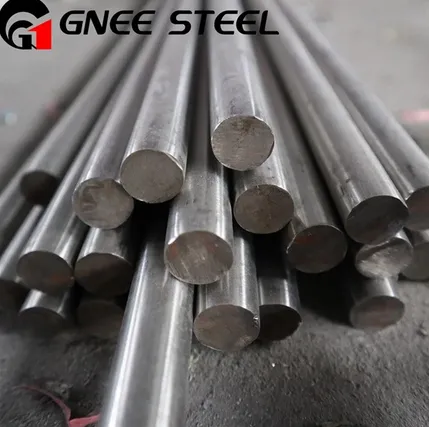
From the bar stock perspective, the material is typically supplied in the cold-finished, centerless ground, or polished condition to ensure precise diametral tolerances (often ±0.05 mm) and a smooth surface free from surface defects such as laps, seams, or scratches that could act as stress concentrators. However, once the implant is machined, the final surface treatment diverges. For load-bearing applications (e.g., hip stems), a highly polished surface is often maintained on the stem neck and body to minimize crack initiation under cyclic loading.
For surfaces intended to interface with bone, such as the proximal femur stem or dental root form, controlled surface roughening is required. Common methods include grit blasting with alumina or titanium particles, acid etching, or anodization. For Ti-6Al-7Nb, acid etching protocols must be carefully validated because the alloy's niobium content can alter the surface chemistry compared to Ti-6Al-4V. A standard etching solution (e.g., a mixture of HF and HNO₃) must be controlled to avoid preferential attack of the niobium-rich beta phase, which could create micro-porosity that compromises fatigue life. Anodization is also widely used to create a controlled oxide layer (typically 200–1000 nm) that provides both corrosion resistance and a surface topography conducive to protein adsorption and osteoblast adhesion. Ultimately, the finishing process chain for Ti-6Al-7Nb bars must be validated to ensure that the final surface treatment does not introduce hydrogen embrittlement (from acid etching) or compromise the fatigue limit, which for implant applications is typically required to exceed 10⁷ cycles at physiological loads.
5. Q: What specific documentation, traceability, and regulatory requirements govern the supply chain of Ti-6Al-7Nb medical titanium bars for global markets?
A: The supply chain for Ti-6Al-7Nb medical bars operates under a stringent regulatory framework that demands complete transparency and verifiable documentation from the raw material source to the final implant. Unlike commercial-grade materials, medical titanium bars must be supplied under a certified Quality Management System (QMS) , typically ISO 13485:2016 (Medical Devices) , which ensures that the supplier maintains documented control over all processes-from melting to final packaging.
The cornerstone of compliance is full lot traceability. Each bar must be traceable back to the original ingot melt number. The Mill Test Certificate (MTC) , often certified by an independent third-party inspection body, must include:
Chemical Composition: Verified against ISO 5832-11, with strict controls on interstitials (O, N, C, Fe) and residuals.
Mechanical Properties: Tensile strength, yield strength, elongation, and reduction of area, typically derived from representative samples of the same melt lot.
Microstructure: Documentation confirming the equiaxed alpha-beta structure with grain size within specified limits.
Non-Destructive Testing (NDT): Evidence of 100% ultrasonic testing (UT) to ensure no internal flaws exceeding a defined reference standard (e.g., 0.8 mm flat-bottom hole) exist.
For global regulatory compliance, additional requirements come into play. For the U.S. market, compliance with FDA (Food and Drug Administration) guidance is required, often necessitating a Device Master File (DMF) or a Master Access File (MAF) where the material supplier provides proprietary manufacturing details directly to the FDA for reference. For the European market, the material must comply with the Medical Device Regulation (MDR) 2017/745, which demands that the material supplier provide a Declaration of Conformity and often requires the involvement of a Notified Body to audit the material's fitness for purpose.
Finally, specific customer requirements frequently add layers such as bioburden testing (to confirm sterility or low microbial load), cytotoxicity testing per ISO 10993-5, and special process validation for any critical operations like surface treatment or ultrasonic cleaning. Any deviation in these documentation or process controls can result in rejection of the entire bar lot, underscoring the necessity for medical-grade material suppliers to operate with a level of traceability and quality assurance that significantly exceeds that of standard industrial titanium products.