1. Q: What is the fundamental distinction between Nickel Alloy UNS N02201 plate and its counterpart Nickel 200 (UNS N02200), and why does this distinction matter for pickling and surface treatment?
A: The fundamental distinction between Nickel 201 (UNS N02201) and Nickel 200 (UNS N02200) lies in their carbon content-a seemingly minor compositional difference that has profound implications for material performance, particularly in applications involving welding, elevated-temperature service, and surface treatment processes such as pickling.
Nickel 200 contains a maximum carbon content of 0.15%, while Nickel 201 is a low-carbon variant with a maximum carbon content of 0.02%. This reduction in carbon directly addresses the phenomenon of graphitization-the precipitation of carbon as graphite at grain boundaries when the material is exposed to temperatures in the range of approximately 315°C to 760°C (600°F to 1400°F) for extended periods. In Nickel 200, this graphitization leads to embrittlement and a significant loss in ductility and impact resistance. Nickel 201, with its ultra-low carbon content, effectively eliminates this risk.
Why this matters for pickling and surface treatment: The carbon content also influences how the material responds to surface treatment processes. During pickling-an acid-based chemical treatment used to remove surface oxides and scale-the uniformity of material composition affects the consistency of the pickling reaction. Nickel 201's more homogeneous, low-carbon microstructure allows for more predictable and uniform scale removal compared to Nickel 200, which may have localized carbon-rich areas that can affect surface reactivity. For applications requiring subsequent welding or high-temperature service, the selection of Nickel 201 over Nickel 200 is critical to ensure that the pickled surface-and the base material beneath it-maintains its structural integrity throughout the component's service life.
2. Q: What governing standards apply to Nickel Alloy UNS N02201 pickling plate, and what specific requirements do these standards impose on plate products?
A: Nickel Alloy UNS N02201 plate, sheet, and strip are governed primarily by ASTM B162, the standard specification for rolled nickel and low-carbon nickel plate, sheet, and strip
. This standard establishes the critical requirements that manufacturers must meet to ensure material quality, consistency, and fitness for service.
Scope of ASTM B162: The standard covers both Nickel 200 (UNS N02200) and low-carbon Nickel 201 (UNS N02201) products in plate, sheet, and strip forms. It specifies requirements for chemical composition, mechanical properties, dimensions, tolerances, and testing procedures.
Chemical Composition Requirements: For UNS N02201, ASTM B162 mandates a maximum carbon content of 0.02%, with nickel plus cobalt content of 99.0% minimum. Other elements are strictly controlled: iron (0.40% max), manganese (0.35% max), silicon (0.35% max), sulfur (0.01% max), and copper (0.25% max).
Mechanical Property Requirements: In the annealed condition-the typical temper for pickling plate-ASTM B162 requires:
Tensile strength: Minimum 55 ksi (380 MPa) for thicknesses up to certain limits; 50 ksi (345 MPa) for thicker sections
Yield strength (0.2% offset): Minimum 15 ksi (105 MPa) for thinner gauges; 12 ksi (83 MPa) for thicker sections
Elongation: Minimum 35% to 40% depending on thickness, reflecting the material's excellent ductility
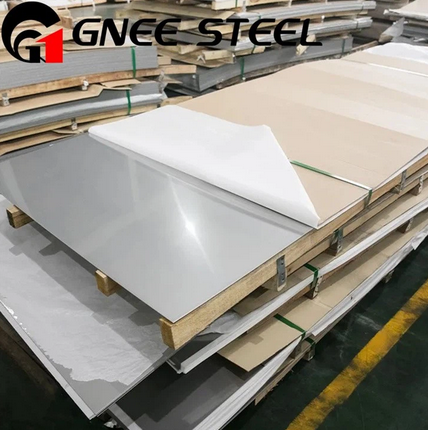
Product Forms: The standard distinguishes between plate (typically thicker than 3/16 inch / 5 mm), sheet (thinner material), and strip (narrow, rolled material). For pickling plate applications-where the material will undergo chemical surface treatment-the product is typically supplied in the annealed and pickled condition, meaning the mill has already performed the initial descaling to provide a clean, corrosion-resistant surface ready for fabrication
3. Q: Why is pickling a critical surface treatment process for Nickel Alloy UNS N02201 plate, and what specific challenges does this material present during pickling compared to austenitic stainless steels?
A: Pickling is an essential surface treatment process for Nickel Alloy UNS N02201 plate because it removes the oxide scale and surface contaminants that form during hot rolling and annealing operations. However, industry sources note that descaling of Nickel 201 is somewhat difficult in comparison with Type 304 stainless steel. Understanding the reasons for this difficulty is critical for processors and fabricators.
Why pickling is necessary: During the manufacturing process, Nickel 201 plate is subjected to high-temperature annealing (typically between 760°C and 1050°C / 1400°F to 1920°F) to achieve the desired mechanical properties. This high-temperature exposure results in the formation of a tenacious oxide scale on the material's surface. If left in place, this scale can:
Interfere with subsequent welding operations
Compromise corrosion resistance
Create surface irregularities that affect performance in chemical equipment applications
Inhibit proper adhesion of coatings or further surface treatments
Pickling challenges specific to Nickel 201: The difficulty in pickling Nickel 201 compared to Type 304 stainless steel stems from several factors:
Oxide composition: The oxide scale formed on pure nickel alloys has a different chemical composition and structure than the chromium oxide scale on stainless steels, requiring different acid formulations and processing parameters.
Lower reactivity: Nickel itself is more noble (less reactive) than iron, meaning the chemical reaction between the pickling acid and the base metal proceeds more slowly. This requires careful control to avoid under-pickling (incomplete scale removal) or over-pickling (excessive metal removal).
Contaminant sensitivity: The surface of Nickel 201 is highly sensitive to contamination. Iron particles embedded during processing can create galvanic corrosion sites if not completely removed during pickling.
Common pickling approaches: For Nickel 201 plate, pickling typically involves acid mixtures containing nitric acid (HNO₃) and hydrofluoric acid (HF), often at elevated temperatures. The specific acid concentrations and dwell times must be carefully optimized based on the degree of scaling and the desired surface finish. After pickling, thorough rinsing is essential to remove all acid residues, which could otherwise promote localized corrosion in service.
4. Q: How does the surface condition of pickled Nickel Alloy UNS N02201 plate affect its corrosion resistance in demanding chemical environments such as caustic soda and halogen service?
A: The corrosion resistance of Nickel Alloy UNS N02201 plate is not solely a function of its chemical composition-it is also critically dependent on surface condition. A properly pickled surface provides the optimal starting point for the formation of protective passive films that enable the alloy to perform in its most demanding applications, including caustic soda manufacturing and halogen service.
The role of surface condition: When Nickel 201 is exposed to corrosive environments, it develops a thin, adherent protective oxide film that acts as a barrier between the base metal and the corrosive medium. This passive film forms most readily and uniformly on clean, scale-free surfaces. A properly pickled surface provides:
Uniform chemistry: Removal of the heat-affected oxide scale ensures that the surface exposed to the environment is the true alloy composition, with predictable corrosion behavior.
Freedom from contaminants: Pickling removes iron particles, embedded scale, and other contaminants that could create localized galvanic cells or initiation sites for pitting corrosion.
Optimal surface roughness: While excessively rough surfaces can trap corrosive media and promote localized attack, properly pickled surfaces achieve a controlled roughness that balances passive film stability with practical fabrication requirements.
Applications where surface condition is critical: Nickel 201 plate is widely used in caustic soda (NaOH) manufacturing equipment, particularly in diaphragm electrolysis processes, and in handling dry chlorine and other halogens. In these environments:
Caustic service: Any surface irregularities or embedded contaminants can disrupt the protective nickel oxide film that forms in alkaline environments, potentially leading to localized attack or caustic embrittlement in susceptible regions.
Halogen service: In dry chlorine, fluorine, and other halogen gases, surface cleanliness is essential because any moisture or contamination can trigger rapid, aggressive corrosion. Pickled surfaces, being free from scale and iron contamination, provide the cleanest possible starting condition for these critical services.
Post-pickling care: To preserve the benefits of pickling, Nickel 201 plate must be handled carefully after surface treatment. Contamination from carbon steel tools, shop debris, or marking materials can compromise the corrosion resistance achieved through pickling. For critical chemical equipment applications, manufacturers often specify that pickled plate be protected with temporary coatings or stored in clean, dry conditions until fabrication.
5. Q: What are the key applications and performance requirements for pickled Nickel Alloy UNS N02201 plate in the chemical processing, battery, and electronic component industries?
A: Pickled Nickel Alloy UNS N02201 plate serves critical functions across multiple industries, with each sector imposing specific requirements that make the combination of low-carbon chemistry and clean, pickled surface essential.
Chemical Processing Industry: The chlor-alkali industry represents one of the largest applications for Nickel 201 plate. In caustic soda manufacturing using diaphragm electrolysis, Nickel 201 is the preferred material for evaporators, concentrators, and piping systems. The material's exceptional resistance to concentrated sodium hydroxide at elevated temperatures-combined with its resistance to caustic embrittlement-makes it irreplaceable. The pickled surface condition is critical in this service because:
It ensures uniform passive film formation
It eliminates scale that could flake off and contaminate the caustic product
It provides a clean surface for weld fabrication of large vessel components
Fluorine and Halogen Processing: In the production and handling of anhydrous hydrogen fluoride (HF) and other fluorine compounds, Nickel 201's resistance to dry halogen attack is essential. Chemical equipment such as reactors, heat exchangers, and storage vessels require pickled surfaces to ensure:
Absence of moisture-trapping scale that could trigger corrosion
Clean surfaces for reliable weld joints
Uniform resistance to halogen attack across all wetted surfaces
Battery and Electronic Component Applications: Nickel 201 sheet and strip find extensive use in battery components, including lead wires, battery tabs, connector tabs for implantable medical devices (cardiac rhythm management and neurostimulation devices), and stamped or etched fabrications
. For these applications, pickled and annealed surfaces are often specified because:
The clean surface ensures consistent electrical contact and low contact resistance
The uniform surface condition supports consistent resistance welding or laser welding operations
The absence of scale and contaminants is essential for reliability in critical medical and electronic applications
Additional Applications: Beyond these primary sectors, pickled Nickel 201 plate is used in:
Heat exchangers: Where surface cleanliness affects heat transfer efficiency and corrosion resistance
Food processing equipment: Where the material's inertness and cleanability are essential for product purity
High-temperature processing equipment: Where the low carbon content ensures resistance to graphitization during service
Performance Requirements Across Applications: Regardless of the specific industry, pickled Nickel 201 plate must consistently deliver:
Certified low carbon content (≤0.02%) to ensure high-temperature stability
Verified mechanical properties per ASTM B162
Uniform surface condition free from scale, pits, and embedded contaminants
Full traceability to mill certifications and positive material identification (PMI) testing