
Jun 24, 2025 Leave a message

The difference between TA1 and TA2 titanium?


The difference between TA1 and TA2 titanium
titanium-grade-1
01.

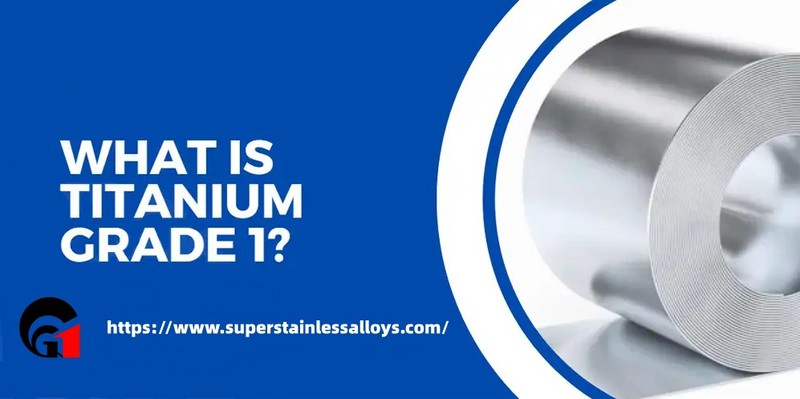
What is Titanium Grade 1?

One of the four commercially available pure titanium grades is Grade 1 titanium, also known as EN 3.7025/UNS R50250 alloy.

It is not the strongest of the four grades, and is also the softest, but it has the best formability and corrosion resistance. Its weldability is also quite good.

Grade 1 titanium is commonly used in the chemical and marine industries to enhance its corrosion resistance, and is also used in aircraft manufacturing where high formability is required.

02.

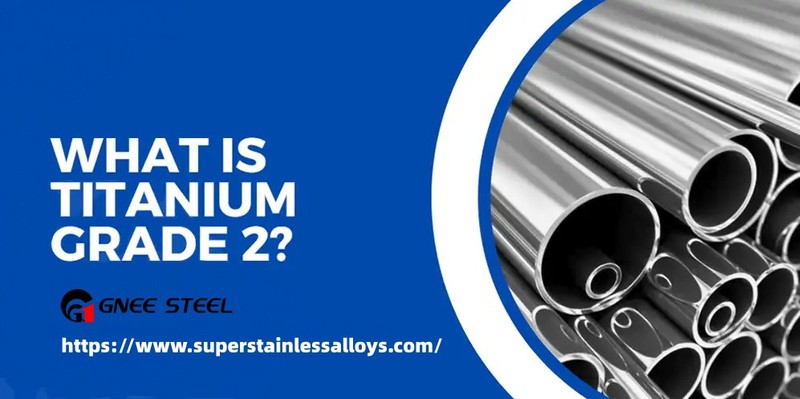
What is Titanium Grade 2?

Grade 2 titanium alloy, also known as EN3.7035/UNS R50400 titanium CP3, has an alpha crystal structure.

Due to its excellent formability, moderate strength, and outstanding corrosion resistance, this alloy is widely used.

The density of Grade 2 titanium alloy is approximately half that of stainless steel and nickel alloys. Grade 2 titanium alloy exhibits excellent corrosion resistance in oxidizing media, alkaline media, organic acids and their compounds, aqueous solutions, and high-temperature gases.

This alloy also shows good corrosion resistance in nitric acid, moderately strong reducing acids, and wet chlorine or bromine gas. Furthermore, Grade 2 titanium alloy also exhibits excellent corrosion resistance in seawater applications.

titanium-grade-2


Grade 1 vs. Grade 2 Titanium Chemical Composition Comparison Table

Element Grade 1 Titanium Composition (%) Grade 2 Titanium Composition (%)
C ≤0.080% ≤0.080%
N ≤0.030% ≤0.030%
H ≤0.015% ≤0.015%
O ≤0.180% ≤0.250%
Fe 0.20% 0.30%
Ti ≥99.175% ≥98.9%


mechanical properties of Grade 1 and Grade 2 titanium

Titanium Grade 1 Mechanical Properties

Density Melting Point Tensile Strength Yield Strength (0.2%Offset) Elongation
4.51 g/cm3 1670°C (3040°F) 240Mpa 170-310Mpa 24%

Titanium Grade 2 Mechanical Properties

Density Melting Point Tensile Strength Yield Strength (0.2%Offset) Elongation
4.51 g/cm3 1665°C (3030°F) 345Mpa 276Mpa 20%


Comparison of equivalent grades of Grade 1 and Grade 2 titanium

STANDARD WERKSTOFF NR. UNS GOST AFNOR JIS BS EN OR
Ti Grade 1 3.7025 R50250
STANDARD WERKSTOFF NR. UNS GOST AFNOR JIS BS EN OR
Ti Grade 2 3.7035 R50400


Application Scenarios: When to Use Which Grade?

Choose Grade 1 Titanium Alloy:

Deep Drawing Required: Manufacturing plate heat exchangers, corrugated plates, or complex building panels.

Explosion Shock Coating: Bonding titanium alloy to steel plates (its ductility helps absorb blast shocks).

Maximum Corrosion Resistance: In extremely harsh environments, a slightly lower iron content (0.20% vs. 0.30%) can theoretically delay crevice corrosion, although this is rare.


Choose Grade 2 Titanium Alloy:

General Manufacturing: Pipes, flanges, fittings, and valves.

Pressure Vessels: Tanks and reactors conforming to ASME standards with specific wall thickness requirements.

Liners: Loose linings for steel tanks; titanium alloy primarily serves as corrosion protection, not structural support.

Supply Crucial: You need standard-sized titanium alloy plates, and delivery is required tomorrow.


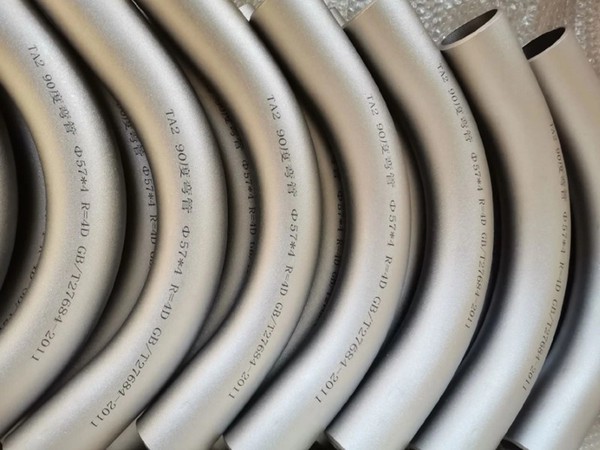
Real shot of pipe bending at a secondary titanium alloy factory

Real shot of pipe bending at a secondary titanium alloy factory


Summary: Key Comparisons Between Grade 1 Titanium Alloy and Grade 2 Titanium Alloy

Decision Factor Choose Grade 1 (UNS R50250) Choose Grade 2 (UNS R50400)
Forming Process Deep drawing, severe bending (>50% stretch). Rolling, simple bending, standard fabrication.
Design Driver Formability / Ductility. Strength / ASME Pressure Rating.
Bend Radius Tight bends (1T – 1.5T). Generous bends (2T – 2.5T).
Availability Moderate / Low (Specialty items). High (The Industry Standard).
Corrosion Excellent. Excellent (Virtually identical).


Comparison of TA1 and other alloys in the Inconel series

Property / Grade TA1 (Grade 1 Titanium) Inconel 600 (UNS N06600) Inconel 601 (UNS N06601) Inconel 718 (UNS N07718)
Main Composition Commercially pure titanium (Ti ≥ 99.5%) 72% Ni, 15% Cr, 8% Fe 60% Ni, 23% Cr, 1.4% Al 52% Ni, 19% Cr, 3% Mo, 5% Nb
Core Advantages Excellent corrosion resistance, high specific strength, biocompatibility Excellent stress corrosion cracking resistance, good performance in reducing environments Superior oxidation resistance, carburization resistance (enhanced by Al addition) Extremely high mechanical strength, good weldability, excellent fatigue resistance
Maximum Service Temperature ~315°C (oxidation above this temperature) ~1095°C ~1250°C (due to Al addition) ~700°C (age-hardened alloy)
Corrosion Resistance Best (especially in oxidizing media, seawater, wet chlorine) Excellent (resists dry chlorine, chloride-induced stress corrosion cracking) Good (focuses on chemical corrosion at high temperatures) Excellent (maintains high strength in various corrosive environments)
Fabricability Moderate (prone to springback, requires cold working techniques) Good (easily formed and welded) Good (slightly lower high-temp strength than 600, but easy to fabricate) Difficult (due to high hardness, requires specialized cutting tools)
Typical Applications Chemical heat exchangers, marine engineering, medical implants Nuclear reactor evaporators, vacuum furnace components, chemical equipment Combustion chamber components, heat treatment tubes, exhaust treatment Aerospace engines, gas turbines, high-pressure oil & gas wellheads


Contact us for the latest export quotations for Grade 1 Titanium Alloy and key nickel-based alloy grades


Frequently Asked Questions (FAQ)

Q: Is Grade 2 titanium magnetic?

A: No. Neither Grade 1 nor Grade 2 titanium is magnetic. This makes them ideal for medical imaging equipment (MRI) and housings of precision electronic components.

Q: Can I solder Grade 1 titanium onto Grade 2 titanium?

A: Yes, they are compatible. You can solder Grade 1 titanium onto Grade 2 titanium using matching solder wire (usually ERTi-1 or ERTi-2). The mechanical properties of the welded area will be somewhere in between.

Q: Will Grade 2 titanium rust?

A: No. Titanium does not "rust" like iron. It forms a stable passivating oxide film that prevents corrosion in seawater, wet chlorine, and most organic acids.

Q: Why is Grade 2 titanium more popular than Grade 1 titanium?

A: It offers a "just right" balance: strong enough for structural use (unlike Gr1), but formable enough for manufacturing (unlike Gr5), while having the highest availability in the supply chain.

Send Inquiry

whatsapp

Phone

E-mail

Inquiry