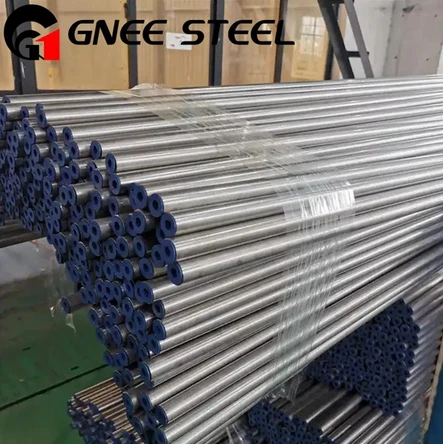
2304 Super Duplex Stainless Steel is a lean duplex stainless steel (not a "super duplex," which typically refers to higher-alloy grades like 1.4501). Its ASTM grade is:
UNS S32304
Common designations:
ASTM A240 Grade S32304
EN standard: 1.4362
| Property |
Typical Values (as per ASTM A240) |
| Tensile Strength |
≥ 600 MPa (87,000 psi) |
| Yield Strength (0.2% offset) |
≥ 400 MPa (58,000 psi) |
| Elongation at Break |
≥ 25% |
| Hardness (HB) |
≤ 290 |
| Density |
~7.8 g/cm³ |
| Modulus of Elasticity |
~200 GPa (29,000 ksi) |
| Element |
Weight % Range |
| Carbon (C) |
≤ 0.030 |
| Silicon (Si) |
≤ 1.00 |
| Manganese (Mn) |
≤ 2.50 |
| Phosphorus (P) |
≤ 0.030 |
| Sulfur (S) |
≤ 0.020 |
| Chromium (Cr) |
22.0 – 23.0 |
| Nickel (Ni) |
3.0 – 5.5 |
| Molybdenum (Mo) |
0.10 – 0.60 |
| Nitrogen (N) |
0.05 – 0.20 |
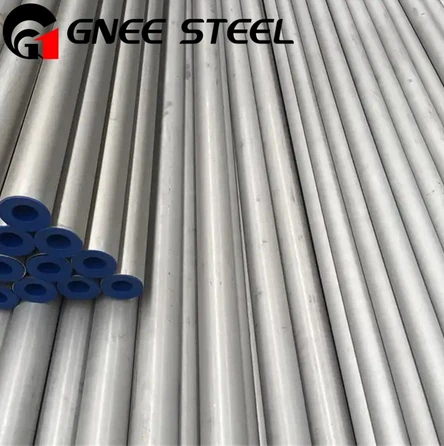
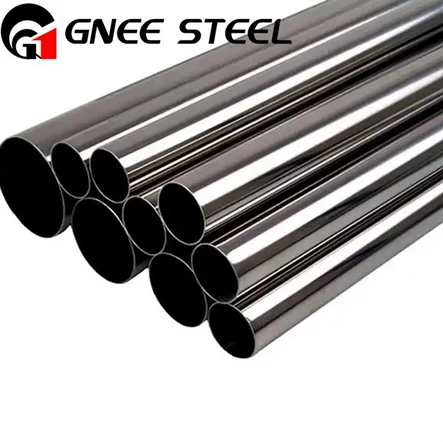
Due to its balanced corrosion resistance and strength, 2304 is used in:
Chemical processing industries: Reactors, tanks, and pipelines exposed to mild corrosive media.
Marine environments: Offshore structures, seawater systems, and ship components.
Paper and pulp industry: Equipment exposed to chlorinated compounds.
Food and beverage processing: Hygienic pipelines and storage tanks.
Oil and gas industry: Mildly corrosive wellheads and flowlines.
Corrosion Resistance: High resistance to pitting, crevice corrosion, and stress corrosion cracking (SCC) compared to austenitic stainless steels (e.g., 304/316).
Strength: Higher yield strength than austenitic grades, reducing material thickness and weight in designs.
Cost-Effective: Lower nickel content than super duplex or austenitic steels, making it more economical for moderate-corrosion applications.
Weldability: Good weldability with proper procedures, suitable for fabrication in complex structures.
Dual Microstructure: The duplex (ferrite + austenite) structure balances toughness and strength.