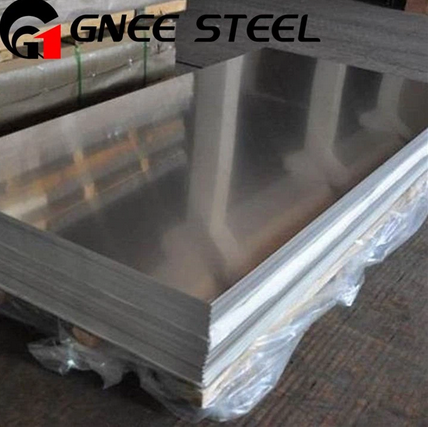
1. Q: What is the composition of the 57Ni-19.5Cr-13.5Co nickel alloy covered by AMS5544L, and what are its international equivalents?
A: The 57Ni-19.5Cr-13.5Co nickel alloy is a precipitation-hardening superalloy known globally as Inconel 718 (UNS N07718) or specifically a variant with controlled cobalt content aligned with AMS 5544L. This specification covers sheet, strip, and plate of this corrosion and heat resistant alloy, which is one of the most widely used superalloys in aerospace and high-temperature applications.
Complete Composition Profile: The nominal composition of 57% nickel, 19.5% chromium, and 13.5% cobalt represents a carefully balanced alloy system. The full composition typically includes:
| Element | Composition Range | Function |
|---|---|---|
| Nickel (Ni) | 50.0% - 55.0% | Austenitic matrix; corrosion resistance |
| Chromium (Cr) | 17.0% - 21.0% | Oxidation resistance; corrosion protection |
| Cobalt (Co) | 13.5% max | Solid-solution strengthening; thermal stability |
| Iron (Fe) | Balance | Cost-effectiveness; solid-solution strengthening |
| Niobium (Nb) | 4.75% - 5.50% | Forms gamma-double-prime (γ'') strengthening phase |
| Molybdenum (Mo) | 2.80% - 3.30% | Solid-solution strengthening; creep resistance |
| Titanium (Ti) | 0.65% - 1.15% | Contributes to gamma-prime (γ') strengthening |
| Aluminum (Al) | 0.20% - 0.80% | Contributes to gamma-prime formation |
| Carbon (C) | 0.08% max | Carbide formation; grain boundary strengthening |
| Boron (B) | 0.006% max | Grain boundary strengthening |
International Equivalents:
| System | Designation |
|---|---|
| UNS | N07718 |
| AMS | AMS 5544L (sheet/plate), AMS 5596 (sheet), AMS 5590 (sheet/plate) |
| ASTM | ASTM B670 (plate, sheet, strip) |
| German (W.Nr.) | 2.4668 |
| British (BS) | HR 504 |
| French (AFNOR) | NC19FeNb |
| Chinese (GB) | GH4169 |
The Cobalt Addition: The inclusion of approximately 13.5% cobalt is a distinguishing feature of certain variants of this alloy. Cobalt contributes to:
Solid-solution strengthening: Increases strength without forming embrittling phases
Improved creep resistance: Reduces stacking fault energy, impeding dislocation motion
Thermal stability: Stabilizes the austenitic matrix against intermetallic phase formation
Hot corrosion resistance: Enhances resistance to sulfidation at elevated temperatures
The Gamma-Double-Prime Strengthening Mechanism: This alloy derives its exceptional high-temperature strength from the precipitation of gamma-double-prime (γ'') -Ni₃Nb-along with a secondary population of gamma-prime (γ') -Ni₃(Al, Ti). This dual-precipitate system offers:
Slow overaging kinetics: The γ'' phase coarsens significantly slower than γ' at elevated temperatures
High strength: Yield strengths exceeding 150 ksi (1035 MPa) in the aged condition
Fabricability: The precipitation-hardening response is slow enough to allow hot and cold working
2. Q: What does AMS5544L specify, and how does it govern the melting, processing, and quality requirements for this nickel alloy sheet and plate?
A: AMS 5544L is the Aerospace Material Specification covering this corrosion and heat resistant nickel alloy in the form of sheet, strip, and plate. The "L" designation indicates the current revision level, reflecting the most up-to-date requirements for material produced for aerospace and high-performance applications. This specification is critical for ensuring material integrity in gas turbine engines and other demanding environments.
Scope and Applicability: AMS 5544L specifically addresses:
Product forms: Sheet, strip, and plate of this precipitation-hardening nickel alloy
Nominal composition: 57Ni - 19.5Cr - 13.5Co (with molybdenum, niobium, titanium, aluminum, and iron)
Condition: Typically supplied in the solution-annealed condition for fabrication, with precipitation hardening performed after forming
Applications: Corrosion-resistant and heat-resistant components for gas turbine engines, aerospace structures, and high-temperature chemical processing equipment
Melting Requirements – The Critical Quality Factor: AMS 5544L mandates specific melting practices to ensure material quality:
Consumable electrode remelting (VAR): The specification requires that the alloy be melted by vacuum induction melting (VIM) followed by consumable electrode remelting (also known as vacuum arc remelting, VAR). This dual melting process:
Reduces gas content (hydrogen, oxygen, nitrogen)
Minimizes non-metallic inclusions
Provides homogeneous chemistry
Enhances fatigue and creep properties essential for aerospace applications
Alternative melting: The specification allows for consumable electrode melting in vacuum or inert atmosphere, ensuring consistent quality regardless of the specific method.
Chemical Composition Control: AMS 5544L establishes strict composition limits that must be verified through heat analysis:
| Element | Composition Limits |
|---|---|
| Nickel | 50.0% - 55.0% |
| Cobalt | 13.5% max |
| Chromium | 17.0% - 21.0% |
| Molybdenum | 2.80% - 3.30% |
| Niobium | 4.75% - 5.50% |
| Titanium | 0.65% - 1.15% |
| Aluminum | 0.20% - 0.80% |
| Iron | Balance |
| Carbon | 0.08% max |
| Boron | 0.006% max |
Product Condition and Heat Treatment: AMS 5544L specifies that sheet and plate be supplied in the solution-annealed condition:
Solution annealing temperature: 940°C to 1010°C (1725°F to 1850°F)
Cooling: Rapid cooling (typically water quenching or rapid air cooling)
Purpose: To dissolve strengthening precipitates and achieve a homogeneous microstructure suitable for forming
Precipitation Hardening (Aging): After fabrication, components are typically aged to develop full strength:
First aging: 718°C ± 8°C (1325°F ± 15°F) for 8 hours minimum, followed by furnace cooling at controlled rate
Second aging: 621°C ± 8°C (1150°F ± 15°F) for 8 hours minimum, followed by air cooling
Mechanical Property Requirements (Precipitation-Hardened Condition):
| Property | Requirement |
|---|---|
| Tensile Strength | 180 ksi (1240 MPa) minimum |
| Yield Strength (0.2% offset) | 150 ksi (1035 MPa) minimum |
| Elongation | 12% minimum (in 2 inches or 50 mm) |
Quality Assurance Requirements: AMS 5544L mandates:
Tensile testing: Performed on representative samples
Hardness testing: For quality control verification
Grain size determination: To ensure consistent microstructure
Nondestructive examination: As specified by the purchaser
Traceability: Heat number marking on each sheet or plate
3. Q: What are the critical corrosion and heat-resistant properties of AMS5544L nickel alloy sheet and plate, and how do these properties compare to other superalloys?
A: The 57Ni-19.5Cr-13.5Co alloy covered by AMS5544L offers a unique combination of corrosion resistance and high-temperature strength that makes it indispensable for gas turbine engine components, aerospace structures, and high-temperature processing equipment. The addition of cobalt and the controlled precipitation-hardening system provide performance attributes that distinguish it from other nickel-based superalloys.
Heat-Resistant Properties:
| Property | Performance | Temperature Range |
|---|---|---|
| Creep resistance | Excellent | Up to 650°C (1200°F) |
| Stress rupture strength | Superior | Up to 650°C (1200°F) |
| Thermal stability | Excellent | Long-term exposure up to 650°C |
| Oxidation resistance | Good | Up to 980°C (1800°F) intermittent |
| Thermal fatigue | Good | Cyclic thermal environments |
Creep and Stress Rupture Strength: The gamma-double-prime (γ'') and gamma-prime (γ') precipitates provide:
Grain boundary pinning: Precipitates impede dislocation motion, delaying creep deformation
Slow overaging kinetics: The γ'' phase coarsens more slowly than γ', maintaining strength longer
Stress rupture life: Superior to solid-solution strengthened alloys at intermediate temperatures
Corrosion Resistance Characteristics:
| Environment | Performance | Mechanism |
|---|---|---|
| Oxidation (high temp) | Good | Chromium oxide (Cr₂O₃) scale formation |
| Chloride stress corrosion | Excellent | High nickel content (>50%) provides immunity |
| Sulfidation | Enhanced by cobalt | Cobalt improves hot corrosion resistance |
| Reducing acids | Good | Nickel base provides resistance |
Cobalt's Contribution to Corrosion Resistance: The 13.5% cobalt addition:
Enhances hot corrosion resistance: Particularly in sulfidizing environments encountered in gas turbines
Improves oxidation scale adhesion: Reduces spallation during thermal cycling
Stabilizes the matrix: Prevents formation of embrittling intermetallic phases
Comparison with Other Superalloys:
| Property | AMS5544L (Inconel 718) | Waspaloy | Inconel 625 | Hastelloy X |
|---|---|---|---|---|
| Strengthening | Precipitation (γ''/γ') | Precipitation (γ') | Solid-solution | Solid-solution |
| Max Service Temp | 650°C (1200°F) | 870°C (1600°F) | 980°C (1800°F) | 1090°C (2000°F) |
| Creep Strength (650°C) | Excellent | Excellent | Moderate | Moderate |
| Oxidation Resistance | Good | Good | Good | Excellent |
| Fabricability | Good | Fair | Excellent | Excellent |
| Weldability | Good (requires PWHT) | Fair | Excellent | Excellent |
| Cost Position | Moderate | High | Moderate | Moderate |
Aging Response and Property Development: One of the key advantages of this alloy is its controlled aging response:
Slow aging kinetics: Allows fabrication in the solution-annealed condition without premature hardening
Weldability: The slow aging response reduces the risk of strain-age cracking during welding
Heat treatment flexibility: Various aging cycles can be used to optimize specific properties
Thermal Stability: Unlike some precipitation-hardened alloys that suffer from rapid overaging, this alloy:
Maintains strength during prolonged exposure at 650°C (1200°F)
Resists formation of embrittling phases (sigma, laves) when properly heat treated
Provides predictable long-term performance for gas turbine components
4. Q: What are the critical fabrication and welding considerations for AMS5544L nickel alloy sheet and plate in aerospace applications?
A: The fabrication and welding of AMS5544L nickel alloy sheet and plate require specialized techniques that reflect the alloy's precipitation-hardening characteristics and the influence of cobalt on its metallurgical behavior. Proper fabrication practices are essential to maintain the corrosion resistance, high-temperature strength, and structural integrity required for aerospace applications.
Forming Considerations: In the solution-annealed condition, this alloy exhibits excellent ductility:
| Forming Operation | Considerations |
|---|---|
| Cold forming | Good formability; work hardens rapidly |
| Hot forming | 950°C-1100°C (1740°F-2010°F); reduces forming forces |
| Minimum bend radius | 2× to 4× thickness depending on temper |
| Springback | Moderate; cobalt increases elastic modulus |
Work Hardening Management:
Intermediate annealing: Required after significant cold work; 940°C-1010°C (1725°F-1850°F) with rapid cooling
Ductility restoration: Annealing restores elongation for further forming operations
Residual stress: May require stress relief for complex formed components
Welding Considerations: This alloy exhibits good weldability for a precipitation-hardening alloy:
| Parameter | Recommendation |
|---|---|
| Welding processes | GTAW (TIG) preferred; GMAW for thicker sections |
| Filler metal | ERNiCrFe-7 (Inconel 718 filler) or matching composition |
| Shielding gas | Argon or argon-helium mixtures; back purging for root passes |
| Heat input | Controlled to minimize grain growth |
| Interpass temperature | Maintain below 150°C (300°F) |
Cobalt's Influence on Welding: The 13.5% cobalt addition:
Reduces the tendency for hot cracking
Improves weld metal ductility
Enhances thermal stability of the weld zone
Post-Weld Heat Treatment: For applications requiring full high-temperature strength, welded assemblies must undergo post-weld heat treatment:
| Step | Temperature | Purpose |
|---|---|---|
| Solution annealing | 940°C-1010°C (1725°F-1850°F) | Dissolve precipitates in HAZ |
| First aging | 718°C (1325°F) for 8 hours | Gamma-double-prime formation |
| Second aging | 621°C (1150°F) for 8 hours | Complete precipitation |
Alternative Approach: For assemblies that cannot be heat treated after welding:
Welding in the solution-annealed condition
Localized aging of weld zones (where possible)
Consideration of reduced mechanical properties in as-welded condition
Machining Considerations:
| Parameter | Recommendation |
|---|---|
| Tooling | Carbide (C-2 or C-3) for production; HSS for low volume |
| Surface speed | 100-150 SFM (carbide); 40-60 SFM (HSS) |
| Feed rate | Aggressive feeds (0.005-0.015 in/rev) |
| Coolant | Flood coolant essential |
| Work hardening | Avoid light cuts; maintain constant tool engagement |
Surface Preparation and Cleaning:
| Operation | Method |
|---|---|
| Descaling | Pickling in nitric-hydrofluoric acid solutions |
| Degreasing | Solvent cleaning or alkaline cleaning |
| Passivation | After fabrication to restore corrosion resistance |
| Contamination prevention | Dedicated tools; avoid sulfur, lead, zinc |
5. Q: What quality assurance, testing, and procurement considerations are essential for AMS5544L nickel alloy sheet and plate in critical aerospace applications?
A: The procurement of AMS5544L nickel alloy sheet and plate for aerospace applications requires rigorous attention to quality assurance, testing protocols, and supply chain reliability. The demanding service conditions-gas turbine engine components, combustor liners, and high-temperature structural parts-demand that material quality meet the most stringent requirements.
Material Certification and Traceability: The foundation of quality assurance is comprehensive documentation:
| Documentation | Required Information |
|---|---|
| Mill test reports (MTRs) | Heat number, chemical analysis, mechanical properties, heat treatment |
| Heat treatment records | Time-temperature charts for solution annealing |
| Grain size determination | ASTM grain size verification |
| Product marking | Heat number, specification, alloy, dimensions |
| Traceability | Full traceability from melt to finished product |
Chemical Composition Verification: AMS5544L mandates strict composition limits:
| Element | Verification Requirement |
|---|---|
| Nickel | 50.0% - 55.0% |
| Cobalt | 13.5% max |
| Chromium | 17.0% - 21.0% |
| Niobium | 4.75% - 5.50% |
| Carbon | 0.08% max |
Melting Process Verification:
VIM + VAR documentation: Confirmation of dual melting process
Electrode composition: Verification of consumable electrode composition
Melt records: Documentation of melting parameters
Nondestructive Examination (NDE) Requirements:
| Test | Applicability | Purpose |
|---|---|---|
| Ultrasonic testing (UT) | Plate over certain thickness | Internal defect detection |
| Eddy current testing (ET) | Sheet and thin plate | Surface defect detection |
| Liquid penetrant testing (PT) | As specified | Surface crack detection |
| Visual examination | All products | Surface condition verification |
Mechanical Testing Requirements:
| Test | Requirement |
|---|---|
| Tensile testing (room temp) | 180 ksi min UTS; 150 ksi min YS; 12% min elongation |
| Hardness testing | Quality control verification |
| Grain size determination | Per ASTM E112 |
| Elevated-temperature testing | As specified for high-temperature applications |
Supplier Qualification for Aerospace:
| Criterion | Requirement |
|---|---|
| Quality system | AS9100 (aerospace quality management) |
| Mill approval | Approved by major engine manufacturers (OEMs) |
| Testing laboratory | ISO 17025 accreditation |
| Traceability systems | Full traceability capability |
| NDE qualifications | Certified NDE personnel and procedures |
Procurement Specification Checklist:
AMS 5544L specification and revision level
Alloy designation (UNS N07718 or Inconel 718)
Product form (sheet, strip, or plate)
Dimensions (thickness, width, length)
Condition (solution-annealed)
Melting process (VIM + VAR)
NDE requirements
Mechanical testing requirements
Certification requirements
Third-party inspection (if required)
Receiving Inspection Checklist:
Verify markings match purchase order
Review MTRs for completeness and conformance
Confirm melting process documentation
Perform Positive Material Identification (PMI) testing
Inspect surface condition for defects
Verify dimensions (thickness, width, length)
Check flatness and straightness
Verify packaging integrity
Special Requirements for Aerospace Applications:
| Requirement | Details |
|---|---|
| Source approval | Material must be from approved mills |
| Lot traceability | Each heat/lot must be traceable |
| Certificate of conformance | Statement of compliance with AMS 5544L |
| Third-party inspection | May be required by OEM or end user |
| Shelf life | Some applications have shelf life requirements |
Storage and Handling:
Clean environment: Store away from carbon steel to prevent contamination
Protective packaging: Maintain original packaging until fabrication
Traceability preservation: Ensure markings remain legible
Environmental control: Controlled temperature and humidity for critical applications
Risk Mitigation for Critical Applications:
| Strategy | Purpose |
|---|---|
| Qualified sources list | Restrict procurement to approved suppliers |
| Third-party inspection | Independent verification of material quality |
| Witnessed testing | Buyer presence during critical testing |
| Lot segregation | Prevent mixing of different heats |
| Change control | Any source changes require re-qualification |
By adhering to these quality assurance and procurement practices, aerospace manufacturers can ensure that AMS5544L nickel alloy sheet and plate meet the rigorous requirements of gas turbine engines and other critical applications, providing the corrosion resistance, heat resistance, and mechanical integrity essential for reliable service in extreme environments.