


Choosing between Nimonic 75 bars (Alloy 75/GH3030) and Nimonic 80A round bars (Alloy 80A/GH4080A) is a critical decision that directly impacts the performance and return on investment of high-temperature systems. While both alloys are nickel-chromium based, their metallurgical structure and mechanical property limits differ significantly.
Gnee Steel, a leading Nimonic alloy sourcing expert, provides this comprehensive comparative analysis to help your engineering and sourcing teams make data-driven and cost-effective decisions.
💰 Click to get a price comparison of Nimonic 75 and Nimonic 80A round bars
Nimonic 75 vs. Nimonic 80A Round Bars: A Purchasing Comparison Guide
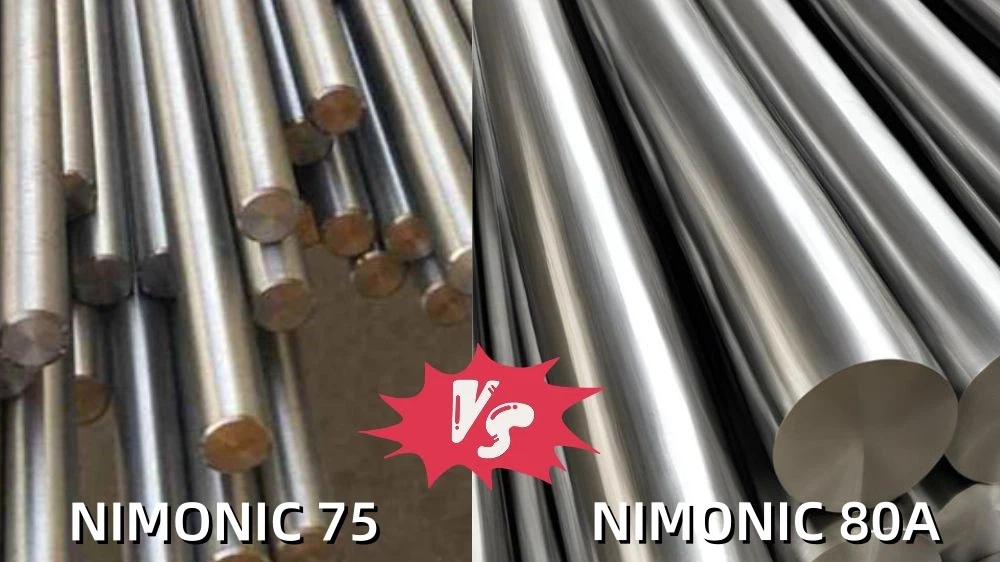
Nimonic 75 vs. Nimonic 80A Round Bars: A Purchasing Comparison Guide
This procurement guide compares two commonly used nickel-chromium superalloys-Nimonic 75 and Nimonic 80A round bars-which are frequently used in high-temperature applications. Although their base materials are similar, their performance characteristics, heat treatment requirements, and costs differ, making them suitable for different engineering needs.
What is NIMONIC 75?
Nimonic 75 is a nickel-chromium alloy with good corrosion resistance and heat resistance, and it also contains added titanium and carbon. Originally used in the 1940s for manufacturing turbine blades, Nimonic 75 is easy to machine and weld, and is now more widely used in gas turbines, industrial furnaces, and nuclear engineering.

1. Core Differences Between Nimonic 75 and Nimonic 80A Rod
The key to choosing lies in the strengthening mechanism:
Nimonic 75: A solid solution strengthened alloy. Its advantage lies in its simple structure-titanium stabilization gives it excellent oxidation resistance and excellent processing properties (welding/cold forming).
Nimonic 80A: A precipitation hardening (γ' phase) alloy. By adding aluminum and titanium, its hardening process significantly improves tensile strength and creep resistance under extreme mechanical stress.
2. Comparison of chemical composition of Nimonic 75 and 80A Bar
| Element | Nimonic 75 (%) | Nimonic 80A (%) |
|---|---|---|
| Nickel (Ni) | ≥ 78.0 | ≥ 69.0 |
| Chromium (Cr) | 18.0 – 21.0 | 18.0 – 21.0 |
| Iron (Fe) | ≤ 5.0 | ≤ 3.0 |
| Titanium (Ti) | ≤ 0.35 | 1.8 – 2.7 |
| Aluminum (Al) | – | 1.0 – 1.8 |
| Carbon (C) | 0.08 – 0.15 | ≤ 0.06 (max) |
| Manganese (Mn) | ≤ 1.0 | ≤ 1.0 |
| Silicon (Si) | ≤ 1.0 | ≤ 1.0 |
Click to download the GH3030 alloy PDF file now
3. Mechanical properties of Nimonic 75 and 80A bars
| Property | NIMONIC 75 | NIMONIC 80A |
|---|---|---|
| Tensile Strength (MPa) | ~750 | 900 – 1000 |
| Yield Strength (MPa) | ~350 | 550 – 650 |
| Elongation (%) | ~40 | ~20 – 25 |
| Hardness (Rockwell B) | ~85 | ~95 |
| Service Temperature (max) | Up to 1000°C | Up to 815°C (long term), higher for short periods |
4. Key Comparisons Between Nimonic 75 and 80A Bar
| Feature | Nimonic 75 (GH3030 / UNS N06075) | Nimonic 80A (GH4080A / UNS N07080) |
| Max Service Temp (Stress) | ~800°C (Moderate Load) | ~815°C (High Load) |
| Oxidation Resistance | Superior (Best in Class) | Excellent |
| Tensile Strength at 800°C | Moderate | Superior (Extreme) |
| Weldability | Exceptional | Moderate (Requires specialized PWHT) |
| Machinability | Good (for a superalloy) | Challenging (Work-hardens fast) |
| Primary Forms | Sheets, Tubes, Rounds | Bars, Forged Blanks, Fasteners |
| Price Factor | Cost-Effective | Performance-Premium |
5. Choosing Between Nimonic 75 Round Bars and Nimonic 80A
When to Purchase Nimonic 75 Round Bars?
If your application requires extremely high resistance to oxidation and structural stability, choose Nimonic 75. It is the gold standard for industrial furnace components, radiant tubes, and aerospace combustion liners.
Why Choose Us?
We offer factory-direct bulk pricing and maintain a wide inventory of various sizes from 10mm to 300mm in diameter.
When to Purchase Nimonic 80A Round Bars?
If your components must withstand high internal pressure or mechanical stress at temperatures around 800°C, choose Nimonic 80A. It is an essential material for gas turbine blades, exhaust valves, and high-strength bolts.
Why Choose Us?
Our Nimonic 80A bars are 100% ultrasonically tested (UT) to ensure no internal voids in high-stress applications.
Contact our professionals to recommend alloys suitable for your project
Why Choose Gnee as Your Nickel-Based Alloy Supplier
✅ Over 18 years of export experience, products sold to more than 80 countries
✅ Certified by ISO, SGS, and BV
✅ Global inventory of Inconel, Hastelloy, Incoloy, and Monel alloy tubing, plates, and bars
✅ Custom processing services available – including cutting, polishing, CNC machining, and packaging
✅ Fast delivery within 7-15 days, supported by global logistics partners
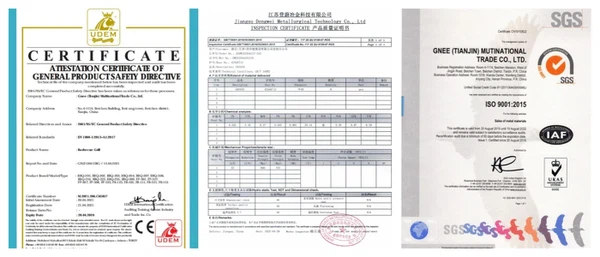
Gnee Steel GH3030 Certificate
📦 Packaging and Shipping
All Nickel Based Alloy products are packaged using the following methods:
Wooden pallets or crates
Moisture-proof packaging
Labels with furnace number, standard, and size labels
Shipped worldwide by sea, air, or express
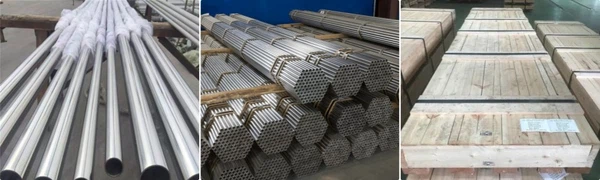
Gnee Steel GH3030 Product Packing
Contact us for the latest export price quote for GH3030 Alloy
FAQ
Q1: Can I replace Nimonic 75 with 80A to improve performance?
A: Not necessarily. While 80A is stronger, it is significantly more expensive and harder to weld. If your system isn't under high mechanical load, Nimonic 75 offers better ROI and fabricability.
Q2: Is Nimonic 80A harder to machine than Nimonic 75?
A: Yes. Due to its precipitation-hardened state, Nimonic 80A work-hardens more aggressively. As a technical support specialist, we recommend using high-quality carbide tools and slower feed rates for 80A.
Q3: Do you provide equivalents for GH3030 and GH4080A?
A: Absolutely. As a global exporter, we can certify our materials to both international standards (Nimonic/Alloy) and Chinese standards (GH), providing full EN 10204 3.1 MTCs.
Q4: How does the price compare between the two alloys?
A: Nimonic 80A typically carries a premium over Nimonic 75 due to its complex alloying elements and the intensive heat treatment process required to achieve its strength.



