

Information on Inconel 600 hex bolts and Inconel 718 hex bolts

Information on Inconel 600 hex bolts and Inconel 718 hex bolts
Inconel 600 and 718 hex bolts are high-performance nickel-chromium alloys used in extreme conditions. Inconel 600 offers excellent high-temperature oxidation and carburization resistance (suitable for temperatures ranging from cryogenic to 2200°F), while Inconel 718 provides superior strength and creep resistance, making it ideal for high-stress, high-temperature applications (up to 1300°F). Its strength is generally superior to Inconel 600 and it is widely used in aerospace and oil and gas industries. Both alloys exhibit good corrosion resistance, but Inconel 718 is typically stronger and more expensive, suitable for applications where extremely high tensile and fracture strength are critical.
Why is Inconel 718 difficult to machine?
Inconel 718 is a nickel-based superalloy that exhibits excellent performance at high temperatures, making it widely used in industries such as aerospace, shipbuilding, and automotive. However, Inconel 718 has poor thermal conductivity and a high work-hardening rate, resulting in poor machinability and inferior surface quality after machining.

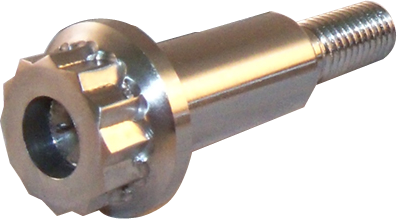
Inconel 600 Hex Bolts
Hex bolts manufactured from Inconel 600 material possess excellent mechanical properties, including high strength and good machinability. The high nickel content of Inconel 600 provides outstanding corrosion resistance, particularly against chloride stress corrosion cracking. Inconel 600 hex bolts also exhibit good high-temperature oxidation resistance. Furthermore, these ultra-strong hex bolts are cold-worked and strengthened, resulting in extremely high reliability.
Inconel 718 Hex Bolts
Inconel 718 superalloy is a precipitation-hardened nickel-based alloy designed to exhibit exceptional yield strength, tensile strength, and creep rupture properties at temperatures up to 1300°F. Due to the heat treatment and quenching process used to alter its atomic structure, Inconel 718 hex bolts are stronger than Inconel 625 bolts, and their strength is further enhanced through cold working.
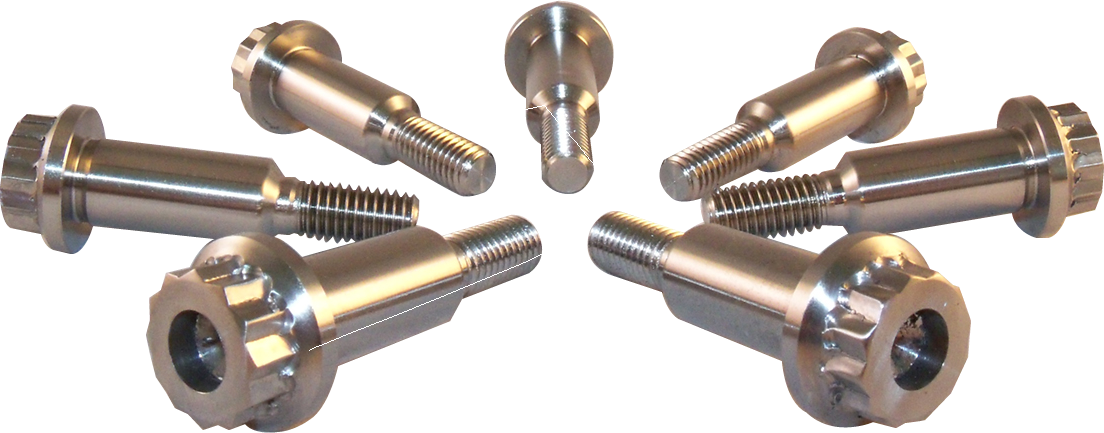
Comparison of the chemical composition of Inconel 600 hexagonal bolts and Inconel 718 hexagonal bolts
| Element | Inconel 600 Bolts (UNS N06600) | Inconel 718 Bolts (UNS N07718) |
|---|---|---|
| Nickel (Ni) | ≥ 72.0 % | 50.0 – 55.0 % |
| Chromium (Cr) | 14.0 – 17.0 % | 17.0 – 21.0 % |
| Iron (Fe) | 6.0 – 10.0 % | Balance |
| Niobium (Nb) | – | 4.75 – 5.50 % |
| Molybdenum (Mo) | – | 2.80 – 3.30 % |
| Titanium (Ti) | – | 0.65 – 1.15 % |
| Aluminum (Al) | – | 0.20 – 0.80 % |
| Cobalt (Co) | – | ≤ 1.00 % |
| Carbon (C) | ≤ 0.15 % | ≤ 0.08 % |
| Manganese (Mn) | ≤ 1.0 % | ≤ 0.35 % |
| Silicon (Si) | ≤ 0.5 % | ≤ 0.35 % |
| Copper (Cu) | ≤ 0.5 % | ≤ 0.30 % |
| Sulfur (S) | ≤ 0.015 % | ≤ 0.015 % |
| Phosphorus (P) | – | ≤ 0.015 % |
| Boron (B) | – | ≤ 0.006 % |
Comparison of mechanical properties between Inconel 600 hexagonal bolts and Inconel 718 hexagonal bolts
| Property | Inconel 600 Bolts (Annealed) | Inconel 718 Bolts (Aged / Heat Treated) |
|---|---|---|
| Tensile Strength (MPa, min) | 550 – 690 | 1275 – 1375 |
| Yield Strength (0.2% Offset, MPa, min) | 240 | 1035 – 1170 |
| Elongation (% in 50 mm, min) | 30 | 12 – 20 |
| Hardness (Rockwell C) | – | 36 – 44 HRC |
| Hardness (Rockwell B) | 90 HRB max | – |
| Shear Strength (MPa) | ~345 | ~690 |
| Fatigue Strength (Endurance Limit, MPa) | Moderate | Very High |
| Creep Resistance | Good up to ~700°C | Excellent up to ~650°C |
| Maximum Service Temperature (Continuous) | ~700°C | ~650°C |
| Impact Toughness (Charpy V-Notch, J) | Moderate | Good |
| Stress Rupture Strength (at 650°C) | Low | Very High |
Applications of Inconel 600 Hex Bolts
Hex bolts made from Inconel 600 material are typically used in applications requiring extremely high strength and corrosion resistance.
Heaters
Distillers
Condensers
Tube sheets
Bubble columns
Stripping columns
Applications of Inconel 718 Hex Bolts
Inconel 718 hex bolts are often used in high-end industries due to their excellent high-temperature strength properties, maintaining strength and ductility at both extremely high and low temperatures. Inconel 718 alloy hex bolts and screws are commonly used in the following types of applications:
Chemical processing
Nuclear reactors
Turbine engines
Oil wells
Natural gas processing
Cryogenic storage tanks
Main differences and similarities between Inconel 600 and Inconel 718 hex bolts
Strength: Due to the presence of strengthening elements (niobium), Inconel 718 alloy has significantly higher strength at high temperatures than Inconel 600 alloy.
Corrosion Resistance: Both alloys have high corrosion resistance, but Inconel 718 is more suitable for high-temperature applications requiring high strength, while Inconel 600 is more suitable for applications requiring specific chemical corrosion resistance.
Applications: If the application environment involves extremely high temperatures/corrosive media and the final strength requirements are not high, choose Inconel 600; if the application environment involves high stress, high or low temperatures, and requires maintaining structural integrity, choose Inconel 718.
Why Choose Gnee as Your Nickel-Based Alloy Supplier
✅ Over 18 years of export experience, products sold to more than 80 countries
✅ Certified by ISO, SGS, and BV
✅ Global inventory of Inconel, Hastelloy, Incoloy, and Monel alloy tubing, plates, and bars
✅ Custom processing services available – including cutting, polishing, CNC machining, and packaging
✅ Fast delivery within 7-15 days, supported by global logistics partners
📦 Packaging and Shipping
All stainless steel products are packaged using the following methods:
Wooden pallets or crates
Moisture-proof packaging
Labels with furnace number, standard, and size labels
Shipped worldwide by sea, air, or express
Gnee Steel also supplies custom Inconel 600 products in various sizes and specifications. Please send us your drawings for a quote!


