

When designing applications with temperatures above 800°C (1472°F), choosing between Inconel 713C (UNS N07713) and Hastelloy X (UNS N06002) is often one of the most critical decisions engineers face. The former boasts extremely high strength, while the latter is renowned for its excellent machinability.
Gnee Alloy, as a leading sourcing center for high-temperature alloys, offers this technical guide to help you meet mechanical load requirements while considering manufacturing costs. Don't over-engineer your project-contact our experts today for a comparative inquiry.
Contact our professionals to recommend the right alloy for your project
Inconel 713C vs Hastelloy X: Choosing Between Two Alloys

Inconel 713C vs Hastelloy X: Choosing Between Two Alloys
The choice between Inconel 713C and Hastelloy X depends on whether your application requires extremely high heat resistance (Inconel 713C) or excellent oxidation resistance and processability in corrosive environments (Hastelloy X).
Inconel 713C is a precipitation-hardening nickel-chromium casting alloy optimized for excellent creep strength and fatigue resistance at temperatures up to 900°C (1652°F).
Hastelloy X is a nickel-chromium-iron-molybdenum alloy renowned for its superior oxidation resistance, ductility, and machinability, making it particularly suitable for jet engine exhaust systems and industrial furnaces.
What are the properties of Inconel 713C material?
Inconel 713C has extremely high corrosion resistance. Upon heating, a thick, stable oxide layer forms on the surface, providing protection. This material maintains its strength over a wide temperature range. This metal alloy is particularly suitable for applications with temperatures up to 900°C.

1. Key Differences Between Inconel 713C and Hastelloy X
Inconel 713C (Precipitation Strengthening): Strengthened by the γ′ (γ') phase [Ni3(Al, Ti)]. Contains 6% aluminum and is designed for high-stress rotating components, especially suitable for applications requiring extremely high creep rupture strength.
Hastelloy X (Solid Solution Strengthening): Strengthened by the presence of chromium, molybdenum, and iron in the nickel matrix. It exhibits excellent oxidation resistance and machinability, making it a standard material for sheet metal parts and burners.
Request a quote for Inconel 713C bars
2. Comparison of chemical composition of Inconel 713C (typical value %)
| Element | Inconel 713C (Cast) | Hastelloy X (Wrought/Cast) | Technical Significance |
| Nickel (Ni) | Balance | Balance | Base matrix for heat resistance. |
| Chromium (Cr) | 12.0 - 14.0 | 20.5 - 23.0 | Hastelloy X has superior oxidation resistance. |
| Aluminum (Al) | 5.5 - 6.5 | 0.5 Max | 713C uses Al for
γ′γ′ strengthening. |
| Molybdenum (Mo) | 4.0 - 5.0 | 8.0 - 10.0 | Hastelloy X uses Mo for solid solution strength. |
| Iron (Fe) | 2.5 Max | 17.0 - 20.0 | Hastelloy X is more cost-effective for static parts. |
| Cobalt (Co) | 1.0 Max | 0.5 - 2.5 | Enhances high-temp stability. |
3. Mechanical properties of Inconel 713C and Hastelloy X
| Property | Inconel 713C (at 982°C) | Hastelloy X (at 982°C) | Why it Matters? |
| Tensile Strength | 345 MPa | 125 MPa | 713C is 2.5x stronger at peak heat. |
| Creep Rupture (100h) | ~150 MPa | ~40 MPa | 713C carries much higher loads. |
| Weldability | Virtually Unweldable | Excellent | Hastelloy X is for welded assemblies. |
| Processing | Casting & Machining only | Forging, Rolling, Welding | Hastelloy X is highly versatile. |
Click to download the Inconel 713C alloy PDF file now
4. Inconel 713C and Hastelloy X manufacturing processes
| Feature | Inconel 713C Processing | Hastelloy X Processing |
| Forming | Vacuum Investment Casting | Cold/Hot Rolling & Forging |
| Welding | Not recommended (Strain-age cracking) | TIG, MIG, Electron Beam (Excellent) |
| Machining | Precision Grinding / EDM | Standard Milling & Turning |
| NDT Testing | X-Ray & FPI (Mandatory) | Eddy Current & Ultrasonic |
| Standard | AMS 5391 | AMS 5536 (Sheet) / AMS 5754 (Bar) |


5. When should you choose between the Inconel 713C and Hastelloy X?
Choose Inconel 713C if:
You are designing rotating parts (Turbine wheels, blades).
The component faces extreme centrifugal stress at 1000°C.
You need a near-net-shape cast-to-size component.

Turbine impeller made of Inconel 713C alloy
Choose Hastelloy X if:
You are designing combustion chambers, transition ducts, or tailpipes.
The design requires complex sheet metal forming and extensive welding.
The primary threat is oxidation/corrosion rather than high mechanical load.

Hastelloy X alloy for combustion chamber
Why Choose Gnee as Your Nickel-Based Alloy Supplier
✅ Over 18 years of export experience, products sold to more than 80 countries
✅ Certified by ISO, SGS, and BV
✅ Global inventory of Inconel, Hastelloy, Incoloy, and Monel alloy tubing, plates, and bars
✅ Custom processing services available – including cutting, polishing, CNC machining, and packaging
✅ Fast delivery within 7-15 days, supported by global logistics partners

Gnee Steel inconel 713C Certificate
📦 Packaging and Shipping
All Nickel Based Alloy products are packaged using the following methods:
Wooden pallets or crates
Moisture-proof packaging
Labels with furnace number, standard, and size labels
Shipped worldwide by sea, air, or express
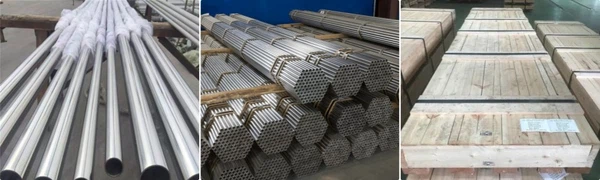
Gnee Steel 713C Tube Product Packing
Contact us for the latest export price quote for 713C Alloy
FAQ
Q: Can I use Hastelloy X for a turbine blade to save on machining costs?
A: Absolutely not. While Hastelloy X is easier to machine, it will deform (creep) almost instantly under the centrifugal loads of a turbine at 900°C. Inconel 713C is mandatory for rotating stressed parts.
Q: Is Inconel 713C more expensive than Hastelloy X?
A: Per kilogram, 713C master alloy is often cheaper due to lower Mo and Co. However, the Vacuum Investment Casting process for 713C is more specialized than the fabrication of Hastelloy X. Contact our technical sales team for a total cost analysis.
Q: Do you provide certified MTC for both alloys?
A: Yes. Whether it's AMS 5391 for 713C or AMS 5536 for Hastelloy X, every shipment includes a Full Traceability MTC 3.1 with verified chemical and mechanical data.


