

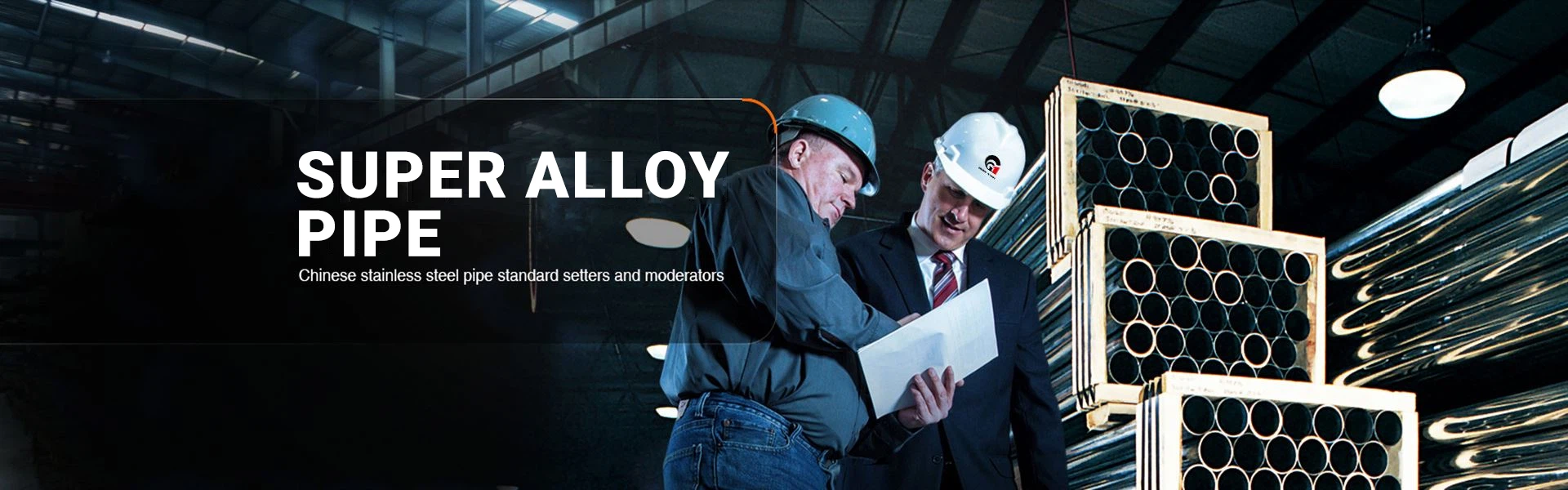
Finding a reliable supplier of Inconel 713C (2.4670) tubing is a common challenge for engineers. As experts in the 2.4670 alloy, Gnee Alloy must emphasize that Inconel 713C is a castable superalloy that cannot be cold-drawn or rolled.
To meet the needs of core hot-end components, we offer precision machining services, utilizing VIM melt casting blanks to machine hollow profiles. This method ensures your turbine nozzles and sleeves maintain the exceptionally high creep strength of 1800°F, unique to 713C, and meet the custom dimensions required for your project.
Contact our professionals to recommend the right alloy for your project
Custom Inconel 713C (2.4670) Tube: Turbine Hot End Machining Guide

Custom Inconel 713C (2.4670) Tube: Turbine Hot End Machining Guide
Machining Inconel 713C (2.4670) alloy for the hot end of turbines requires overcoming its extremely high heat resistance, rapid work hardening, and high abrasiveness. This nickel-chromium alloy is often cast for turbine blades and exhaust components, which leads to rapid tool wear and requires large cutting forces.
What are the properties of INCONEL 713C material?
Inconel 713C has extremely high corrosion resistance. When heated, a thick, stable oxide layer forms on the surface, providing protection. This material maintains its strength over a wide temperature range. This metal alloy is particularly suitable for applications with temperatures up to 900°C.

1. Why is machined hollow profiles the industry standard?
Standard stainless steel tubes fail at 1000°C, while forged alloys like 625 lack the necessary creep resistance.
Material Challenge: The high aluminum (6%) and titanium content of Inconel 713C makes it difficult to roll, but ideal for precision machining.
Solution: We use vacuum induction melting (VIM) technology to cast high-purity solid cylinders, followed by deep hole drilling and external turning, to create ultra-precision hollow profiles. This ensures metallurgical integrity to AMS 5391 standards.
Click to learn about Gnee Alloy's Inconel 713C alloy manufacturing process
2. Chemical composition of Inconel 713C (2.4670 / AMS 5391) alloy tubing
Our hollow components are machined from VIM-melted feedstock to ensure zero internal defects and precise chemical balance.
| Element | Content (Wt. %) | Engineering Benefit |
| Nickel (Ni) | Balance | Provides the heat-resistant matrix. |
| Chromium (Cr) | 12.00 - 14.00 | Resistance to hot corrosion & oxidation. |
| Aluminum (Al) | 5.50 - 6.50 | Key for 1800°F Gamma-Prime strengthening. |
| Molybdenum (Mo) | 4.00 - 5.00 | Solid-solution strengthening for core parts. |
| Niobium (Nb) | 2.00 - 3.00 | Stabilizes structure for dimensional accuracy. |
| Titanium (Ti) | 0.50 - 1.00 | Enhances precipitation hardening. |
3. Mechanical properties of Inconel 713C tube
| Property | Room Temp (20°C) | High Temp (1800°F / 982°C) |
| Tensile Strength (UTS) | 862 MPa (125 ksi) | 345 MPa (50 ksi) |
| Yield Strength (0.2%) | 758 MPa (110 ksi) | 276 MPa (40 ksi) |
| Elongation (%) | 5.0% | 10.0% |
| Density | 7.91 g/cm³ | Predictable weight for aero-design |
4. Physical properties of alloy 713C tube
| Physical Metric | Value |
| Melting Range | 1260°C - 1290°C |
| Thermal Expansion (20-1000°C) | 16.2 μm/m·°C |
| Thermal Conductivity (at 1000°C) | 27.6 W/m·K |
| Specific Heat | 427 J/kg·°C |
Click to download the Inconel 713C alloy PDF file now
5. Advanced manufacturing and processing methods for 713C alloy pipes
Due to the high hardness and work hardening properties of Inconel 713C alloy, it is extremely difficult to machine. We employ specialized tools and CNC machining processes to ensure the perfect quality of our hollow profiles.
| Processing Method | Purpose & Benefit | Equipment / Capability |
| VIM Melting | Ensures Aerospace-grade purity and low gas content. | Vacuum Induction Melting |
| Vacuum Investment Casting | Creates the near-net-shape hollow or solid blank. | Vacuum Casting Furnace |
| Deep Hole Drilling (DHD) | Precisely creates the inner diameter (ID) of the hollow bar. | CNC Gun Drilling |
| CNC Turning & Milling | Achieves tight tolerances for turbine sleeves and bushes. | Multi-axis CNC Centers |
| EDM (Wire/Sinker) | Used for complex slots or holes in core parts to avoid stress. | Electrical Discharge Machining |
| Centerless Grinding | Ensures outer diameter (OD) surface finish up to Ra 0.4. | Precision Grinding Machines |


6. Gnee Alloy Inconel 713C Quality Inspection
At the "hot end" of a gas turbine, failures are absolutely unacceptable. Our fully traceable MTC 3.1 employs the following world-class testing methods to ensure compliance with global safety standards.
| Inspection Method | Target Defects / Parameters | Significance for 713C |
| ICP-MS & Gas Analysis | Al/Ti ratio and Oxygen/Nitrogen (<10ppm). | Ensures 1800°F Creep Strength. |
| FPI (Fluorescent Penetrant) | Surface micro-cracks and machining stress tears. | Mandatory for turbine rotating parts. |
| X-Ray / Radiography | Internal casting porosity and shrinkage. | Ensures structural integrity of hollow sections. |
| Stress Rupture Testing | Mechanical life at 982°C / 152 MPa. | Validates batch-to-batch reliability. |
| CMM Inspection | Dimensional accuracy vs. CAD drawing. | Guarantees fit for high-precision assembly. |
| Ultrasonic Testing (UT) | Internal inclusions and subsurface flaws. | Essential for VIM-melted feedstock bars. |


7. Why do we need to partner with Gnee Alloy, a professional supplier of nickel-based alloys?
Machining 713C requires specialized tooling and deep metallurgical knowledge to prevent work hardening and surface micro-cracks.
✅️Precision Machining: We specialize in turning, milling, and deep-hole drilling of hard-to-cut nickel superalloys.
✅️Custom Dimensions: Whether you need a 50mm bush or a 300mm hollow sleeve, we deliver to your exact CAD tolerances.
✅️Full Traceability: Every machined part comes with a Full Traceability MTC 3.1, ensuring your supply chain meets aerospace global safety standards.

Gnee Steel Alloy 713C Certificate
📦 Packaging and Shipping
All Nickel Based Alloy products are packaged using the following methods:
Wooden pallets or crates
Moisture-proof packaging
Labels with furnace number, standard, and size labels
Shipped worldwide by sea, air, or express

Gnee Steel inconel 713C Product Packing
Contact us for the latest export price quote for 713C Alloy
FAQ
Q: Can I get Inconel 713C tubes in long coils?
A: No. As a 2.4670 alloy expert, we clarify that 713C is only available in cast and machined forms. For coils, you must look at Inconel 625, but it will not match 713C's high-temperature strength.
Q: Why use machined hollow sections instead of as-cast tubes?
A: Machining allows for much tighter tolerances (±0.01mm) and a superior surface finish (Ra 0.8), which is essential for the aerodynamic efficiency of gas turbine core hot-end parts.
Q: Do you provide NDT testing for machined parts?
A: Yes. We offer FPI (Fluorescent Penetrant Inspection) and X-ray testing to ensure that your hollow sections are 100% free of casting porosity or machining defects.


