


Inconel 625 ASTM B444 seamless tube is a nickel-chromium-molybdenum-niobium alloy tubular product designated as UNS N06625 (W.Nr.2.4856), manufactured to ASTM B444 for seamless pipe and tube used in aerospace fluid conveyance, structural ducting, and engine peripheral systems. It combines a minimum 58% nickel matrix with 20–23% chromium, 8–10% molybdenum, and 3.15–4.15% niobium, delivering chloride pitting resistance (PREN ~47.5), oxidation resistance to 980°C, and tensile strength up to 827 MPa in the cold-worked condition. This guide covers Grade 1 vs Grade 2 selection, dimensional availability, NDT inspection requirements, welding procedures, and certification checklists to help aerospace procurement engineers make informed sourcing decisions.

Request ASTM B444 Aerospace Tube Quote & NDT Report Package
What Is Inconel 625 ASTM B444 Seamless Tube?
ASTM B444 is the standard specification for seamless pipe and tube of nickel-chromium-molybdenum-columbium (Ni-Cr-Mo-Cb) alloy, covering UNS N06625 in two grades. Inconel 625 is the Special Metals Corporation trade name for this alloy; the generic designation is UNS N06625. The seamless manufacturing route (extrusion + cold pilger / cold draw, no longitudinal weld seam) is critical for aerospace applications where weld-seam-free structural integrity and uniform grain structure are mandatory.
The alloy is a solid-solution strengthened grade - it does not require precipitation-hardening heat treatment. It is supplied in the solution-annealed condition (1093°C / 2000°F) or cold-worked condition, ready for fabrication. Is Inconel a nickel alloy?
Yes - with ≥58% nickel content, Inconel 625 is a true nickel-based superalloy. Its strength comes from the Ni-Cr-Mo-Nb matrix and carbide precipitation at grain boundaries, not from gamma-prime or gamma-double-prime phases. This makes it simpler to fabricate than precipitation-hardened grades like Inconel 718.
Inconel 625 ASTM B444: Grade 1 vs Grade 2 Selection
ASTM B444 specifies two delivery conditions. The choice between Grade 1 and Grade 2 is the first decision an aerospace procurement engineer must make, as it directly affects pressure rating, formability, and certification path:
| Parameter | Grade 1 (Cold-Worked) | Grade 2 (Solution Annealed) |
|---|---|---|
| Condition | Strain-hardened (cold-reduced) | Solution annealed at 1093°C, air/water cool |
| Tensile Strength, min | 827 MPa (120 ksi) | 655 MPa (95 ksi) |
| Yield Strength (0.2%), min | 415 MPa (60 ksi) | 310 MPa (45 ksi) |
| Elongation in 50 mm, min | 30% | 30% |
| Hardness (typical) | 25–35 HRC | ≤20 HRC (~95 HRB) |
| Best For | High-pressure fluid conveyance lines | Forming, bending, welding-intensive parts |
| Aerospace Use Case | Engine fuel & hydraulic lines, high-pressure ducts | Exhaust shrouds, structural ducting, brackets |
| Post-Weld Heat Treatment | Not required | Not required |
Selection rule: If the tube will be bent, flared, or extensively welded during fabrication, specify Grade 2 (annealed) for maximum ductility. If the tube is used as-is for high-pressure straight runs, specify Grade 1 (cold-worked) for higher strength and pressure rating. Both grades meet ASTM B444 chemical composition requirements identically.
Get Grade 1 / Grade 2 Selection Chart & Price Comparison
Inconel 625 ASTM B444 Chemical Composition
The Inconel 625 chemical composition per ASTM B444 is identical for both Grade 1 and Grade 2. The specification controls impurity levels (P, S) to ≤0.015% each to prevent hot shortness during extrusion and welding:
| Element | ASTM B444 Range (%) | Metallurgical Function |
|---|---|---|
| Nickel (Ni) | ≥58.0 | FCC matrix; SCC immunity |
| Chromium (Cr) | 20.0–23.0 | Passive Cr&sub2;O&sub3; film; oxidation resistance to 980°C |
| Molybdenum (Mo) | 8.0–10.0 | Pitting & crevice corrosion resistance; PREN boost |
| Niobium+Ta (Nb+Ta) | 3.15–4.15 | MC carbide stabilization; sensitization prevention |
| Iron (Fe) | ≤5.0 | Controlled residual; phase stability |
| Carbon (C) | ≤0.10 | Low carbon for weldability |
| Manganese (Mn) | ≤0.50 | Deoxidizer; hot-workability |
| Silicon (Si) | ≤0.50 | Deoxidizer; limited to prevent embrittlement |
| Phosphorus (P) | ≤0.015 | Strict impurity; prevents hot cracking |
| Sulfur (S) | ≤0.015 | Strict impurity; prevents hot shortness |
| Aluminum (Al) | ≤0.40 | Oxidation aid |
| Titanium (Ti) | ≤0.40 | Minor; carbon getter |
Manufacturing Process of Inconel 625 Seamless Tube for Aerospace Gas Turbine
For aerospace gas turbine service, Inconel 625 seamless tube follows a strict multi-stage precision manufacturing workflow with dual vacuum melting to meet AMS and ASTM B444 requirements.
- VIM+VAR Dual Vacuum Melting & Ingot Casting High-purity nickel, chromium, molybdenum and niobium feedstock are melted by Vacuum Induction Melting (VIM), then remelted via Vacuum Arc Remelting (VAR). This dual-melting method minimizes gas impurities and segregations, delivering uniform microstructure critical for gas turbine high-temperature service. The molten alloy solidifies into dense ingots.
- Billet Preparation Ingots go through forging, surface peeling, saw cutting and centre drilling. All surface defects are fully removed, and hollow billets are machined to precise dimensional tolerance before hot forming.
- Hot Extrusion Preheated hollow billets are extruded through precision dies to form mother seamless tube shells. Hot extrusion creates a continuous grain flow around the tube circumference, eliminating weld seam weakness required for high-pressure gas turbine circuits.
- Cold Pilgering & Sizing Multi-pass cold pilgering reduces outer diameter and wall thickness to final dimensions, achieving tight wall tolerance. This step refines grain structure and boosts dimensional accuracy for aerospace precision tubing.
- Controlled Solution Annealing & Straightening The tubes undergo solution annealing (Grade 1 / Grade2 heat treatment per ASTM B444) to relieve forming stress and tune high-temperature creep performance. Rotary straightening controls tube straightness to meet aerospace specifications.
- Full NDT Inspection & Final Finishing Every tube receives 100% non-destructive testing: ultrasonic testing, eddy current inspection and PMI positive material identification. Surface pickling, polishing and dimensional verification are completed before material test certification and packing.


Inconel 625 ASTM B444 seamless tube Aerospace Dimensional Availability & Tolerances
ASTM B444 tubes are produced to dimensional tolerances per ASTM B829 (general requirements) and ASME B36.19M. For aerospace applications, tighter tolerances may be specified per the purchaser's drawing (e.g., WT ±10% vs the standard ±12.5%). Common aerospace production sizes include:
| OD Range | Wall Thickness Range | Typical Aerospace Application |
|---|---|---|
| 6.35 mm (1/4") | 0.5–1.65 mm | Instrumentation lines, sensor tubing |
| 12.7 mm (1/2") | 0.89–2.77 mm | Hydraulic fluid conveyance lines |
| 19.05 mm (3/4") | 1.24–3.96 mm | Fuel supply lines, bleed air ducts |
| 25.4 mm (1") | 1.65–5.54 mm | Lubrication lines, coolant loops |
| 38.1–60.3 mm (1.5–2") | 2.77–8.74 mm | Engine peripheral cooling ducts |
| 76.2–168.3 mm (3–6") | 3.96–15.09 mm | Exhaust shrouds, thrust reverser ducting |
Length: Random lengths 4–7 m; fixed lengths and cut-to-size available. End finish: Square cut, deburred, or beveled for welding. Surface: Cold-drawn OD may be specified to Ra ≤1.6 µm; electropolished to Ra ≤0.4 µm for pharmaceutical-grade cleanliness where required.
Request Full NDT Report Package & MTC Sample
Inconel 625 aerospace Tube Key Corrosion & High-Temperature Performance
In aerospace service, Inconel 625 tube must withstand thermal cycling, combustion gas exposure, and chloride-containing environments (de-icing salts, marine atmosphere). The table below rates performance with star ratings:
| Environment | Rating | Notes |
|---|---|---|
| Chloride pitting (marine atmosphere) | ★★★★★ | CPT >90°C; immune at ambient |
| Stress corrosion cracking (Cl− + H&sub2;O) | ★★★★★ | Immune at all practical temperatures |
| Oxidation (air, continuous) | ★★★★★ | Scaling limit 980°C; safe structural service ≤650°C |
| Combustion gas (jet fuel exhaust) | ★★★★☆ | Good up to 650°C; sulfidation risk if high-sulfur fuel |
| Thermal fatigue (cyclic 200–650°C) | ★★★★☆ | Excellent; FCC matrix resists cracking |
| Hydraulic fluid / fuel compatibility | ★★★★★ | Inert; no degradation in MIL-PRF-7808/23699 oils |
When to use Inconel 625 B444 tube in aerospace: Fuel and hydraulic fluid lines operating at -50°C to 650°C; exhaust gas ducting where oxidation and thermal cycling coexist; marine-environment exposed components on carrier-based aircraft; engine peripheral cooling tubes within the hot section outer envelope.
When NOT to use Inconel 625 in aerospace: Turbine blade or disc applications requiring load-bearing strength above 650°C - use Inconel 718 (precipitation-hardened, creep-rupture rated to 700°C) or Inconel 617 (solid-solution, rated to 950°C). For rotating components requiring ultra-high specific strength, wrought or powder-metallurgy superalloys (Rene 95, U720Li) are the correct choice.
Inconel 625 aerospace Tube Welding & Fabrication Guidelines
Inconel 625 ASTM B444 tube exhibits excellent weldability - no preheat, no post-weld heat treatment, and no precipitation-hardening cycle required. This is a significant advantage over Inconel 718 in fabrication efficiency. Key guidelines for aerospace fabrication:
- Welding process: GTAW (TIG) is preferred for aerospace tube joints. Use pulsed DCEN with 2% thoriated or lanthanated tungsten electrode. GMAW acceptable for non-critical joints.
- Filler metal: ERNiCrMo-3 (AWS A5.14) matching filler wire, 0.8–1.6 mm diameter. For dissimilar joints to 316L or carbon steel, ERNiCrMo-3 remains the preferred over-alloyed filler.
- No preheat: Do not preheat. Interpass temperature must remain below 150°C. Use contact thermocouple verification between passes.
- Joint preparation: 60–70° V-groove, 1–2 mm root face, 2–3 mm root gap for full-penetration single-side welds.
- Purge: Maintain pure argon ID purge (O&sub2; <0.03%) during root welding. Flow rate 5–10 L/min until root pass reaches 3 mm minimum thickness.
- Bending: Cold bend minimum radius 3×OD for Grade 2 (annealed); 5×OD for Grade 1 (cold-worked) without intermediate stress relief.
- Machining: Rapid work-hardening requires sharp positive-rake carbide tooling, low surface speed (30–45 m/min), and generous lubrication to prevent galling.
- Pickling & passivation: Remove weld heat tint with 20–25% HNO&sub3; + 3–5% HF at 40°C for 15–30 min; neutralize and rinse thoroughly.
For a full Inconel 625 ASTM B444 price list, stock list, or technical data sheet, contact us today. Factory-direct pricing, no middleman markup, full EN 10204 certification, and worldwide shipping.
Why Choose Us as Your Supplier Partner
As a specialized Nickel Based Alloy manufacturer and exporter with extensive industry experience and a proven export record to over 40 countries, our Inconel 625 ASTM B444 seamless tube supply capability includes:
- Stock Availability: Inconel 625 B444 seamless tube in standard aerospace sizes ready for immediate dispatch from our warehouses.
- Full NDT Capability: In-house ET, UT, hydrostatic, PMI, and OES spectrometry facilities; every tube shipped with a complete NDT report per ASTM B444 / B829.
- Material Certification: EN 10204 3.1 / 3.2 MTC with third-party inspection by SGS, BV, or TÜV available on request. Grain size and inclusion reports for aerospace-critical programs.
- Custom Processing: Cutting to fixed length, beveling, cold bending, flaring, electropolishing, and U-bending for heat exchanger bundles.
- Export Packaging: Seaworthy wooden cases with plastic end caps, rust-inhibitor VCI paper, and desiccant; FCL or LCL shipment by sea, air, or air-freight express per customer urgency.
- 24-Hour Technical Support: Our metallurgical engineers provide material selection guidance, Grade 1 vs Grade 2 consultation, welding procedure specifications (WPS), and corrosion-data consultation within 24 hours of inquiry.

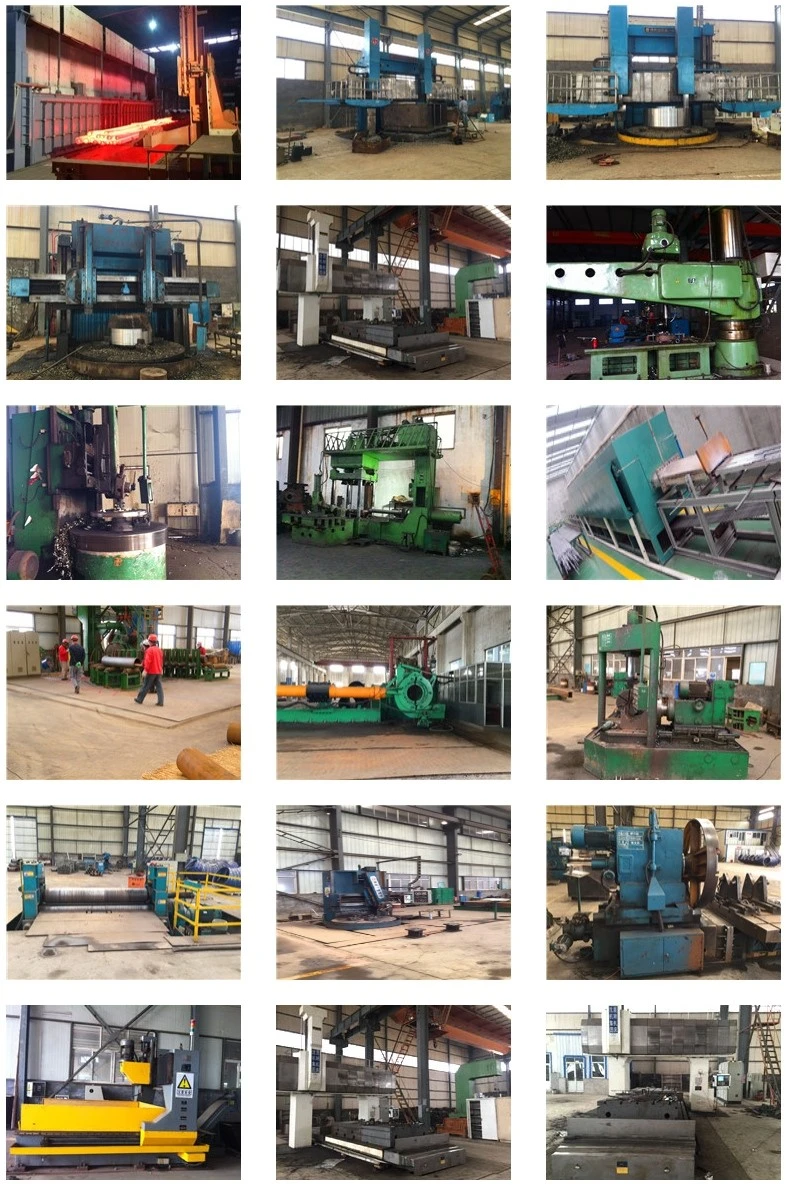
Production Line Equipment and Product Testing

FAQ:
Q: What is the difference between ASTM B444 and ASTM B704/B705?
A: ASTM B444 covers seamless pipe and tube of UNS N06625, manufactured by extrusion and cold-drawing with no longitudinal weld seam. ASTM B704 covers welded tube, and ASTM B705 covers welded pipe. For aerospace applications, seamless (B444) is specified almost exclusively because it eliminates weld-seam-related failure risks and provides uniform grain structure and mechanical properties in all directions.
Q: What temperature can Inconel 625 B444 tube withstand in aerospace service?
A: Inconel 625 B444 tube is rated for continuous structural service from -196°C to 650°C. It resists oxidation in air up to 980°C, but load-bearing capacity and creep-rupture strength degrade above 650°C. For structural service above this limit, precipitation-hardened Inconel 718 or solid-solution Inconel 617 should be considered.
Q: Which ASTM B444 grade should I specify for aerospace fuel lines?
A: For aerospace fuel and hydraulic fluid conveyance lines, Grade 1 (cold-worked) is typically specified because it provides higher tensile strength (827 MPa min) and yield strength (415 MPa min), allowing thinner walls and lighter weight at the same pressure rating. If the tube requires significant bending or flaring during installation, Grade 2 (annealed) may be preferred for ductility, and the pressure rating recalculated for the lower yield strength.
Q: Is Inconel 625 B444 tube weldable without post-weld heat treatment?
A: Yes. Inconel 625 is a solid-solution strengthened alloy with low carbon (≤0.10%) and niobium stabilization (3.15–4.15%). This prevents sensitization and intergranular corrosion after welding. No preheat and no post-weld solution treatment is required. Use ERNiCrMo-3 (AWS A5.14) filler metal. Interpass temperature must be kept below 150°C.
Q: What NDT is mandatory for aerospace-grade B444 tube?
A: Eddy Current Testing (ET) per ASTM E426 and Ultrasonic Testing (UT) per ASTM E213 are mandatory for aerospace applications. PMI (ASTM E1621) and OES spectrometry (ASTM E3047) verify chemical composition. Hydrostatic testing (ASTM E1003) is required for pressure-service tubing. Grain size (ASTM E112) and nonmetallic inclusion (ASTM E45) reports may be required for critical programs.
Q: How does Inconel 625 compare to Inconel 718 for aerospace tube?
A: Inconel 625 is solid-solution strengthened (no aging required), offering superior corrosion resistance (higher Mo content, PREN 47.5) and simpler fabrication (no post-weld heat treatment). Inconel 718 is precipitation-hardened, offering higher tensile strength (1240+ MPa aged vs 827 MPa cold-worked 625) and better creep-rupture above 650°C. For fluid conveyance and ducting at ≤650°C, Inconel 625 is preferred. For rotating or load-bearing parts above 650°C, Inconel 718 is the correct choice. The difference between Inconel and Incoloy is also relevant: Inconel 625 is a nickel-based matrix (≥58% Ni), while Incoloy grades like 825 are iron-based with lower nickel content.
Q: What sizes and MOQ are available for aerospace B444 tube?
A: Standard aerospace sizes range from 6.35 mm (1/4") to 168.3 mm (6") OD, with wall thicknesses from 0.5 mm to 15 mm. Lengths are available in random (4–7 m) or fixed lengths. Non-standard sizes and tight-tolerance cuts can be produced to order. Contact us with your dimensional requirements and program quantity for a tailored quotation.



