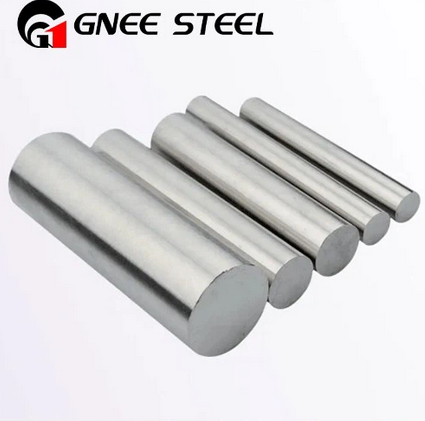
1. What is the fundamental metallurgical identity of GH3128 alloy, and why is its "bar" form so industrially vital?
GH3128 is a nickel-chromium-based, solid-solution strengthened superalloy. Its fundamental identity is that of a high-temperature, oxidation-resistant alloy specifically engineered for long-term service in severely oxidizing environments at temperatures ranging from 900°C to 1200°C (1652°F to 2192°F). As a solid-solution alloy, it derives its strength not from secondary precipitation phases, but from the inherent effect of its alloying elements dissolved directly in the nickel matrix.
The key characteristics are defined by its sophisticated composition:
Nickel-Chromium Matrix: Provides a stable austenitic (face-centered cubic) structure. The high chromium content (~20-23%) is the cornerstone of its exceptional oxidation and sulfidation resistance.
Tungsten and Molybdenum (~8-10% combined): These are potent solid-solution strengtheners. Their large atomic size creates significant lattice strain, which dramatically increases the alloy's high-temperature strength, creep resistance, and recrystallization temperature.
Controlled Carbon and Nitrogen: These elements form stable carbides and carbonitrides, which provide grain boundary strengthening and enhance creep rupture life.
Lanthanum and Cerium (Trace amounts): These rare earth elements are a critical feature. They dramatically improve the spallation resistance of the protective oxide scale, preventing it from flaking off during thermal cycling-a property vital for long-term stability.
The "bar" form is industrially vital for several key reasons:
Forging Stock for High-Temperature Components: It serves as the primary billet material for the closed-die forging of critical components that must withstand extreme heat and oxidation, such as combustion chamber parts, flame holders, and furnace radiant tubes.
Direct Machining of Fixtures and Components: Bar stock is directly machined into a vast array of high-temperature parts, including heat treatment fixtures, support rods, brackets, and fasteners for industrial furnaces and aerospace applications.
Material Consistency: The wrought bar form ensures a homogeneous and uniform microstructure throughout the cross-section, which is paramount for predictable performance under sustained thermal and mechanical loads at high temperatures.
In essence, the GH3128 alloy bar combines outstanding high-temperature oxidation resistance, useful strength, and excellent fabricability into a versatile form factor for manufacturing durable components for the most demanding high-temperature environments.
2. In a high-temperature industrial furnace application, why would you specify a GH3128 bar over a common alloy like 310S stainless steel?
The selection of a GH3128 bar over 310S stainless steel for a high-temperature furnace component is a critical decision driven by the need for superior longevity, structural integrity, and performance in the most demanding thermal environments, particularly those involving thermal cycling.
Performance Comparison: GH3128 vs. 310S
Oxidation and Scaling Resistance:
310S Stainless Steel: Performs well up to approximately 1100°C (2012°F) in intermittent service. However, at sustained temperatures above 1000°C (1832°F), it forms a thick, non-adherent oxide scale that spalls (flakes off) during thermal cycling. This leads to progressive metal loss, contamination of the furnace atmosphere, and eventual failure.
GH3128 Superalloy: Offers vastly superior oxidation resistance, especially under cyclic conditions. The nickel-rich matrix is more stable, and the high chromium content forms a more tenacious scale. Crucially, the addition of lanthanum makes this scale incredibly adherent, drastically reducing spallation. This results in much lower metal wastage and a longer service life.
Creep Strength and Structural Stability:
310S: Has relatively low creep strength at temperatures above 900°C (1652°F). Under sustained load, it is prone to gradual deformation (sagging) over time. It can also suffer from embrittlement due to sigma phase formation.
GH3128: Possesses significantly higher creep strength due to its solid-solution strengthened matrix, heavily fortified with tungsten and molybdenum. It is much more resistant to sagging and distortion when used as structural supports, radiant tubes, or fixtures under load at high temperatures. It remains microstructurally stable and does not form embrittling phases.
Temperature Capability:
310S: Effectively limited to ~1150°C for short periods.
GH3128: Can operate continuously in the 1150°C - 1200°C (2102°F - 2192°F) range, making it suitable for the most intense heating zones of a furnace.
Application Guideline:
Specify 310S for general-purpose furnace components operating reliably up to ~1000°C, where cost is a significant factor. Specify GH3128 bar for critical fixtures, radiant tubes, charge rails, and fan components in high-temperature vacuum or atmosphere furnaces where the operational temperature is consistently above 1000°C, thermal cycling is frequent, and maximum service life with minimal maintenance is required.
3. What is the standard heat treatment for GH3128 bar stock, and how does it differ from the treatment of precipitation-hardened superalloys?
The heat treatment for GH3128 is fundamentally different and significantly simpler than that for precipitation-hardened alloys like GH4169 (Inconel 718). This simplicity is a direct consequence of its solid-solution strengthened metallurgy.
Standard Heat Treatment for GH3128: Solution Annealing
Process: The material is heated to a high temperature range of 1160°C - 1200°C (2120°F - 2192°F), held for a sufficient time to achieve a uniform temperature throughout the cross-section (typically 30-90 minutes, depending on diameter), and then rapidly cooled via water quenching or fast air cooling.
Metallurgical Objectives:
Dissolution of Secondary Phases: To dissolve any carbides or other minor phases that may have formed during processing back into the nickel matrix, creating a homogeneous solid solution and maximizing ductility and corrosion resistance.
Recrystallization: To produce a uniform, equiaxed grain structure. For high-temperature service, a controlled grain size is established to optimize the balance between strength and creep resistance.
Stress Relief: To eliminate internal stresses from prior cold working or hot working, restoring the material to its softest and most fabricable condition.
Critical Difference from Precipitation-Hardened Alloys (e.g., GH4169):
GH3128 (Solid-Solution): Has a single-step heat treatment. Its strength is inherent from the alloying elements (W, Mo, Cr) in the matrix. The solution anneal is the final treatment to optimize the microstructure. No aging treatment is performed or required.
GH4169 (Precipitation-Hardened): Requires a complex, multi-step heat treatment sequence:
Solution Treat: To dissolve the γ'' and γ' formers (Nb, Al, Ti).
Rapid Quench: To create a supersaturated solid solution.
Aging (Two Steps): To precipitate a fine, uniform dispersion of the strengthening gamma double prime (γ'') and gamma prime (γ') phases.
This simpler, single-step heat treatment is a major advantage of GH3128, as it reduces processing complexity, cost, and the risk of distortion.
4. What are the primary machining and welding considerations for fabricating components from GH3128 bar?
While GH3128 is more fabricable than many precipitation-hardened superalloys, it still presents challenges that require specific techniques to achieve successful results, primarily due to its strength and work-hardening tendency.
Machining Considerations:
Work Hardening: The alloy has a strong tendency to work-harden during machining.
Strategy: Use sharp, positive-rake angle carbide tools. Maintain a constant, aggressive enough feed rate to ensure the cut is made beneath the work-hardened layer. Dull tools or light, rubbing cuts will rapidly work-harden the surface, leading to excessive tool wear and poor surface finish.
Tool Material and Geometry: Carbide inserts are standard. Use grades designed for high-temperature alloys. Sharp edges and generous chip breakers are essential to control the tough, stringy chips.
Parameters: Use moderate speeds and heavy, positive feeds. Rigidity in the machine, tool holder, and setup is paramount to prevent chatter.
Coolant: A high-volume, high-pressure flood coolant is mandatory to control heat at the cutting edge, extend tool life, and aid in chip evacuation.
Welding Considerations:
GH3128 is generally considered to have good weldability. Key practices include:
Processes: Gas Tungsten Arc Welding (GTAW/TIG) is the most common and preferred process due to its excellent control and clean, high-purity welds.
Filler Metal: Use a matching composition filler metal, such as HGH3128 or ERNiCrMo-1.
Shielding: Excellent gas shielding with high-purity argon is critical to prevent oxidation of the weld pool.
Post-Weld Heat Treatment (PWHT): For most applications, PWHT is not required due to the alloy's solid-solution nature. However, for heavily restrained welds or for service in highly stressed corrosive environments, a full solution anneal may be recommended to restore optimum corrosion resistance and ductility in the heat-affected zone (HAZ) and relieve residual stresses.
5. How does the performance and application range of GH3128 bar position it within the broader family of high-temperature alloys?
GH3128 bar occupies a strategic, high-performance niche in the material selection matrix, positioned as a specialist in extreme oxidizing and cyclically heated environments.
Performance and Application Spectrum:
Lower End: Austenitic Stainless Steels (304H, 310S)
Performance: Good for oxidizing environments up to ~1000-1100°C. Suffer from lower strength, scaling, and potential embrittlement.
Cost: Lowest.
Mid-Range / General Purpose Solid-Solution: GH3030, Inconel 600
Performance: Good oxidation resistance up to ~1100°C (2012°F), but with lower strength than GH3128.
Applications: General furnace hardware, chemical processing equipment.
High-Performance / Oxidizing & Cyclic Environment Specialist: GH3128
Performance: Excellent oxidation resistance up to 1200°C (2192°F) and useful structural strength up to ~1100°C (2012°F). Its key differentiator is superior resistance to scale spallation during thermal cycling, thanks to its lanthanum content.
Applications: The preferred material for aerospace afterburner components, combustion chambers, and high-temperature industrial furnace hardware (radiant tubes, muffles, trays) where thermal cycling is a primary cause of failure.
High-Strength / Versatile: Solid-Solution Alloys like Haynes 230®
Temperature Limit: Higher strength than GH3128 at very high temperatures and even better oxidation resistance due to a proprietary oxide scale stabilizer (lanthanum).
Applications: Used in the most demanding high-temperature structural applications.
Premium / Highest Strength: Precipitation-Hardened Alloys (Inconel 718, GH4738)
Temperature Limit: Higher tensile and creep strength, but typically limited to 1300°F (700°C) due to microstructural instability. Their oxidation resistance is generally inferior to GH3128 at very high temperatures.
Applications: Turbine disks, blades, and other rotating components where high centrifugal stress is the primary driver.
Conclusion on Positioning:
GH3128 bar is the "thermal cycling specialist." Its value proposition is an outstanding balance of exceptional high-temperature oxidation resistance, good fabricability, and unparalleled scale adhesion. It is not the strongest alloy, but it offers a proven, reliable performance package for a vast range of applications where components must endure the combined assault of intense heat, an oxidizing atmosphere, and repeated heating/cooling cycles, particularly in aerospace propulsion and high-temperature industrial heating systems.