GH4169 bar production process
The manufacturing process of GH4169 high-temperature alloy bars is a complex thermomechanical process designed to control its microstructure and ensure its excellent mechanical properties. Key steps include initial melting, remelting and purification, hot working (forging/rolling), and precise multi-stage heat treatment.
What is the composition of GH4169 alloy?
The chemical composition of GH4169 alloy is as follows: Ni 53.44%, Cr 18.56%, Mo 3.02%, Nb 5.3%, Al 0.44%, Ti 1.04%, C 0.026%, P 0.005%, S 0.001%, B 0.002%, Fe balance (weight percentage).

Chemical composition of GH4169 Rod(%)
| Element | Composition (%) |
|---|---|
| Ni | 50.0 – 55.0 |
| Cr | 17.0 – 21.0 |
| Fe | Balance |
| Mo | 2.8 – 3.3 |
| Ta | 4.75 – 5.5 |
| Ti | 0.65 – 1.15 |
| Al | 0.2 – 0.8 |
| Co | ≤ 1.0 |
| Mn | ≤ 0.35 |
| Si | ≤ 0.35 |
| S | ≤ 0.015 |
| P | ≤ 0.015 |
| C | ≤ 0.08 |
| Cu | ≤ 0.3 |
| B | 0.001 – 0.006 |
Physical properties of GH4169 Bar
| Property | Value |
|---|---|
| Density | 8.19 g/cm³ |
| Melting Point | 1260 – 1320 °C |
| Thermal Conductivity | 11.2 W/m·K (at 20°C) |
| Specific Heat Capacity | 435 J/kg·K (at 20°C) |
| Electrical Resistivity | 1.25 µΩ·m (at 20°C) |
| Coefficient of Thermal Expansion | 13.0 x 10⁻⁶ /°C (20 – 100°C) |
| Young's Modulus | 204 GPa |
| Poisson's Ratio | 0.29 |
1. Material Preparation and Melting
Raw Materials: This process begins with high-purity raw materials, including pure nickel, iron, chromium, molybdenum, niobium, aluminum, and titanium.
Triple Melting Process: To achieve the required purity and minimize inclusions (such as oxides and nitrides), industrial production typically employs a "triple melting" process:
Vacuum Induction Melting (VIM): Raw materials are melted in a vacuum environment to precisely control the chemical composition and remove harmful elements and gases (degassing).
Electroslag Remelting (ESR): The VIM ingot is then remelted using ESR for deep desulfurization and further removal of inclusions, which helps eliminate macroscopic segregation.
Vacuum Arc Remelting (VAR): The final stage uses Vacuum Arc Remelting (VAR) to refine the grain structure, improve uniformity, and ensure a high-quality ingot suitable for subsequent processing.
2. Hot Working (Forging and Rolling)
Homogeneity: Before mechanical deformation, the ingot undergoes a prolonged high-temperature homogenization heat treatment (e.g., holding at 1160 °C for 24 hours followed by holding at 1200 °C for 24 hours) to dissolve low-melting-point phases (such as the Laves phase) and eliminate microsegregation.
Forging/Hot Rolling: The homogenized ingot is then processed into bars using hot working processes such as forging or hot rolling, typically within a temperature range of 950–1050 °C. This crucial step utilizes dynamic recrystallization (DRX) to break down coarse as-cast structures, refine grains, and ensure uniform microstructure, which is essential for the final mechanical properties.
3. Heat Treatment
After hot working, the bars require specific heat treatment to achieve the final properties by controlling the precipitation of strengthening phases (mainly γ' and γ''):
Solution Treatment: The bars are heated to a high temperature (e.g., 950-980℃ or 1010-1065℃, depending on the desired properties) and held for a period of time (approximately 1 hour) to allow the strengthening elements to form a solid solution. This is typically followed by rapid cooling (water quenching or oil quenching).
Aging Treatment (Double Aging): This is a two-stage process for precipitating the strengthening phases:
Heating to approximately 720℃ and holding for 8 hours.
Finally, furnace cooling to 620℃ at a controlled rate (approximately 50℃/h) and holding for 8 hours.
Finally, air cooling to room temperature. This process is crucial for obtaining high strength and eliminating notch sensitivity.
Why Choose Gnee Nickel Alloy (Supplier Example)?
✅ Large stock of GH4169 stainless steel strip/coil available for fast shipping.
✅ Factory direct sales, highly competitive prices, excellent value for money.
✅ Comprehensive quality assurance: Material Testing Certificate (MTC), Chemical Composition Certificate, and Mechanical Properties Certificate.
✅ Value-added services: Slitting, Cutting, Polishing, Surface Treatment.
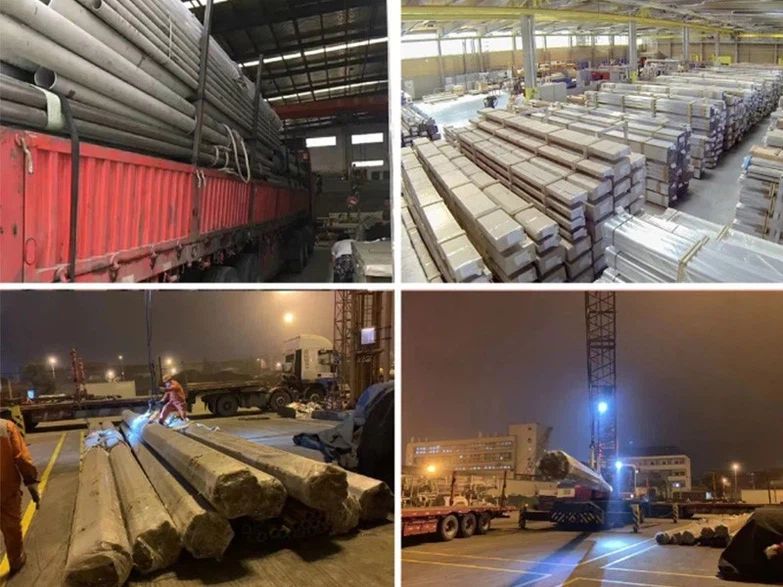
✅ Worldwide shipping, secure and reliable packaging, and provision of export documentation.
Email: ss@gneemetal.com
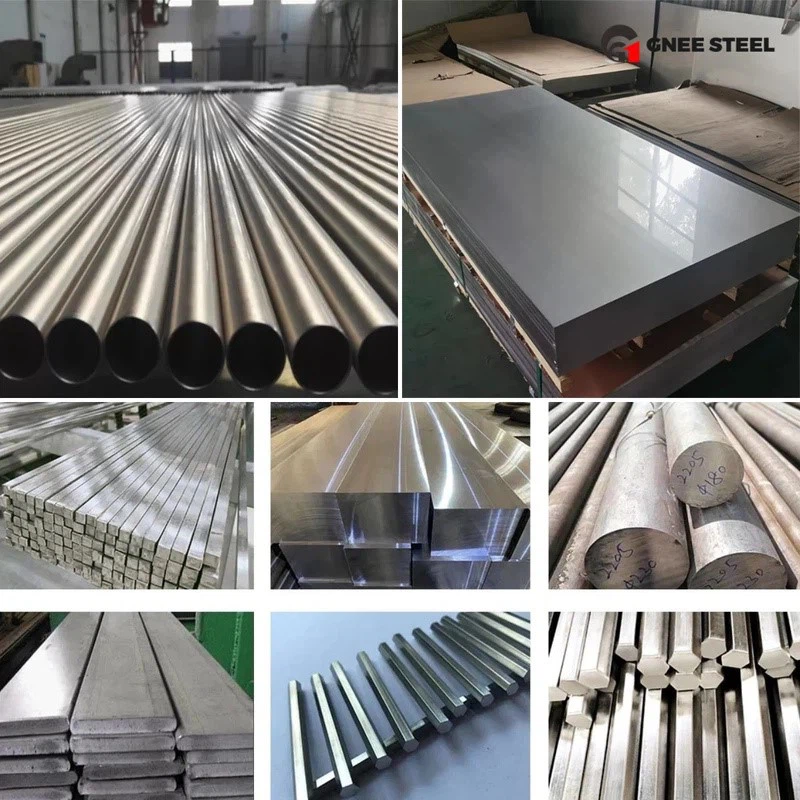
Gnee Steel is a supplier of GH4169 alloy, offering a wide range of products including: seamless pipe (sizes: 4-219 mm; thickness: 0.5-20 mm); welded pipe (sizes: 5.0-1219.2 mm; thickness: 0.5-20 mm); plates (thickness: 0.1 to 100 mm; width: 10-2500 mm); strips; alloy round bars (diameter: 3-800 mm); flat bars (thickness: 2-100 mm; width: 10-500 mm); hexagonal bars (size: 2-100 mm); wire rods; and extruded profiles. We collaborate with steel mills to provide our customers with GH4169 alloy products that meet or exceed numerous leading industry standards, including ASTM, ASME, SAE, AMS, ISO, DIN, EN, and BS standards.
Gnee Steel stocks and sells GH4169, pipes, plates, strips, round bars, flat bars, forged billets, hexagonal steel, wire rods, and extruded profiles. Please feel free to contact us at ss@gneesteel.com for a quote.