

1. Chemical Composition & Oxygen Content
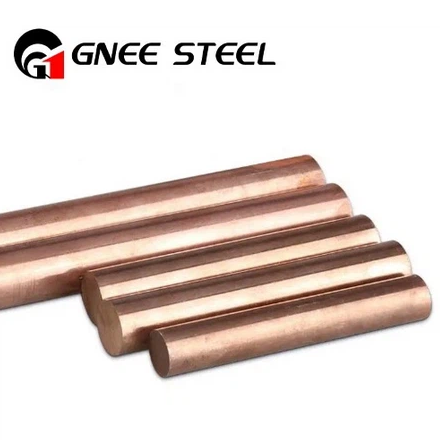
ETP Copper (C11000)
Oxygen content: 0.02–0.05% (typical).
Composition: ≥99.90% pure copper, with oxygen intentionally added during production (tough-pitch process) to remove impurities like phosphorus, sulfur, and iron.
Key impurity: Residual oxygen forms copper oxide (Cu₂O) particles, which influence its mechanical and corrosion properties.
EC Copper (C10200)
Oxygen content: ≤0.001% (ultra-low, often called "oxygen-free" in practical terms).
Composition: ≥99.95% pure copper, produced via a vacuum or inert-gas melting process to eliminate oxygen.
Impurities: Minimal (far lower than ETP), with no significant Cu₂O particles.
2. Core Property Differences


3. Typical Applications
ETP Copper (C11000)
The most widely used copper grade globally (≈70% of commercial copper applications).
Ideal for general-purpose applications requiring good conductivity and workability:
Electrical: Power cables, busbars, switchgear, and electrical connectors (non-critical high-voltage).
Plumbing: Potable water pipes, fittings, and valves (compatible with most water chemistries).
Heat transfer: Radiators, heat exchangers, and air conditioning coils.
Fabrication: Sheet metal, wires, tubes, and stamped parts (easily formed and joined).
EC Copper (C10200)
Reserved for applications demanding ultra-high conductivity, corrosion resistance in harsh environments, or low outgassing:
Electrical: High-frequency cables, microwave components, superconducting magnets, and aerospace/defense wiring (where signal integrity is critical).
Industrial: Vacuum systems, semiconductor manufacturing equipment, and hydrogen-rich environments (e.g., refineries, chemical plants).
Specialty: Medical devices (e.g., MRI machines), precision instruments, and high-performance transformers.
4. Key Takeaways
ETP Copper (C11000) : Cost-effective, versatile, and easy to process – the go-to for most commercial, electrical, and plumbing needs. Avoid in reducing or corrosive environments.
EC Copper (C10200) : Premium, ultra-pure, and corrosion-resistant – used for high-conductivity, high-reliability applications where ETP's oxygen-related weaknesses are a risk.


