


Differences Between Phosphorus Deoxidized Copper and Ordinary Pure Copper
Pure copper is widely known as the basic material with excellent electrical and thermal conductivity, but it can be divided into different varieties according to production processes and impurity control, among which phosphorus deoxidized copper and ordinary pure copper are the two most commonly used. Although both belong to the category of copper materials with copper content above 99.9%, there are obvious differences in chemical composition, physical properties, production process, and application scenarios.
First of all, the biggest difference lies in the deoxidation method and residual elements.
Ordinary pure copper, also known as oxygen-free copper or tough pitch copper in a broad sense, usually contains a small amount of oxygen, generally 100–650 ppm. During the smelting process, oxygen is inevitably mixed in, forming copper oxide in the grain boundaries. In contrast, phosphorus deoxidized copper is a special kind of copper that adds a small amount of phosphorus in the smelting stage for deep deoxidation. Phosphorus reacts with oxygen to generate phosphorus oxide gas and escape, so that the oxygen content in the copper is greatly reduced, usually controlled below 10 ppm. However, a small amount of residual phosphorus (generally 0.005%–0.04%) will remain in the finished product, which is the most significant component characteristic of phosphorus deoxidized copper.
Secondly, the two are quite different in electrical conductivity.
Ordinary pure copper has extremely high conductivity, close to 100% IACS, which is almost the highest among common metal materials. Therefore, it is the preferred material for high-efficiency transmission of electric energy. The residual phosphorus in phosphorus deoxidized copper will slightly hinder the flow of electrons, resulting in a decrease in conductivity, usually about 85%–95% IACS. Although this conductivity is still excellent, it is not as good as ordinary pure copper. This difference directly determines their different positioning in the electrical field.
In terms of welding performance and hot workability, phosphorus deoxidized copper has obvious advantages.
The oxygen contained in ordinary pure copper is easy to cause hydrogen embrittlement during gas welding, brazing or high-temperature heating. Hydrogen reacts with copper oxide to produce water vapor, which forms high pressure inside the material, leading to cracks and fractures. Phosphorus deoxidized copper has extremely low oxygen content after deep deoxidation, so it can well avoid hydrogen embrittlement. It has excellent welding performance, brazing performance and hot forming performance, and is not easy to crack during processing. This makes it irreplaceable in products that require a lot of welding.
In terms of thermal conductivity and plasticity, both are excellent, but there are subtle differences.
Ordinary pure copper has slightly higher thermal conductivity, which is more suitable for occasions requiring precise heat conduction efficiency. Phosphorus deoxidized copper has slightly better plasticity and toughness under high temperature, and is more suitable for bending, flaring, extrusion and other complex forming processes.
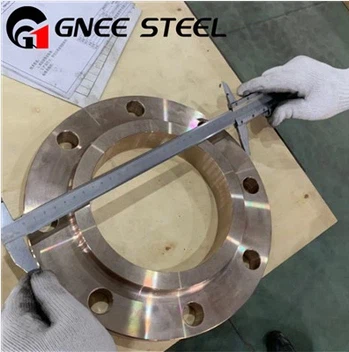
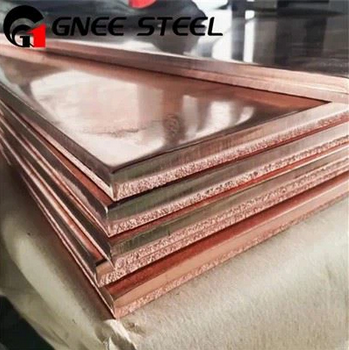
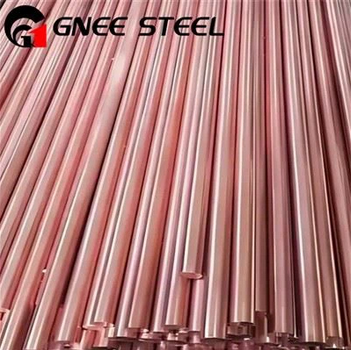
In terms of application scenarios, the two are clearly divided.
Ordinary pure copper is mainly used in fields with high requirements for conductivity, such as power cables, busbars, motor windings, transformers, electronic connectors and integrated circuit lead frames. Phosphorus deoxidized copper is widely used in plumbing, refrigeration, gas pipelines, heat exchangers, water tanks, decorative copper parts and other products that need welding and forming, because it is safe and reliable in welding and not easy to leak.
In summary
The core difference between phosphorus deoxidized copper and ordinary pure copper comes from phosphorus deoxidation treatment: ordinary pure copper focuses on ultra-high conductivity, while phosphorus deoxidized copper focuses on excellent welding performance and low oxygen stability. Choosing which material depends mainly on whether the product prioritizes electrical conductivity or welding and processing performance.


