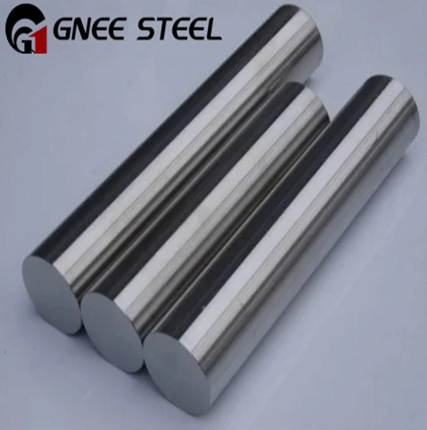
1. Q: What is ASTM A638, and what nickel-based alloys does it cover for round bar and rod applications?
A: ASTM A638 is the standard specification for precipitation-hardening and solid-solution-strengthened nickel-based alloy bars, rods, and forgings. This specification covers a range of high-temperature and corrosion-resistant alloys, including A-286 (UNS S66286), Incoloy 800 (UNS N08800), Incoloy 825 (UNS N08825), and Incoloy 925 (UNS N09925). Understanding the scope and requirements of ASTM A638 is essential for selecting the appropriate material for demanding applications.
Scope of ASTM A638: This specification establishes requirements for:
Product forms: Hot-finished and cold-finished bars, rods, and forgings
Alloy types: Precipitation-hardening alloys (A-286, 925) and solid-solution-strengthened alloys (800, 825)
Conditions: Various heat-treated conditions depending on alloy and application
Applications: High-temperature service, corrosion-resistant components, and structural parts
Alloys Covered Under ASTM A638:
| Alloy | UNS Designation | Strengthening Mechanism | Key Characteristics |
|---|---|---|---|
| A-286 | S66286 | Precipitation (γ') | High-temperature strength up to 650°C; good oxidation resistance |
| Incoloy 800 | N08800 | Solid-solution | Oxidation and carburization resistance; good creep strength |
| Incoloy 825 | N08825 | Solid-solution | Exceptional resistance to reducing acids; chloride SCC resistance |
| Incoloy 925 | N09925 | Precipitation (γ') | High strength plus corrosion resistance; NACE compliant |
A-286 (UNS S66286): A precipitation-hardening iron-nickel-chromium alloy with additions of molybdenum, titanium, and aluminum. Key features:
Composition: 24-27% Ni, 13.5-16% Cr, balance Fe, with Ti and Al for gamma-prime strengthening
Strengthening: Gamma-prime (γ') – Ni₃(Al, Ti)
Temperature range: Up to 650°C (1200°F)
Applications: Gas turbine components, high-temperature fasteners, afterburner parts
Incoloy 800 (UNS N08800): A solid-solution-strengthened nickel-iron-chromium alloy. Key features:
Composition: 30-35% Ni, 19-23% Cr, balance Fe
Strengthening: Solid-solution; carbide formation provides creep strength
Temperature range: Up to 815°C (1500°F)
Applications: Heat exchanger tubing, furnace components, petrochemical equipment
Incoloy 825 (UNS N08825): A solid-solution-strengthened nickel-iron-chromium alloy with molybdenum, copper, and titanium. Key features:
Composition: 38-46% Ni, 19.5-23.5% Cr, 2.5-3.5% Mo, 1.5-3.0% Cu, 0.6-1.2% Ti
Strengthening: Solid-solution; titanium stabilization prevents intergranular corrosion
Corrosion resistance: Exceptional in reducing acids, chlorides, and sour gas
Applications: Chemical processing, oil & gas, marine environments
Incoloy 925 (UNS N09925): A precipitation-hardening variant of Incoloy 825. Key features:
Composition: Based on 825 with increased Ti (1.5-2.5%) and Al (0.1-0.5%)
Strengthening: Gamma-prime (γ') precipitation
Yield strength: 100 ksi (690 MPa) minimum in aged condition
Applications: Sour service (NACE compliant), high-strength downhole components
Comparison of Strengthening Mechanisms:
| Alloy | Strengthening | Heat Treatment Required | Maximum Strength |
|---|---|---|---|
| A-286 | Precipitation (γ') | Solution + age | Very high (140 ksi YS) |
| 800 | Solid-solution | Annealed | Moderate (30 ksi YS) |
| 825 | Solid-solution | Annealed | Moderate (35 ksi YS) |
| 925 | Precipitation (γ') | Solution + age | High (100 ksi YS) |
ASTM A638 Condition Codes: The specification uses condition codes to indicate heat treatment:
| Condition | Description |
|---|---|
| A | Annealed (solid-solution alloys) |
| B | Cold worked |
| C | Cold worked and aged (precipitation-hardening alloys) |
| D | Solution treated and aged (precipitation-hardening alloys) |
2. Q: What are the specific heat treatment and mechanical property requirements for each alloy under ASTM A638?
A: ASTM A638 establishes distinct heat treatment and mechanical property requirements for each alloy grade, reflecting their different strengthening mechanisms. Understanding these requirements is critical for achieving the desired properties in finished components.
A-286 (UNS S66286) – Precipitation-Hardening Alloy:
| Requirement | Specification |
|---|---|
| Solution annealing | 980°C - 1000°C (1800°F - 1830°F) |
| Cooling | Rapid cooling (oil or water quench) |
| Aging | 705°C - 760°C (1300°F - 1400°F) for 12-16 hours |
| Cooling after aging | Air cool |
A-286 Mechanical Properties (Aged Condition):
| Property | Bar Diameter ≤ 1.5 in | Bar Diameter > 1.5 in |
|---|---|---|
| Tensile Strength | 130 ksi (895 MPa) min | 120 ksi (825 MPa) min |
| Yield Strength (0.2% offset) | 85 ksi (585 MPa) min | 75 ksi (515 MPa) min |
| Elongation | 15% min | 15% min |
| Reduction of Area | 20% min | 20% min |
Incoloy 800 (UNS N08800) – Solid-Solution Alloy:
| Requirement | Specification |
|---|---|
| Solution annealing | 980°C - 1175°C (1800°F - 2150°F) |
| Cooling | Rapid cooling (air or water) |
| Grain size (optional) | ASTM No. 5 or coarser for 800H variant |
Incoloy 800 Mechanical Properties (Annealed):
| Property | Requirement |
|---|---|
| Tensile Strength | 75 ksi (515 MPa) min |
| Yield Strength (0.2% offset) | 30 ksi (205 MPa) min |
| Elongation | 30% min |
Incoloy 825 (UNS N08825) – Solid-Solution Alloy:
| Requirement | Specification |
|---|---|
| Solution annealing | 925°C - 1040°C (1700°F - 1900°F) |
| Cooling | Rapid cooling (air or water) |
Incoloy 825 Mechanical Properties (Annealed):
| Property | Requirement |
|---|---|
| Tensile Strength | 85 ksi (585 MPa) min |
| Yield Strength (0.2% offset) | 35 ksi (240 MPa) min |
| Elongation | 30% min |
Incoloy 925 (UNS N09925) – Precipitation-Hardening Alloy:
| Requirement | Specification |
|---|---|
| Solution annealing | 980°C - 1040°C (1800°F - 1900°F) |
| Cooling | Rapid cooling (water quench) |
| Aging | 700°C - 760°C (1300°F - 1400°F) for 4-8 hours |
| Optional second aging | 620°C (1150°F) for 4-8 hours |
Incoloy 925 Mechanical Properties (Aged):
| Property | Requirement |
|---|---|
| Tensile Strength | 135 ksi (930 MPa) min |
| Yield Strength (0.2% offset) | 100 ksi (690 MPa) min |
| Elongation | 20% min |
| Reduction of Area | 35% min |
Hardness Requirements:
| Alloy | Condition | Typical Hardness |
|---|---|---|
| A-286 | Aged | 280-350 HB |
| 800 | Annealed | 150-200 HB |
| 825 | Annealed | 150-200 HB |
| 925 | Aged | 280-350 HB (≤35 HRC for NACE) |
Effect of Heat Treatment on Properties:
| Alloy | Solution Annealed | Aged |
|---|---|---|
| A-286 | Soft, formable | High strength, lower ductility |
| 800 | Moderate strength | Not applicable |
| 825 | Moderate strength | Not applicable |
| 925 | Moderate strength (55 ksi YS) | High strength (100 ksi YS) |
3. Q: What are the critical corrosion resistance properties of A-286, 800, 825, and 925, and how do they compare for different service environments?
A: The four alloys covered under ASTM A638 offer distinct corrosion resistance profiles, each suited to specific service environments. Understanding these differences is essential for selecting the right material for the intended application.
Corrosion Resistance Comparison Matrix:
| Environment | A-286 | Incoloy 800 | Incoloy 825 | Incoloy 925 |
|---|---|---|---|---|
| High-temperature oxidation | Good | Good | Good | Good |
| Chloride stress corrosion | Moderate | Good | Excellent | Excellent |
| Sulfide stress cracking (H₂S) | Not rated | Not rated | Good (annealed) | Excellent (aged) |
| Reducing acids (H₂SO₄) | Moderate | Moderate | Excellent | Excellent |
| Pitting/crevice corrosion | Moderate | Moderate | Good | Good |
| Nitric acid (oxidizing) | Good | Good | Good | Good |
A-286 (UNS S66286) – High-Temperature Alloy:
Oxidation resistance: Good up to 650°C (1200°F); forms protective chromium oxide scale
Chloride SCC: Moderate resistance due to nickel content (24-27%)
Limitations: Not designed for sour service or highly reducing acid environments
Typical applications: Gas turbine fasteners, jet engine components, high-temperature springs
Incoloy 800 (UNS N08800) – High-Temperature and Oxidation:
Oxidation resistance: Excellent up to 815°C (1500°F); chromium oxide scale
Carburization resistance: Good due to nickel content
Sulfidation resistance: Moderate
Chloride SCC: Good resistance (30-35% Ni)
Limitations: Not suitable for reducing acid environments; moderate strength
Typical applications: Heat exchanger tubing, furnace components, petrochemical equipment
Incoloy 825 (UNS N08825) – Corrosion-Resistant Alloy:
Reducing acids: Exceptional resistance to sulfuric and phosphoric acid due to copper and molybdenum
Chloride SCC: Excellent (38-46% Ni)
Pitting resistance: Good due to molybdenum (2.5-3.5%)
Sour gas: NACE MR0175 compliant in annealed condition
Intergranular corrosion: Titanium stabilization prevents sensitization
Typical applications: Chemical processing, oil & gas, marine environments
Incoloy 925 (UNS N09925) – High-Strength Corrosion Alloy:
Sour service: NACE MR0175 / ISO 15156 compliant in aged condition
Sulfide stress cracking (SSC): Excellent; highest resistance among the four
Reducing acids: Equivalent to Incoloy 825
Chloride SCC: Excellent
Limitations: Maximum service temperature approximately 450°C (840°F) for sustained strength
Typical applications: Downhole components, high-strength fasteners, wellhead equipment
NACE MR0175 / ISO 15156 Compliance:
| Alloy | Condition | NACE Compliance |
|---|---|---|
| A-286 | Aged | Not typically compliant |
| 800 | Annealed | Not rated for sour service |
| 825 | Annealed | Yes (specific hardness limits) |
| 925 | Aged | Yes (≤35 HRC) |
Pitting Resistance Equivalent Number (PREN):
| Alloy | PREN (≈) | Resistance Level |
|---|---|---|
| A-286 | 18-22 | Moderate |
| 800 | 19-23 | Moderate |
| 825 | 30-35 | Good |
| 925 | 30-35 | Good |
*PREN = %Cr + 3.3 × %Mo + 16 × %N*
Selection Guide by Environment:
| Service Environment | Recommended Alloy |
|---|---|
| High temperature (650°C), fasteners | A-286 |
| High temperature (815°C), oxidation | Incoloy 800 |
| Sulfuric acid, phosphoric acid | Incoloy 825 or 925 |
| Sour gas (H₂S) with high strength | Incoloy 925 |
| Sour gas (H₂S), moderate strength | Incoloy 825 (annealed) |
| Seawater, chlorides | Incoloy 825 or 925 |
| Combination high temp + corrosion | A-286 or 800 (depending on temp) |
4. Q: What are the critical fabrication, machining, and welding considerations for ASTM A638 nickel-based alloy bars and rods?
A: The fabrication, machining, and welding of ASTM A638 nickel-based alloys require specialized techniques that reflect the unique characteristics of each alloy-whether solid-solution strengthened or precipitation-hardened. Proper practices are essential to achieve the desired properties and avoid fabrication-related failures.
Machining Considerations by Alloy:
| Alloy | Machinability | Key Considerations |
|---|---|---|
| A-286 | Moderate | Work hardens rapidly; carbide tooling recommended |
| 800 | Good | Similar to austenitic stainless steel |
| 825 | Good | Work hardens; use aggressive feeds |
| 925 | Moderate (aged) | High strength; carbide tooling essential |
Recommended Machining Parameters (Carbide Tooling):
| Parameter | A-286 | 800/825 | 925 (Aged) |
|---|---|---|---|
| Surface speed (SFM) | 80-120 | 100-150 | 60-100 |
| Feed (in/rev) | 0.005-0.010 | 0.005-0.015 | 0.003-0.008 |
| Coolant | Flood essential | Flood essential | Flood essential |
| Tool material | C-2/C-3 carbide | C-2/C-3 carbide | C-2/C-3 carbide |
Work Hardening Prevention:
Avoid light cuts: Use sufficient depth of cut to cut below the work-hardened layer
Maintain feed: Constant engagement prevents surface hardening
Sharp tools: Dull tools increase work hardening and heat generation
Welding Considerations:
| Alloy | Weldability | Filler Metal | Post-Weld Heat Treatment |
|---|---|---|---|
| A-286 | Good | A-286 filler (AMS 5732) | Required to restore properties |
| 800 | Excellent | ERNiCr-3 | Not required |
| 825 | Good | ERNiCrMo-3 | Not required |
| 925 | Good | ERNiCrMo-3 or matching | Required to restore aged properties |
A-286 Welding:
Process: GTAW (TIG) preferred
Filler: Matching A-286 filler (AMS 5732)
PWHT: Solution anneal + age after welding to restore strength
Consideration: Welding in solution-annealed condition; full heat treatment required
Incoloy 800/825 Welding:
Process: GTAW (TIG) or GMAW (MIG)
Filler: ERNiCr-3 (for 800); ERNiCrMo-3 (for 825)
PWHT: Not required for corrosion resistance
Back purging: Recommended for full-penetration welds
Incoloy 925 Welding:
Process: GTAW (TIG) preferred
Filler: ERNiCrMo-3 or matching Incoloy 925 filler
PWHT: Solution anneal + age required to restore aged properties
Consideration: Weld in solution-annealed condition
Forming and Bending:
| Operation | Recommendation |
|---|---|
| Cold forming | Perform in annealed condition (for A-286, 925) |
| Minimum bend radius | 3× to 5× bar diameter (varies by alloy) |
| Hot forming | 950°C-1150°C (1740°F-2100°F); requires subsequent heat treatment |
| Springback | Moderate to high; allowances required |
Heat Treatment After Fabrication:
| Alloy | After Cold Work | After Welding |
|---|---|---|
| A-286 | Solution anneal + age | Solution anneal + age |
| 800 | Anneal if work hardened | Not required |
| 825 | Anneal if work hardened | Not required |
| 925 | Solution anneal + age | Solution anneal + age |
Contamination Prevention:
Sulfur: Avoid sulfur-based lubricants and marking materials
Iron: Use dedicated tools to prevent cross-contamination
Lead, zinc, copper: Prevent contact with low-melting-point metals
5. Q: What quality assurance, testing, and procurement considerations are essential for ASTM A638 nickel-based alloy round bars and rods?
A: The procurement of ASTM A638 nickel-based alloy round bars and rods requires rigorous attention to quality assurance, testing protocols, and supply chain reliability. The demanding applications-from gas turbine fasteners to sour service components-demand that material quality meets the most stringent requirements.
Material Certification and Traceability: The foundation of quality assurance is comprehensive documentation:
| Documentation | Required Information |
|---|---|
| Mill test reports (MTRs) | Heat number, chemical analysis, mechanical properties, heat treatment |
| Heat treatment records | Time-temperature charts for solution annealing and aging |
| Product marking | Heat number, specification, alloy, dimensions |
| Traceability | Full traceability from melt to finished product |
Chemical Composition Verification:
| Alloy | Key Elements to Verify |
|---|---|
| A-286 | Ni (24-27%), Cr (13.5-16%), Ti (1.9-2.35%), Al (0.1-0.35%) |
| 800 | Ni (30-35%), Cr (19-23%), C (0.10% max) |
| 825 | Ni (38-46%), Cr (19.5-23.5%), Mo (2.5-3.5%), Cu (1.5-3.0%), Ti (0.6-1.2%) |
| 925 | Based on 825 with Ti (1.5-2.5%), Al (0.1-0.5%) |
Mechanical Testing Requirements:
| Test | Applicability | Requirement |
|---|---|---|
| Tensile (room temp) | All alloys | Per ASTM A638 limits |
| Hardness | All alloys | Quality control; NACE compliance for 925 |
| Grain size | 800/800H | ASTM No. 5 or coarser (if specified) |
| Reduction of area | A-286, 925 | Per specification |
Nondestructive Examination (NDE):
| Test | Applicability | Purpose |
|---|---|---|
| Ultrasonic testing (UT) | Large diameter bars | Internal defect detection |
| Eddy current testing (ET) | Small diameter bars | Surface defect detection |
| Liquid penetrant (PT) | Critical applications | Surface crack detection |
| Visual examination | All products | Surface condition verification |
NACE MR0175 / ISO 15156 Compliance (For Sour Service):
| Alloy | Requirements |
|---|---|
| 825 | Annealed condition; hardness ≤35 HRC |
| 925 | Aged condition; hardness ≤35 HRC |
| Documentation | NACE compliance statement on MTRs |
Supplier Qualification:
| Criterion | Requirement |
|---|---|
| Quality system | ISO 9001; AS9100 for aerospace |
| Mill approval | Approved by major OEMs (aerospace, oil & gas) |
| Testing laboratory | ISO 17025 accreditation |
| Traceability systems | Full traceability capability |
| NDE qualifications | Certified NDE personnel and procedures |
Procurement Specification Checklist:
ASTM A638 specification and revision level
Alloy designation (UNS S66286, N08800, N08825, or N09925)
Product form (round bar, rod, forging)
Dimensions (diameter, length, tolerances)
Condition (annealed, aged, or solution treated and aged)
Heat treatment requirements
NDE requirements
NACE MR0175 compliance (if required)
Certification requirements
Third-party inspection (if required)
Receiving Inspection Checklist:
Verify markings match purchase order (heat number, alloy, specification)
Review MTRs for completeness and conformance
Confirm heat treatment documentation
Perform Positive Material Identification (PMI) testing
Verify dimensions (diameter, length, straightness)
Inspect surface condition for defects
For NACE applications, verify hardness
Storage and Handling:
Clean environment: Store away from carbon steel to prevent contamination
Protective packaging: Maintain packaging to protect surface finish
Traceability preservation: Ensure markings remain legible
Segregation: Separate by heat number, alloy, and condition
Cost Optimization Strategies:
| Strategy | Application |
|---|---|
| Select appropriate grade | Match alloy to service environment; avoid over-specification |
| Standard dimensions | Stock sizes lower cost than custom |
| Volume consolidation | Larger orders achieve economies of scale |
| Condition selection | Annealed bars lower cost than aged (for precipitation-hardening alloys) |
Red Flags to Avoid:
| Red Flag | Potential Risk |
|---|---|
| Prices significantly below market | Off-specification or counterfeit material |
| Missing heat numbers | No traceability |
| Incomplete MTRs | Cannot verify composition or properties |
| No heat treatment records | Cannot verify proper heat treatment |
| Supplier cannot perform PMI | Limited quality control |
By adhering to these quality assurance and procurement practices, buyers can ensure that ASTM A638 nickel-based alloy round bars and rods meet the rigorous requirements of aerospace, oil & gas, chemical processing, and other demanding applications, providing the strength, corrosion resistance, and reliability essential for long-term service.