


Common Surface Treatments for Grade 5 Titanium Alloy
Grade 5 titanium alloy (Ti-6Al-4V) is the most widely used titanium alloy in aerospace, automotive, medical, and industrial fields. Its surface treatment aims to improve appearance, corrosion resistance, wear resistance, adhesion, and dimensional stability. Below are its common surface treatments, along with answers to whether bright finish, pickled finish, and sandblasted finish are available.
Pickling (Acid Cleaning)
Pickling is the most basic and standard surface treatment for titanium alloy. It uses a mixed acid solution (usually nitric acid + hydrofluoric acid) to remove oxide scale, grease, and impurities formed during hot rolling, forging, or heat treatment.
Purpose: Remove surface defects, improve corrosion resistance, restore the natural metallic luster of titanium.
Surface feature: matte silver-gray, uniform, non-reflective.
Sandblasting / Shot Blasting
Sandblasting uses high-speed sprayed abrasives (such as alumina, glass beads, silicon carbide) to impact the titanium surface.
Purpose: obtain a uniform matte texture, increase surface roughness, improve coating or bonding strength.
Surface feature: uniform matte, non-reflective, good texture.
Bright Finishing / Polishing
Including mechanical polishing, electrochemical polishing, and chemical polishing.
Mechanical polishing: uses polishing paste and wheels to achieve a mirror-like effect.
Electrochemical polishing: removes micro unevenness via electrolytic reaction, providing high brightness and smoothness.
Purpose: improve surface smoothness, brightness, and cleanliness; widely used in medical devices and decorative parts.
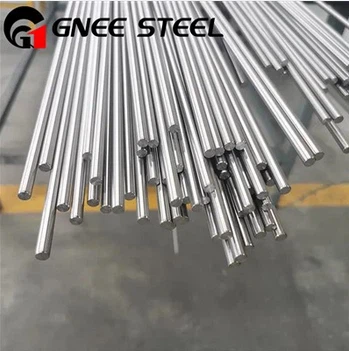
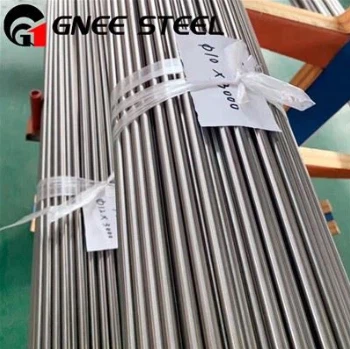
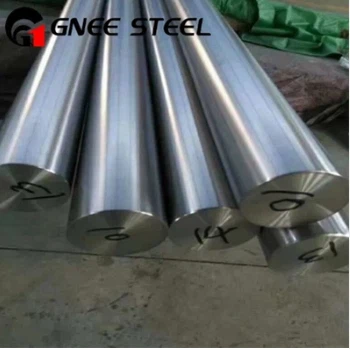
Surface feature: high luster, smooth, reflective.
Anodizing
Anodizing forms a dense oxide film on the titanium surface.
Purpose: enhance corrosion resistance, wear resistance, and insulation; can produce colors (blue, gold, black, etc.) by adjusting process parameters.
Passivation
Further improves the stability of the passive film on the titanium surface, strengthening corrosion resistance, usually after pickling or polishing.
Coating Treatments
Such as PVD coating (TiN, TiCN, DLC), which significantly improve hardness and wear resistance, used in cutting tools and mechanical parts.



