






ASME SB-443 Inconel 625 Pressure Vessel Lining Plates
As a leading supplier and manufacturer in China, GNEE Steel provides cost-effective nickel-based alloy products.
- Send E-mail: ss@gneesteel.com
- Tel: +8615824687445
Gnee Alloy's Solutions for ASME SB-443 Inconel 625 Pressure Vessel Lining Plates
Drawing on 18 years of experience supplying lining plates for over 300 pressure vessel projects, the following unique advantages make Inconel 625 the material of choice
Full Compliance with ASME Code Requirements
Each plate is manufactured and certified to the ASME SB-443 standard, accompanied by comprehensive technical documentation supporting ASME BPVC construction requirements. This eliminates issues for fabricators caused by code approval delays or inspection failures.
Superior Corrosion Resistance in the Heat-Affected Zone (HAZ)
Thanks to the stabilizing effect of Niobium (Nb), Inconel 625 maintains excellent corrosion resistance even within the weld heat-affected zone. For lined vessels involving hundreds of meters of weld seams, this ensures decades of reliable operation free from intergranular corrosion.
No Mandatory Post-Weld Heat Treatment (PWHT)
Unlike precipitation-hardened alloys, Inconel 625 does not require post-weld solution annealing for most corrosive service conditions. This shortens the vessel fabrication cycle (saving weeks of time) and significantly reduces total project costs.
Broad Compatibility with Diverse Corrosive Process Media
The alloy performs reliably in both oxidizing and reducing environments, making it suitable for chloride-containing process fluids, organic and inorganic acids, and moderately sour service conditions (H₂S/CO₂). A single alloy grade meets the application requirements for the majority of chemical and petrochemical vessels.
Excellent Formability
In the annealed condition, Inconel 625 can be readily formed into cylindrical shells, dished heads, and complex vessel components without the need for intermediate annealing. This reduces the risk of cracking and lowers the rate of manufacturing rejects.
Proven Long Service Life
In typical chemical reactor lining applications, Inconel 625 offers a service life of 15 to over 25 years-three to five times that of 316L stainless steel. For continuous production facilities, this translates into substantial savings in downtime and replacement costs.
Click to contact us for high-quality ASME SB-443 Inconel 625 pressure vessel lining plate solutions
ASME SB-443 Inconel 625 Pressure Vessel Lining Plates description

GNEE ASME SB-443 Inconel 625 Pressure Vessel Lining Plates | UNS N06625 Supplier
ASME SB-443 (equivalent to ASTM B443) covers Inconel 625 (UNS N06625 / W.Nr. 2.4856) in the form of plate, sheet, and strip, available in either hot-rolled or cold-rolled conditions. Valued for its high strength and exceptional resistance to corrosion and chloride-induced stress corrosion cracking, the material is widely used for weld overlays or integral linings in pressure vessels, particularly in corrosive, high-temperature, and marine environments.
Regarding ASME Section VIII design allowable stresses, solution-annealed (Grade 2) plate exhibits high allowable stress values at operating temperatures up to 1100°F (approx. 593°C). Key performance characteristics include a nickel-chromium-molybdenum composition that provides near-impervious resistance to pitting, crevice corrosion, and oxidizing/reducing mixed acids, as well as virtual immunity to chloride-ion stress corrosion cracking; mechanically, it maintains high yield and tensile strength from cryogenic temperatures up to 1800°F (982°C) without the need for strengthening heat treatments.
In terms of fabrication, SB-443 plate is primarily used for loose linings, explosion-bonded or roll-bonded composite plates, and as weld overlay cladding to protect carbon or low-alloy steel vessel walls. Welding typically employs INCONEL 625 filler metal or INCONEL 112 electrodes to ensure structural integrity and corrosion resistance at the joints; however, due to the alloy's inherent toughness, specialized tooling and machining parameters are required during processing.

Overview of Material Selection for ASME SB-443 Inconel 625 Pressure Vessel Liners
| Parameter | ASME SB-443 (Inconel 625) | Pressure Vessel Lining Engineering Requirements |
|---|---|---|
| Applicable Standard | ASME SB-443 (Boiler & Pressure Vessel Code) | ASME Section VIII Div. 1 & 2 Pressure Vessels |
| Equivalent Standard | ASTM B443, AMS 5599 | Material properties are identical; ASME adds Code quality system requirements |
| UNS Number | N06625 | Nickel-base high-temperature alloy |
| Material Type | Ni-Cr-Mo-Nb Solid-Solution Strengthened Alloy (UNS N06625) | No precipitation hardening heat treatment required |
| Product Form | Plate (> 4.8mm), Sheet (0.46–4.8mm), Strip (0.13–0.46mm) | Vessel internal lining layer, weld overlay cladding |
| Supply Condition | Grade 1 (Annealed) - Standard choice for ≤ 593°C Grade 2 (Solution Annealed) - High-temperature choice for > 593°C |
Selected based on design temperature and corrosive media |
| ASME Section VIII Maximum Temperature | Grade 1: 1200°F (649°C) Grade 2: 1600°F (871°C) |
Core selection criterion for lining material |
| Melting Process | VIM + ESR (standard) or VIM + VAR (specified) | High cleanliness requirement |
| Certification Requirements | EN 10204 Type 3.2 + ASME Data Report + "SA" marking | ASME Authorized Inspector witness required |
Click to obtain the technical selection assessment and MTC 3.1 sample for Inconel 625 liners
Grade Classification & Engineering Selection Guidelines
ASME SB-443 defines two delivery grades, selected strictly based on design temperature and creep resistance requirements:
|
Parameter |
Grade 1 (Annealed) |
Grade 2 (Solution Annealed) |
|---|---|---|
|
Heat Treatment Standard |
≥871°C, rapid air cooling |
≥1093°C, rapid quenching |
|
Grain Structure |
Fine grain, higher yield strength |
Coarse grain, excellent creep resistance |
|
Max. Service Temp (ASME VIII) |
649°C (1200°F) |
871°C (1600°F) |
|
Recommended Working Condition |
≤593°C, conventional corrosion service |
>593°C, high-temperature creep service |
|
Cost Level |
Economical (first choice for general projects) |
Premium (for high-temperature heavy-duty conditions) |
Gnee Alloy Selection Recommendations:
Service temperature ≤593°C: Select Grade 1 for higher mechanical strength and lower procurement cost
Service temperature >593°C up to 870°C: Select Grade 2 for high-temperature creep and oxidation resistance
Click to contact us and save time on material selection
Key performance characteristics of ASME SB-443 Inconel 625 Pressure Vessel Liners
Chemical composition of ASME SB-443 Uns N06625 Pressure Vessel Liners
| Element | ASME SB-443 Limit (wt%) | Role in Pressure Vessel Lining Performance | |
|---|---|---|---|
|
|
Nickel (Ni) | ≥ 58.0 (balance) | Forms stable austenitic matrix; provides inherent chloride SCC resistance |
| Chromium (Cr) | 20.0 – 23.0 | Delivers general corrosion and high-temperature oxidation resistance | |
| Molybdenum (Mo) | 8.0 – 10.0 | Dramatically improves pitting and crevice corrosion resistance in chloride media | |
| Niobium + Tantalum (Nb+Ta) | 3.15 – 4.15 | Stabilizes weld heat-affected zones; prevents intergranular corrosion | |
| Iron (Fe) | ≤ 5.0 | - | |
| Carbon (C) | ≤ 0.10 | Tightly controlled for weldability and corrosion stability | |
| Manganese (Mn) | ≤ 0.50 | - | |
| Silicon (Si) | ≤ 0.50 | - | |
| Phosphorus / Sulfur | ≤ 0.015 each | Minimized for optimum toughness and corrosion resistance |


Gnee Alloy Superalloy Spectrometer Test Records
Click to view actual photos of our Inconel 625 products
Inconel 625 liner mechanical and physical properties
Room-Temperature Mechanical Properties (ASME Mandatory Minimum)
Grade 1 and Grade 2 share identical room-temperature mechanical requirements; Grade 2 gains high-temperature performance via higher-temperature solution annealing.
|
Thickness Range |
Tensile Strength (Min) |
0.2% Yield Strength (Min) |
Elongation (Min) |
|---|---|---|---|
|
Sheet/Thin Lining (≤4.76mm) |
690 MPa |
275 MPa |
30% |
|
Plate/Heavy Lining (>4.76mm) |
690 MPa |
414 MPa |
30% |
Key Physical Properties of ASME SB-443 Inconel 625
Density: 8.44 g/cm³
Modulus of Elasticity: 205 GPa
Continuous Oxidation Limit: ~980°C (air environment)
Melting Range: 1290–1350°C
Reference Information on ASME VIII High-Temperature Allowable Stresses
For vessel wall thickness calculation, designers shall refer to ASME II D material properties; Grade 2 maintains stable allowable stress above 600°C, while Grade 1 is limited to 593°C maximum continuous operation.
Click to download the Inconel 625 alloy PDF datasheet
ASME SB-443 Inconel 625 Manufacturing and Quality Control Specifications
| Parameter | ASME SB-443 (Standard) | Pressure Vessel Lining Engineering Practice |
|---|---|---|
| Melting Process | VIM + ESR (typical); VIM + VAR (when specified) | High cleanliness requirement - affects lining fatigue life |
| Product Definition | Plate: ≥ 4.8mm (0.188"); Sheet: 0.46–4.8mm; Strip: 0.13–0.46mm | Selected based on vessel size and lining thickness design requirements |
| Hot/Cold Working | Hot-rolled (plate); cold-rolled (sheet/strip) | Controlled reduction ratio ensures grain refinement |
| Grade 1 Heat Treatment | Annealed ≥ 871°C (1600°F), rapid cool | Standard lining choice - higher strength |
| Grade 2 Heat Treatment | Solution annealed ≥ 1093°C (2000°F), rapid quench | High-temperature lining choice - superior creep resistance |
| Surface Finish | Pickled, blasted, or bright annealed | Linings require pickled/blasted surface for clad bond quality |
| Edge Condition | Sheared, slit, or machined edges | Machined bevel required for butt weld joints |
Contact us to learn about our Inconel 625 production process
ASME SB-443 Inconel 625 Grade1 & Grade2 Plate heat treatment

| Parameter | Grade 1 (Annealed) | Grade 2 (Solution Annealed) |
|---|---|---|
| Heat Treatment Temperature | ≥ 871°C (1600°F) | ≥ 1093°C (2000°F) |
| Grain Size | Finer | Coarser (grain growth at higher temperature) |
| Recommended Service Temperature | ≤ 593°C (1100°F) | > 593°C (1100°F), when creep resistance is required |
Do you require third-party witness of aging cycle?
Gnee Alloy ASME SB-443 Inconel 625 Plate Specifications and Supply Options
Gnee Alloy ASME SB-443 Inconel 625 Typical Size Range
| Dimension | Typical Range | Notes |
|---|---|---|
| Thickness | 0.5 mm – 150 mm | Cold-rolled: 0.5–50mm; Hot-rolled: 5–150mm |
| Width | 1000 mm – 2500 mm | Wider widths available by special order |
| Length | 2000 mm – 8000 mm | Custom lengths available |
| Common Stock Sizes (Plate) | 3.18mm, 4.75mm, 6.35mm, 9.53mm, 12.7mm, 15.9mm, 19.1mm, 25.4mm, 38.1mm, 50.8mm, 63.5mm, 76.2mm |
Dimensional Tolerances
| Parameter | Typical Tolerance | Source |
|---|---|---|
| Thickness Tolerance | ±0.02mm or ±10% (whichever is greater), per ASTM B906 | |
| Precision Cold-Rolled | ±0.05mm | |
| Surface Finish (Lining Grade) | Ra ≤0.8μm (mirror polished) to Ra ≤1.6μm (grinded) | |
| Edge Condition | Sheared, slit, machined, abrasive cut, plasma-torch cut | For butt weld lining joints, machined bevel is required |
Contact us to customize Inconel 625 products to your project specifications
Gnee Alloy Inconel 625 Liner Surface Treatment
| Condition | Description |
|---|---|
| Annealed & Pickled | Standard for industrial linings |
| Bright Annealed | Suitable for pharmaceutical / high-purity applications |
| Mechanically Polished | 180 grit / 320 grit / Mirror finish |
Value-added processing services offered by Gnee Alloy

To reduce your in-house fabrication workload, we offer
| Service | Description |
|---|---|
| Precision Cutting | Precision plasma or waterjet cutting to vessel design dimensions |
| Weld Edge Preparation | Beveling (V-groove, X-groove, U-groove) for automatic welding |
| Surface Grinding & Polishing | Surface finishing as required |
| Assembly Marking & Labeling | Sequential identification and tagging services |
| Explosion-Clad Plate Supply | Inconel 625 clad onto carbon steel / low-alloy steel substrates |
Contact us to customize services for your project
Typical Pressure Vessel Applications for Inconel 625 Clad Plate
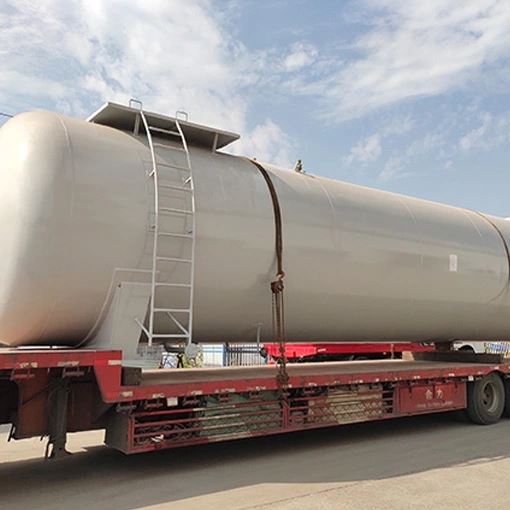
Our ASME SB-443 Inconel 625 clad plates are widely used in a variety of critical process equipment:
| Chemical Processing | Chemical reactors and autoclaves |
| Oil & Gas Production | High-pressure separators and flash tanks |
| Environmental Control | Flue gas desulfurization (FGD) absorber towers |
| Oil & Gas (Sour Service) | Process vessels for sour service in oil and gas production |
| Marine / Desalination | Seawater desalination pressure vessels |
| Petrochemical / Refining | Hydroprocessing reactor internals |
| Pharmaceutical & Fine Chemical | Pharmaceutical and fine chemical process vessels |
| Waste Treatment | Waste treatment pressure vessels |


ASME SB-443 Inconel 625 Non-destructive Testing (NDT) for Plate
| Test Method | Applicable Object | Reference Standard | Notes |
|---|---|---|---|
| Ultrasonic Testing (UT) | Base plate, clad interface | ASME Section V | Can detect defects in Inconel 625 cladding layer; reference blocks must match cladding material |
| Liquid Penetrant Testing (PT) | Lining-side surface, welds | ASTM E1417 / ASME Sec. V | Detects surface-breaking defects (cracks, porosity, etc.) |
| Radiographic Testing (RT) | Welds (especially butt welds) | ASME Section V | 100% weld coverage required |
| Eddy Current Testing (ET) | Tube or thin sheet | ASTM E426 | Selected based on product form |


Click to view actual photos of our Inconel 625 products
Alloy Horizontal Comparison (Inconel 625 vs C276 vs 825)
| Parameter | Inconel 625 (ASME SB-443) | Hastelloy C276 (ASME SB-575) | Alloy 825 (ASME SB-424) |
|---|---|---|---|
| UNS Number | N06625 | N10276 | N08825 |
| Material Type | Ni-Cr-Mo-Nb Solid-Solution Strengthened Alloy | Ni-Cr-Mo-W Solid-Solution Strengthened Alloy | Ni-Fe-Cr-Mo-Cu Solid-Solution Strengthened Alloy |
| Product Form | Plate, sheet, strip | Plate, sheet, strip | Plate, sheet, strip |
| Typical Lining Applications | Chloride organic reactors, FGD absorbers, acetic acid/acetic anhydride reactors | Wet chlorine, strong oxidizing acids, mixed acid reactors | Seawater desalination, sulfuric/phosphoric acid storage tanks, low-temperature chemical storage |
| Strengthening Mechanism | Solid Solution (Mo+Nb) | Solid Solution (Mo+W) | Solid Solution (Mo+Cu+Ti-stabilized) |
| Maximum Service Temperature (ASME) | 871°C (1600°F) | 1093°C (2000°F) | 538°C (1000°F) |
| PREN (Pitting Resistance Equivalent) | ≥ 45 | ≥ 60 | ~ 30 – 35 |
| NACE MR0175 Sour Service | ✅ Qualified (Annealed) | ✅ Excellent (Annealed) | ✅ Good (Annealed) |
| Post-Weld Heat Treatment (PWHT) Required | ❌ No | ❌ No | ❌ No |
Contact our experts to recommend the right alloy for your project
Why Choose Gnee Alloy Inconel 625 Products?

Provide the following operating conditions and specifications to receive a precise quote tailored for special equipment, along with a complete set of compliance documentation for acceptance:
1. Liner Plate Specifications: Thickness, length and width dimensions, flatness/tolerance requirements, and surface finish requirements.
2. Tank Operating Conditions: Working pressure, medium type, operating temperature, and equipment application scenario.
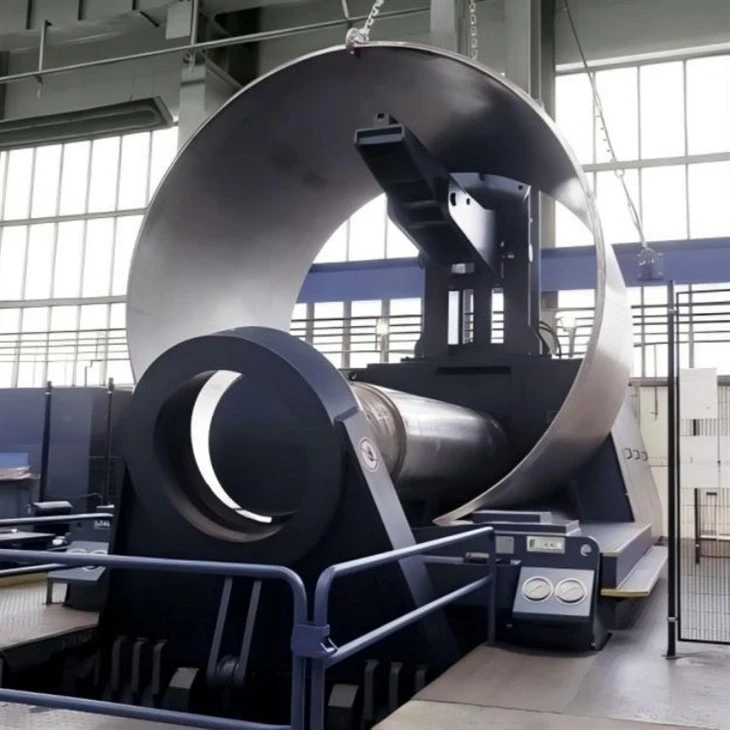
3. Fabrication Requirements: Custom processing needs such as bending, rolling, bevelling, or cutting.
4. Certification Requirements: Standard 3.1 certificate or 3.2 third-party witnessed certification for overseas special equipment.
Specialized Export Services for Pressure Vessels: Free material selection based on operating conditions, free technical consultation on corrosion resistance and pressure-bearing capabilities, full batch traceability, one-on-one technical support for special equipment projects, and one-stop documentation support for customs clearance and acceptance.

Gnee Alloy Inconel 625 certificate
Click to view our professional certificates for Inconel 625 alloy
FAQ
Q1: What are the fundamental differences between ASME SB-443 and standard ASTM B443 Grade 625 plate?
A: ASME SB-443 is a specialized standard for boiler and pressure vessel equipment; it mandates compliance regarding pressure-bearing capabilities, flaw detection grades, and welding stability, making it suitable for pressure-bearing tanks. In contrast, standard ASTM B443 is a general industrial plate specification that lacks pressure-bearing compliance certification and is strictly prohibited for use as pressure vessel liners.
Q2: Can this liner plate be used directly for the installation of high-pressure chemical reactor liners?
A: It is fully compatible. All export-grade plates meet ASME specifications for pressure vessel materials, offering excellent corrosion resistance, pressure-bearing capacity, and weldability. With clean, defect-free surfaces, they can be directly rolled and welded to complete tank lining installation.
Q3: What are the key advantages of 625 liner plates over stainless steel liner plates?
A: Stainless steel liners are suitable only for mildly corrosive, atmospheric-pressure conditions and are prone to pitting and stress corrosion cracking. ASME 625 liners withstand highly corrosive media-such as strong acids, sulfides, and seawater-and are compatible with high-pressure, cyclic operating conditions. They extend the tank's service life by 8–10 times, eliminating the need for frequent maintenance or replacement.
Q4: Do you support third-party special equipment inspections for overseas projects?
A: We fully support this. We can coordinate on-site witness testing with third-party agencies like SGS or TUV. We provide complete ASME compliance documentation and performance reports, boasting a 100% pass rate.
Q5: What is the delivery lead time for standard liner plates?
A: Stock items in standard sizes are delivered within 7–12 working days. Pressure-vessel-grade plates with custom thicknesses or special flatness requirements take 15–25 working days. We also offer expedited production scheduling for urgent tank retrofit projects.

Get a Competitive Quote for Inconel 625 Plate
China Spot Stock | EN 10204 3.1 MTC | NACE MR0175 | ISO 9001:2015 | Ships to over 50 countries/regions within one week
mailto:ss@gneemetal.comHot Tags: asme sb-443 inconel 625 pressure vessel lining plates, China asme sb-443 inconel 625 pressure vessel lining plates suppliers, inconel 601 tube, inconel alloy for bolts, inconel alloy for coolers, inconel alloy for tubing, nickel alloy 625, premium inconel alloy
Previous
Inconel Alloy 601 TubeNext
Inconel 625 BarYou Might Also Like


Send Inquiry