


Wrought product forms of titanium and titanium-base alloys-including forgings and typical mill products-constitute more than 70% of the market in titanium and titanium alloy production. These wrought products represent the most readily available form of titanium-base materials, although cast and powder metallurgy (P/M) products offer advantages for applications requiring complex shapes or microstructures unachievable through conventional ingot metallurgy.
Powder metallurgy of titanium has not gained widespread acceptance and remains primarily restricted to space and missile applications. The principal reasons for utilizing titanium-base products are their outstanding corrosion resistance and advantageous combination of low density (4.5 g/cm³) and high strength. Strength values range from 480 MPa for some grades of commercial titanium to approximately 1100 MPa for structural titanium alloy products, with specialized forms such as wires and springs exceeding 1725 MPa.
A crucial characteristic of titanium-base materials is their reversible transformation from alpha (α, hexagonal close-packed) crystal structure to beta (β, body-centered cubic) structure when temperatures exceed certain thresholds. This allotropic behavior, which depends on alloy composition, enables complex microstructural variations and more diverse strengthening opportunities than found in other nonferrous alloys such as copper or aluminum.


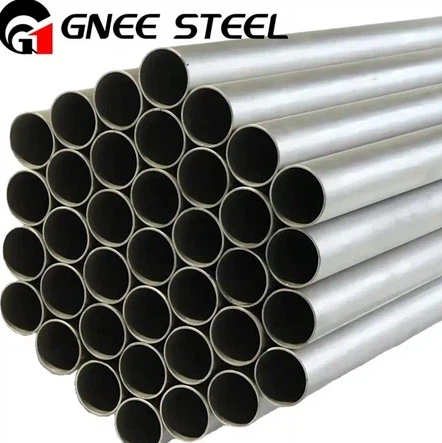
Welding Considerations for Titanium Alloys
Welding has the greatest potential for affecting material properties in titanium and its alloys. In all types of welds, contamination by interstitial impurities such as oxygen and nitrogen must be minimized to maintain useful ductility in the weldment. Alloy composition, welding procedure, and subsequent heat treatment play critically important roles in determining the final properties of welded joints.
Several general principles regarding titanium welding can be summarized as follows:
Welding generally increases strength and hardness
Welding generally decreases tensile and bend ductility
Welds in unalloyed titanium grades 1, 2, and 3 do not require post-weld treatment unless the material will be highly stressed in a strongly reducing atmosphere
Welds in more beta-rich alpha-beta alloys such as Ti-6Al-6V-2Sn have a high likelihood of fracturing with little or no plastic straining
Heat Treatment of Titanium and Titanium Alloys
Titanium and titanium alloys are heat treated for several specific purposes:
To reduce residual stresses developed during fabrication processes
To produce an optimal combination of ductility, machinability, and dimensional and structural stability (annealing)
To increase strength through solution treating and aging
To optimize special properties such as fracture toughness, fatigue strength, and high-temperature creep resistance



