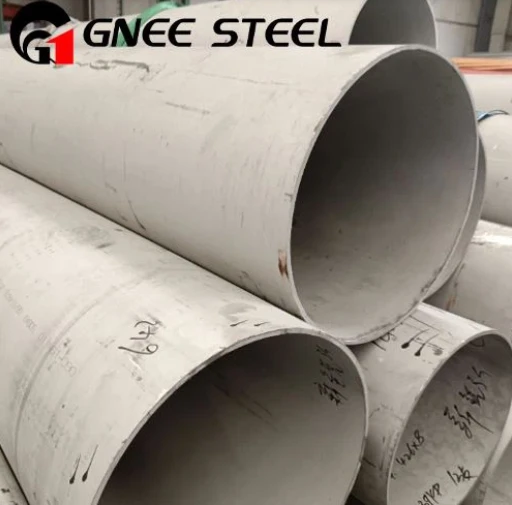
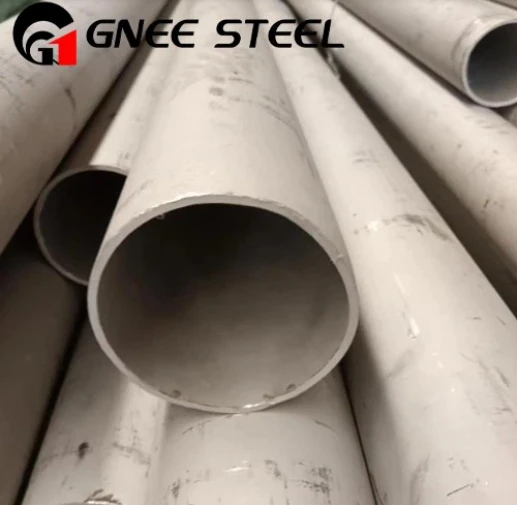
1. What is the primary chemical resistance niche of UNS N10675 pipe, and how does its composition enable this?
UNS N10675, commercially known as Hastelloy® B-3®, is a nickel-molybdenum alloy engineered specifically for unmatched resistance to reducing (non-oxidizing) acids at all concentrations and temperatures, including up to the boiling point. Its exceptional performance stems from its high nickel (~65%) and molybdenum (~28.5%) content, with controlled amounts of chromium and iron kept very low.
Nickel: Provides the fundamental corrosion-resistant matrix and excellent resistance to caustic alkalies.
Molybdenum: The key element that confers extraordinary resistance to reducing acids like hydrochloric acid (HCl) and sulfuric acid (H₂SO₄), particularly in the absence of oxidizing agents (like ferric or cupric ions, dissolved air, or nitric acid). Molybdenum promotes passivation in these harsh environments where chromium is less effective.
Low Chromium & Iron: This is a critical design feature. While chromium is excellent for resisting oxidizing environments, it can be detrimental in pure, hot reducing acids. The minimal chromium and iron in N10675 prevent the formation of harmful secondary phases and optimize the alloy's performance in its intended, severely reducing service.
Thus, N10675 pipe is the material of last resort for the most aggressive reducing acid services where common stainless steels and even many nickel-chromium-molybdenum alloys would rapidly corrode.
2. In what specific industrial applications is N10675 pipe absolutely essential, and what are the critical limitations of its use?
N10675 pipe is essential in the core sections of processes that generate, handle, or concentrate pure, hot reducing acids where no other metallic material offers economical service life.
Primary Applications:
Hydrochloric Acid (HCl) Production, Handling, and Recovery: This is its flagship application. N10675 is used for reactor effluent lines, concentrator piping, transfer lines, and pre-heat exchangers in HCl synthesis (e.g., from salt and sulfuric acid) and absorption systems.
Sulfuric Acid Concentration: Used in the hottest and most concentrated sections of acid re-concentration plants, handling sulfuric acid above ~90% concentration and temperatures exceeding 100°C, where it transitions to a reducing character.
Acetic Acid and Organic Acid Processes: Critical for piping in processes involving hot glacial acetic acid and other carboxylic acids, especially in the presence of halogen impurities.
Alkylation and Esterification Units: Used in catalyst lines (e.g., for HF or H₂SO₄ catalyst) and reactor feed/effluent systems in petrochemical and pharmaceutical industries.
Critical Limitations:
Poor Performance in Oxidizing Environments: This is the most crucial limitation. N10675 has very poor resistance to even mildly oxidizing conditions. The presence of dissolved oxygen, ferric (Fe³⁺) or cupric (Cu²⁺) ions, nitric acid (HNO₃), or free chlorine can cause catastrophic, rapid corrosion. System design must ensure these oxidants are rigorously excluded.
Not for Oxidizing Acids: It is not suitable for nitric, phosphoric (if aerated), or other oxidizing acids.
Temperature Sensitivity in Air: It is susceptible to embrittlement due to the formation of intermetallic phases when exposed to air in the 550°C to 1050°C (1020°F to 1920°F) range, impacting fabrication and high-temperature service in air.
3. What are the paramount considerations for welding UNS N10675 pipe to ensure service integrity in such aggressive environments?
Welding N10675 requires stringent controls to prevent the formation of microfissures (hot cracking) and to maintain corrosion resistance in the weld region.
Cleanliness: Absolute, surgical cleanliness is non-negotiable. Contaminants like sulfur, phosphorus, lead, or low-melting-point elements from marking pens, grease, or cutting fluids can cause immediate weld pool contamination and cracking.
Joint Design & Fit-Up: Use generous groove angles and root openings to allow for good penetration and fluidity of the weld metal, which has a different solidification pattern than the base metal.
Heat Input Control: Use low heat input and the coolest possible interpass temperature (often specified below 93°C / 200°F). High heat input increases the time the weld stays in the brittle temperature range, promoting hot cracking.
Restraint Minimization: Fixture the piping spools to minimize mechanical restraint during welding, as restraint stresses combine with thermal stresses to promote cracking.
Filler Metal: Use a matching composition filler metal, such as ERNiMo-10 (AWS A5.14), specifically designed for welding N10675 (B-3). These fillers contain modified chemistry (e.g., controlled manganese) to improve weld metal solidification cracking resistance while matching the base metal's corrosion properties.
4. How does UNS N10675 (B-3) improve upon earlier generations like UNS N10001 (Alloy B) and N10665 (Alloy B-2)?
N10675 (B-3) represents a significant evolutionary advancement focused on improved thermal stability and fabricability, addressing key weaknesses of its predecessors.
vs. Alloy B (N10001): The original alloy B was highly corrosion-resistant but extremely prone to welding embrittlement and intergranular corrosion in the heat-affected zone (HAZ) due to the formation of nickel-molybdenum intermetallics. This made fabrication of complex piping systems very difficult and risky.
vs. Alloy B-2 (N10665): Alloy B-2 solved much of the intergranular corrosion issue by having a very low carbon and silicon content. However, it was highly susceptible to rapid age-hardening and embrittlement if held in the intermediate temperature range (550°C-1050°C) for too long during slow cooling from welding or heat treatment. This made it sensitive to welding procedures and limited its use in thicker sections.
Advantage of Alloy B-3 (N10675): B-3 incorporates small, controlled additions of chromium and tungsten, along with optimized iron levels. This chemistry dramatically slows the precipitation kinetics of the harmful intermetallic phases. The result is:
Greatly improved thermal stability, allowing for slower cooling after welding or annealing without significant embrittlement.
Much wider window for safe fabrication (welding, hot forming), making it a more reliable and forgiving engineering material than B-2 for complex pipe spools.
Maintains the excellent corrosion resistance of B-2 in pure reducing environments.
5. What specific quality assurance and handling practices are critical for N10675 pipe before and during installation?
Due to its sensitivity to contamination and thermal history, QA for N10675 pipe goes beyond standard checks.
Positive Material Identification (PMI): Essential. XRF must confirm the high molybdenum (~28%), low chromium (~1.5%), and low iron (~1.5%) content to distinguish it from other alloys and ensure the correct grade is supplied.
Certification Review: The Mill Test Certificate must confirm compliance with ASTM/ASME SB-333 (for plate/sheet used in welded pipe) or SB-626/775 (for seamless/welded pipe). Chemistry and mechanical property checks are vital.
Surface Condition & Handling: Pipes must be handled with clean, dedicated gloves and tools. The interior surface must be free of embedded iron (from steel wire brushes or grinding wheels), sulfur, lead, or other contaminants. Cleaning should use virgin, non-metallic brushes and solvents. A final acid pickling/passivation (typically with a nitric/hydrofluoric acid mix) is strongly recommended to remove any surface iron contamination and establish a uniform passive film.
Post-Fabrication Heat Treatment (if needed): For heavy-wall pipe or complex welds, a full solution anneal (typically 1065°C-1120°C followed by rapid water quench) may be specified to dissolve any precipitates and restore maximum ductility and corrosion resistance. This must be performed in a controlled furnace with a protective atmosphere to prevent surface oxidation.
Hydrotesting: Use only demineralized or deionized water with very low chloride content (<50 ppm, often <10 ppm specified) for pressure testing. Immediately after testing, the system must be thoroughly drained and dried with hot, oil-free air to prevent pitting from trapped, oxidizing chloride solutions-a scenario this alloy is uniquely unsuited to handle.