


1.Key Details of the Annealed Condition
Heat Treatment Process
The annealing process typically involves heating the alloy to a temperature range of 925–1150°C (1700–2100°F), holding it at this temperature for a sufficient period (usually 30–120 minutes, depending on the product thickness and form) to ensure uniform microstructure, followed by rapid cooling (air cooling or water quenching). This rapid cooling step is critical-it prevents the precipitation of brittle intermetallic phases (e.g., σ phase) and carbides along grain boundaries, which could degrade the alloy's toughness and corrosion resistance.
Microstructure Characteristics
After annealing, Inconel 625 exhibits a homogeneous austenitic microstructure with a small amount of uniformly dispersed niobium carbides (NbC) and titanium carbides (TiC). The absence of large, detrimental precipitates ensures the alloy achieves an optimal balance of mechanical properties, including high ductility, good toughness, and excellent corrosion resistance, which are essential for subsequent processing (e.g., forming, welding, machining) and end-service applications.
Variations for Specific Product Forms
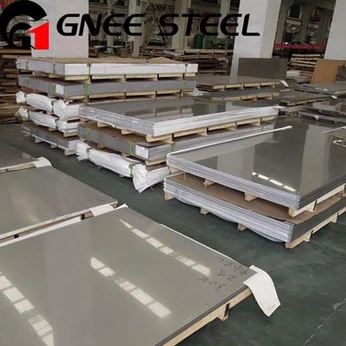
For sheet, plate, and strip: The annealed condition is further specified as "annealed and descaled" or "annealed, descaled, and pickled" to remove surface oxides and contaminants, ensuring a clean surface for fabrication.
For wrought products (bars, rods, wires): Annealing is followed by straightening and conditioning to meet dimensional tolerance requirements.
For castings: The standard delivery condition is often "as-cast and solution annealed" to eliminate casting defects (e.g., porosity) and refine the grain structure.


2.Rationale for Annealing as the Standard Condition
Unlike precipitation-hardened nickel-based alloys (e.g., Inconel 718), Inconel 625 is primarily strengthened by solid solution strengthening (from Mo and Nb) rather than precipitation of intermetallic phases. Annealing maximizes the alloy's formability and ensures consistent performance across different batches, making it suitable for a wide range of fabrication processes and service environments.



