1. Both Incoloy 945 and 926 are solution-strengthened Ni-Fe-Cr alloys. What is the primary metallurgical difference in their chemical composition, and how does this difference dictate their specific application niches in the Oil & Gas industry?
While both alloys belong to the same family and share excellent general corrosion resistance, a key compositional difference tailors them for distinct primary failure modes. The core differentiator is the balance between Molybdenum (Mo) and Copper (Cu).
Incoloy 926 (UNS N08926): This alloy is a high-Molybdenum, high-Nitrogen austenitic stainless steel, often categorized with the 6% Molybdenum super austenitics. Its key feature is ~6.5% Mo and ~0.2% N. It contains no intentional Copper addition.
Incoloy 945 (UNS N09945): This alloy was developed specifically for sour service. It contains a significant ~1.5% Cu addition, paired with a slightly lower ~3.5% Mo content.
Application Niches Driven by Composition:
Incoloy 926: The Chloride Specialist. The high Molybdenum content provides supreme resistance to pitting and crevice corrosion in chloride-ion environments. Its application niche is therefore in offshore oil & gas, where seawater cooling, injection systems, and production tubing are exposed to high chloride concentrations. It is specified for components like downhole tubing and heat exchanger tubes where resistance to chloride-induced localized attack is the primary concern.
Incoloy 945: The Sour Service Specialist. The deliberate addition of Copper, combined with a carefully balanced Ni, Cr, and Mo content, dramatically improves resistance to Sulfide Stress Cracking (SSC) and Stress Corrosion Cracking (SCC) in environments containing H₂S (sour gas). Its niche is in sour well applications, where high partial pressures of H₂S and CO₂ are present. It is the material of choice for critical components like downhole production tubing, casing, and flowlines in these extremely aggressive reservoirs.
2. For a deep, sour gas well with high partial pressures of H₂S and CO₂, why would a seamless pipe made from Incoloy 945 be specified over the more common 13% Chromium martensitic stainless steels or even duplex stainless steels?
The selection of Incoloy 945 is driven by the limitations of lesser alloys under extreme sour service conditions, as defined by standards like ISO 15156 / NACE MR0175.
Limitations of Alternative Materials:
13% Cr Martensitic Stainless Steels: These steels have a threshold of H₂S partial pressure and chloride content beyond which they become highly susceptible to SSC. In a deep, hot, high-pressure sour well, these thresholds are easily exceeded, leading to rapid, brittle failure.
Duplex Stainless Steels (e.g., 2205, 2507): While offering better corrosion resistance than 13Cr steels, duplex steels have a ferritic phase that is inherently more susceptible to SSC and chloride SCC at elevated temperatures (>~80°C / 176°F). The high hardness of the ferrite phase also makes it difficult to meet the maximum hardness requirements (often 36 HRC) for sour service, especially in the heat-affected zone of welds.
Advantages of Incoloy 945 Seamless Pipe:
Proven SSC Resistance: Incoloy 945 is specifically designed and extensively tested to withstand the most severe sour service conditions, with very high H₂S partial pressures and chloride concentrations. Its fully austenitic structure lacks the susceptible ferritic phase of duplex steels.
High Strength with Low Hardness: It can be supplied in a cold-worked condition (e.g., CWR - Cold Worked and Recrystallization Annealed) to achieve high yield strengths (e.g., 125-150 ksi) required for deep wells, while maintaining a low, uniform hardness that is well within NACE limits, ensuring inherent resistance to SSC initiation.
CO₂ Corrosion and Erosion Resistance: The high Nickel (~45%) and Chromium (~21%) content provide excellent resistance to general corrosion and mesa attack from CO₂, as well as good erosion resistance from produced sand.
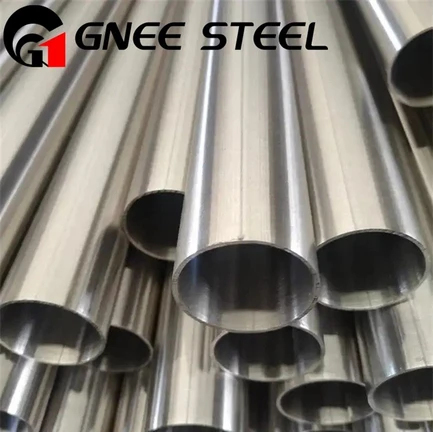
3. The manufacturing of seamless pipe from these alloys is critical for performance. What is the primary advantage of the seamless (ASTM B829 / B517) process over welded pipe (ASTM B775) for Incoloy 945 and 926 in high-pressure, corrosive service?
The primary advantage is the elimination of a longitudinal weld seam, which is a potential point of heterogeneity and weakness in the most demanding applications.
The Seamless Pipe Advantage:
A seamless pipe is created by piercing a solid billet and extruding or pilgering it to size, resulting in a continuous, homogeneous grain structure around its entire circumference. This is crucial for two reasons:
Anisotropic Property Consistency: A seamless pipe has uniform mechanical properties and corrosion resistance in all directions. In a welded pipe, the weld seam and the Heat-Affected Zone (HAZ) have a different metallurgical structure, chemistry (due to dilution), and performance than the base metal. This creates an inherent "weak link" where localized corrosion (pitting, SCC) or mechanical failure can initiate.
Superior Pressure Integrity: For high-pressure downhole tubing or flowlines, the hoop stress is the primary load. A seamless pipe guarantees uniform wall thickness and material strength around the entire loop, with no risk of weld defects (like lack of fusion or inclusions) that could become failure initiation points under cyclic pressure loads.
Why Welded Pipe is a Risk:
While modern welded and cold-worked pipe can achieve high strength, the longitudinal weld remains a potential site for:
Preferential Corrosion: The HAZ can be selectively attacked in certain environments.
Residual Stress: High residual stresses from welding can accelerate SCC, even if the pipe is subsequently heat-treated.
For the immense cost and safety consequences of a downhole failure, the premium paid for a seamless Incoloy 945 or 926 pipe is a justified investment in absolute reliability.
4. Incoloy 926 seamless pipe is often selected for seawater cooled condensers in offshore platforms. What specific property makes it resistant to the two most common failure modes in this service: pitting corrosion and microbiologically influenced corrosion (MIC)?
Incoloy 926's resistance is derived from its high Pitting Resistance Equivalent Number (PREN) and the inherent biostatic nature of its major alloying elements.
Resistance to Pitting Corrosion:
The PREN is a empirical formula used to rank a stainless material's resistance to chloride pitting. For Incoloy 926, the standard PREN formula is: PREN = %Cr + 3.3*(%Mo) + 16*(%N).
For Incoloy 926 (Cr: 21, Mo: 6.5, N: 0.2), the PREN is: 21 + (3.3*6.5) + (16*0.2) = 21 + 21.45 + 3.2 = ~45.7
A PREN > 40 is considered necessary for severe marine environments. This high PREN, driven predominantly by its 6.5% Molybdenum, ensures that the passive film is extremely stable and resistant to breakdown in chloride-laden seawater, even in crevices or under deposits.
Resistance to Microbiologically Influenced Corrosion (MIC):
MIC is caused by bacterial colonies (e.g., sulfate-reducing bacteria - SRB) that create localized acidic, corrosive conditions under their biofilms.
High Molybdenum Content: Molybdenum is particularly effective in resisting corrosion in the low-pH, reducing conditions created by SRBs. It enhances the alloy's ability to re-passivate even under the aggressive chemical micro-environment of a biofilm.
Biostatic Effect of Molybdenum and Nickel: While not fully immune, the high levels of these alloying elements are less conducive to biological growth compared to carbon steels or standard stainless steels like 304/316. More importantly, even if a biofilm forms, the underlying metal has such a high inherent resistance to localized attack that the MIC process is stifled.
5. During the welding of a seamless Incoloy 945 pipe for a sour service flowline, what are the two most critical aspects of the Welding Procedure Specification (WPS) to ensure the finished weldment retains the base metal's SSC resistance?
Welding is the most critical fabrication step, as it can create a localized zone susceptible to SSC if not properly controlled. The two most critical aspects are filler metal selection and heat input control.
1. Filler Metal Selection:
It is absolutely mandatory to use an over-matching nickel-alloy filler metal. Using a filler metal with lower corrosion resistance or strength than the Incoloy 945 base metal would create a galvanic cell and a mechanical weak point.
Common Choice: A filler metal like INCONEL® filler metal 625 (ERNiCrMo-3) is often specified. This filler metal has a higher PREN and superior SSC resistance compared to Incoloy 945. This ensures that the weld metal itself is not the weak link in the system, protecting the entire joint.
2. Heat Input Control and Interpass Temperature:
Excessive heat input during welding can have two detrimental effects:
Segregation and Precipitation: High heat can cause the segregation of alloying elements (like Mo, Cr) and the precipitation of secondary phases (such as carbides, nitrides, or intermetallic phases) in the HAZ and the weld metal. These precipitates can deplete the surrounding matrix of crucial corrosion-resistant elements and create sites for crack initiation.
Loss of Strength and Hardness Control: The HAZ can become over-annealed, potentially reducing its yield strength below the design requirement. Conversely, if cooled too slowly, it can lead to undesirable phase formations.
The WPS must specify a low to medium heat input with a strict maximum interpass temperature (typically below 150°C / 300°F). This controlled thermal cycle prevents the microstructural changes that would degrade the SSC performance of the welded joint, ensuring it performs as a seamless unit with the parent pipe.
In conclusion, the selection between Incoloy 945 and 926 seamless pipes is a precise science. 945 is the specialist for the harshest sour oil & gas fields, while 926 defends against the relentless attack of chlorides in marine and chemical environments. Their value is proven not in the ease of their use, but in their unwavering performance where other materials cannot survive.