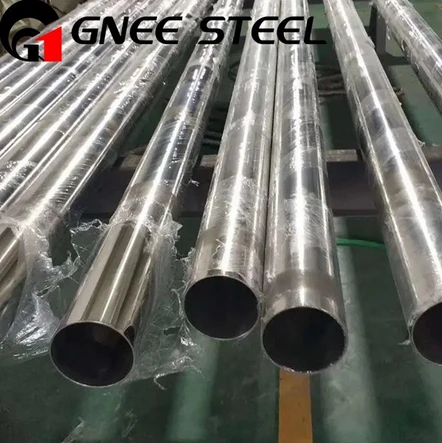
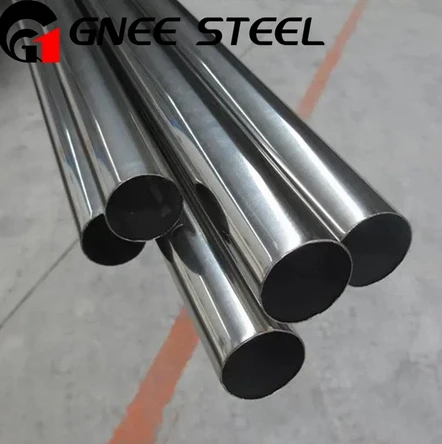
Nickel 270 is a high-purity, commercially pure nickel alloy (often classified as a "commercially pure nickel" grade rather than a complex alloy) renowned for its exceptional chemical inertness, superior thermal and electrical conductivity, and excellent ductility. Unlike alloyed nickels (e.g., Hastelloy, Inconel) that incorporate other elements to enhance specific properties like high-temperature strength or corrosion resistance, Nickel 270 is primarily composed of nickel (typically ≥99.6% purity) with minimal trace impurities.
Its key characteristics make it ideal for applications where purity, resistance to chemical attack (especially in aggressive environments like alkalis, organic acids, and some reducing media), and reliable thermal/electrical performance are critical. Common uses include chemical processing equipment (e.g., tanks, valves, and piping for corrosive fluids), electronic components (such as electrical contacts and lead wires due to its high conductivity), and precision instrumentation parts (where ductility and low impurity levels prevent material failure under stress). It is also valued in aerospace and defense for specialized thermal management components, as well as in the pharmaceutical industry for equipment that requires strict purity to avoid contaminating processes.
The hardness of Nickel 270 varies significantly depending on its temper (heat treatment or mechanical working state), as pure nickel is inherently ductile and soft in its annealed form but can be hardened through cold working. Below are the typical hardness values for common tempers, measured using standard hardness scales:
Annealed state (fully softened): This is the most common form of Nickel 270 for applications requiring maximum ductility. Its hardness typically ranges from 50 to 60 Brinell Hardness (HB) or equivalently 50 to 65 Rockwell B (HRB). In this state, the material is easy to machine, form, and weld.
Cold-worked state (e.g., half-hard, full-hard): Cold working (e.g., rolling, drawing, or stamping) increases Nickel 270's hardness by deforming its crystal structure. For example:
Half-hard Nickel 270 may have a hardness of 75 to 90 HRB (or ~80 to 100 HB).
Full-hard Nickel 270 can reach 100 to 110 HRB (or ~110 to 130 HB). However, cold working reduces ductility, so this temper is used only for applications where higher hardness (e.g., wear resistance for small components) is prioritized over formability.
Nickel 270 is defined by its ultra-high nickel purity, with strict limits on impurity elements to ensure its chemical inertness and performance. The typical chemical composition (by weight percentage, wt%) adheres to industry standards (e.g., ASTM B162, ASTM B163, or ISO 6208) and is as follows:
This low-impurity composition is critical: even small amounts of certain elements (e.g., iron, sulfur) can degrade Nickel 270's resistance to corrosion in harsh environments (e.g., concentrated alkalis) or reduce its electrical/thermal conductivity.
The tensile strength of Nickel 270 is highly dependent on its temper (annealed vs. cold-worked), as mechanical working significantly increases its strength by introducing dislocations in the crystal lattice. Below are typical tensile strength values (per standards like ASTM B162) for common tempers, measured at room temperature (20–25°C, 68–77°F):
Annealed state: In its fully softened form, Nickel 270 prioritizes ductility over strength. Its tensile strength (ultimate tensile strength, UTS) typically ranges from 310 to 420 megapascals (MPa) (or ~45,000 to 61,000 pounds per square inch, psi). This low tensile strength is balanced by extremely high elongation (typically 40–50%), making it easy to form into complex shapes (e.g., seamless tubes, thin sheets).
Cold-worked state: Cold working (e.g., rolling, drawing) increases tensile strength proportionally to the degree of deformation:
Half-hard Nickel 270: UTS ranges from 550 to 650 MPa (~80,000 to 94,000 psi).
Full-hard Nickel 270: UTS can reach 700 to 800 MPa (~101,000 to 116,000 psi).
It is important to note that tensile strength may decrease slightly at elevated temperatures (e.g., above 300°C/572°F) due to thermal softening, but Nickel 270 retains sufficient strength for most low-to-moderate temperature applications (it is not designed for high-temperature structural use, unlike superalloys).
Yield strength (typically specified as 0.2% offset yield strength, the stress at which the material exhibits 0.2% permanent deformation) is another temper-dependent property of Nickel 270. Like tensile strength, it increases with cold working but remains low in the annealed state to support formability. Below are typical room-temperature (20–25°C/68–77°F) yield strength values (per ASTM B162 and similar standards):
Annealed state: The 0.2% offset yield strength of annealed Nickel 270 is relatively low, ranging from 100 to 170 MPa (~14,500 to 24,700 psi). This low yield strength is intentional: it allows the material to undergo significant plastic deformation (e.g., bending, stretching, deep drawing) without permanent damage, which is critical for manufacturing processes like fabricating chemical process equipment or electronic components.
Cold-worked state: Cold working drastically increases yield strength by "locking" dislocations in the material's structure, making it harder to deform. For example:
Half-hard Nickel 270: 0.2% offset yield strength ranges from 450 to 550 MPa (~65,300 to 79,800 psi).
Full-hard Nickel 270: 0.2% offset yield strength can reach 600 to 700 MPa (~87,000 to 101,500 psi).
As with tensile strength, yield strength decreases at elevated temperatures. For instance, at 300°C (572°F), the yield strength of annealed Nickel 270 may drop to ~80–120 MPa (~11,600–17,400 psi), which is still adequate for non-structural, temperature-stable applications like fluid handling or electrical conduction. Exact values may vary by manufacturer, so referencing the supplier's technical datasheet is advised for precision.