


1.What is the application of C61300 copper?
1. Industrial Machinery & Equipment
Gears, Bushings, and Bearings: Ideal for low-to-medium load rotating components. The lead content improves lubricity, reducing friction and wear, while aluminum bronze's inherent hardness resists deformation.
Valves and Fittings: Used in gate valves, globe valves, and pipe fittings for fluid handling systems. It withstands pressure and resists corrosion from water, oils, and mild chemicals.
Wear Plates and Liners: Installed in machinery housings or contact surfaces to protect critical parts from abrasion, especially in material handling equipment (e.g., conveyors, crushers).
2. Marine & Offshore Engineering
Marine Hardware: Suitable for boat propellers, shaft sleeves, and hull fittings. It resists seawater corrosion, biofouling, and galvanic corrosion when paired with other metals.
Offshore Pipeline Components: Used in flanges, couplings, and valves for offshore oil and gas platforms, where resistance to saltwater and harsh atmospheric conditions is critical.
3. Automotive & Transportation
Engine Components: Manufactured into small gears, bushings, and thrust washers for internal combustion engines. It tolerates moderate temperatures and mechanical stress while maintaining machinability for precise manufacturing.
Heavy-Duty Vehicle Parts: Applied in truck and construction equipment hydraulic systems (e.g., valve spools, piston rings) due to its wear resistance and compatibility with hydraulic fluids.
4. Chemical & Process Industries
Chemical Processing Equipment: Used in pumps, impellers, and piping for handling dilute acids, alkalis, and organic solvents. Its corrosion resistance prevents material degradation in aggressive environments.
Food Processing Machinery: Suitable for non-toxic, corrosion-resistant components (e.g., valves, conveyor parts) as it meets food safety requirements (lead content is controlled per standards).
5. General Engineering & Fabrication
Fasteners and Hardware: Produced into bolts, nuts, and screws for industrial assemblies, where a balance of strength, corrosion resistance, and ease of machining is needed.
Custom Fabrications: Machined into precision parts for specialized equipment (e.g., textile machinery, printing presses) due to its ability to hold tight tolerances during processing.
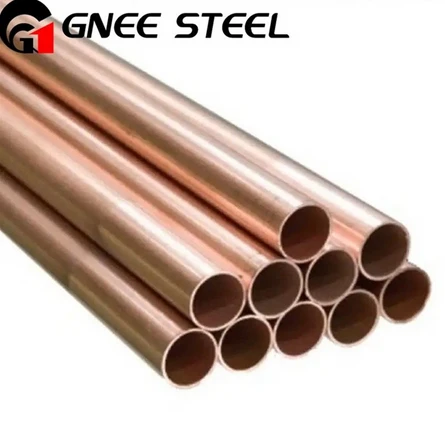


2.What are the execution standards for C61300 copper?
1. ASTM International Standards (United States)
ASTM B150: Specification for Copper Alloy Sand Castings. Covers chemical composition, tensile strength, yield strength, elongation, and casting quality for C61300 sand castings.
Mandatory requirements: Cu ≥ 86%, Al = 6–8%, Pb = 2–4%, Fe ≤ 2%; minimum tensile strength 380 MPa (55 ksi), minimum yield strength 170 MPa (25 ksi).
ASTM B505: Specification for Copper Alloy Continuous Castings. Governs continuous cast C61300 products (e.g., bars, rods, tubes) with requirements for dimensional tolerance, mechanical properties, and defect control.
ASTM B584: Specification for Copper Alloy Forgings. Applies to C61300 forgings, outlining forging temperatures, heat treatment, and mechanical performance criteria.
2. European Standards (EN)
EN 1982: Copper and Copper Alloys – Castings. Classifies C61300 under the designation CuAl6Fe2Pb (CW304G) and specifies chemical composition, mechanical properties, and testing methods for cast products.
EN 12163: Copper and Copper Alloys – Seamless Tubes for Water and Gas Supply. Covers C61300 seamless tubes used in plumbing and gas systems, with requirements for pressure resistance and corrosion performance.
3. Japanese Industrial Standards (JIS)
JIS H5120: Copper Alloy Castings. Specifies C61300 (designated CAC406) with chemical composition limits (Cu: 85–89%, Al: 5–7%, Pb: 2–4%) and mechanical property requirements for castings.
JIS H3250: Copper and Copper Alloy Bars. Governs C61300 bars, including dimensional tolerances, tensile strength (minimum 370 MPa), and elongation (minimum 15%).
4. Other Regional/Industry Standards
ISO 13388: Copper and Copper Alloys – Castings – Technical Conditions of Delivery. International standard harmonizing requirements for C61300 castings across global markets.
SAE J461: SAE Specification for Copper and Copper Alloys. Used in the automotive industry to qualify C61300 components for engine and hydraulic applications.
5. Key Compliance Requirements
Chemical Composition Control: Lead content is strictly limited (typically 2–4%) to ensure machinability without compromising safety or corrosion resistance.
Mechanical Testing: Mandatory tensile testing, hardness testing (Brinell or Rockwell), and non-destructive testing (NDT) for castings/forgings to detect defects (e.g., porosity, cracks).
Dimensional Tolerances: Standards specify allowable variations in size, shape, and surface finish for different product forms (castings, bars, tubes, forgings).


