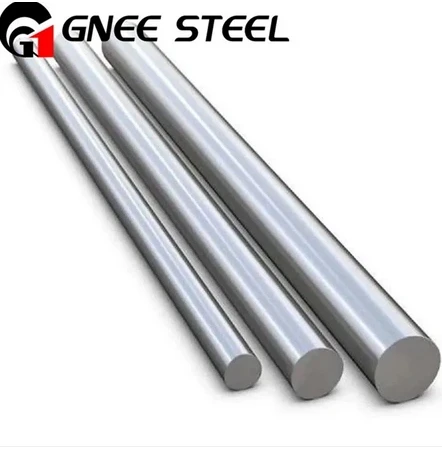
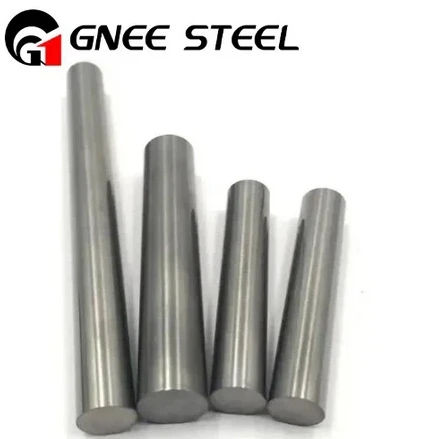
Grade 9 titanium, also known as Ti-3Al-2.5V, is a alpha-beta titanium alloy composed primarily of titanium (≈94.5%), 3% aluminum, and 2.5% vanadium. This alloy is valued for its unique balance of properties, combining the formability of commercially pure (CP) titanium with enhanced strength from its alloying elements. Aluminum improves strength and stability at elevated temperatures, while vanadium promotes workability and ductility, making Grade 9 highly versatile for both cold and hot working processes. It is often referred to as a "low-alloy" titanium due to its relatively low concentration of alloying elements compared to higher-strength grades like Grade 5 (Ti-6Al-4V).
The density of Grade 9 titanium is approximately 4.48 g/cm³ (or 0.162 lb/in³). This places it significantly lighter than steel (≈7.85 g/cm³) and slightly denser than aluminum (≈2.7 g/cm³), contributing to its appeal in weight-sensitive applications where strength-to-weight ratio is critical.
Grade 9 titanium's combination of moderate strength, excellent corrosion resistance, formability, and weldability makes it suitable for diverse industries, including:
Aerospace: It is widely used in aircraft hydraulic systems, fuel lines, and tubing for its ability to withstand high pressure and temperature fluctuations without compromising on weight. Its weldability also makes it ideal for fabricating complex components like ducting and structural brackets.
Medical Devices: Due to its biocompatibility (non-toxic and non-reactive with human tissue) and good fatigue resistance, Grade 9 is used in surgical instruments, orthopedic implants (e.g., bone plates), and catheter tubing.
Marine and Offshore Engineering: Its resistance to saltwater corrosion makes it valuable for seawater piping, heat exchangers, and fasteners in ships, offshore platforms, and desalination plants.
Chemical Processing: It is employed in pipes, valves, and storage tanks handling corrosive fluids (e.g., acids, chlorides) where both durability and corrosion resistance are essential.
Sports Equipment: Lightweight and strong, it is used in high-performance gear such as bicycle frames, golf club shafts, and racing components.
The tensile strength of Grade 9 titanium varies slightly depending on its heat treatment and processing (e.g., annealed vs. cold-worked). In its annealed condition (the most common form), it typically ranges from 620 MPa to 795 MPa (≈90,000 to 115,000 psi). This is significantly higher than commercially pure titanium grades (e.g., Grade 2: 345 MPa) but lower than high-strength alloys like Grade 5 (≈860 MPa in annealed form). Its yield strength, a measure of resistance to permanent deformation, is around 485 MPa to 655 MPa (≈70,000 to 95,000 psi) in the annealed state.
Whether Grade 5 (Ti-6Al-4V) is "better" than Grade 9 depends on the specific application, as each alloy offers distinct advantages:
Grade 5 is "better" for applications demanding maximum strength, high-temperature performance, and fatigue resistance, such as aerospace structural components (e.g., airframe parts, turbine blades), military hardware, and heavy-duty industrial tools.
Grade 9 is "better" when formability, weldability, corrosion resistance, or cost are prioritized-for example, in tubing, medical implants, marine components, or chemical processing equipment where complex shapes or exposure to harsh environments are key requirements.
In summary, neither is universally superior; their suitability depends on whether the application requires raw strength (Grade 5) or a balance of workability, corrosion resistance, and moderate strength (Grade 9).