


1. What are the grades of seamless pipes?
Carbon Steel: ASTM A106 (Grade A, B, C), ASTM A53 (Grade B), API 5L (Grades B, X42-X80).
Alloy Steel: ASTM A335 (P1, P5, P9, P11, P22, P91), used for high-temperature applications.
Stainless Steel: ASTM A312 (TP304, TP304L, TP316, TP316L), known for corrosion resistance.
Low-Temperature Steel: ASTM A333 (Grade 6, 8), designed for cryogenic environments.
Other Special Grades: e.g., ASTM A213 (T11, T22) for boiler tubes.
2. What is the code for seamless pipe?
ASTM (American Society for Testing and Materials): Covers material specifications (e.g., A106, A335).
API (American Petroleum Institute): Focuses on oil and gas industry pipes (e.g., API 5L).
ASME (American Society of Mechanical Engineers): Used for pressure vessels and piping systems (e.g., ASME B31.1 for power plants, B31.3 for chemical/petrochemical).
ISO (International Organization for Standardization): Global standards like ISO 3183 for oil and gas pipelines.
3. What is the ASTM standard for seamless pipes?
ASTM A106: Seamless carbon steel pipes for high-temperature services (e.g., steam lines).
ASTM A333: Seamless carbon and alloy steel pipes for low-temperature applications.
ASTM A335: Seamless ferritic alloy-steel pipes for high-temperature services.
ASTM A312: Seamless and welded austenitic stainless steel pipes.
ASTM A53: Seamless and welded carbon steel pipes for general purposes.

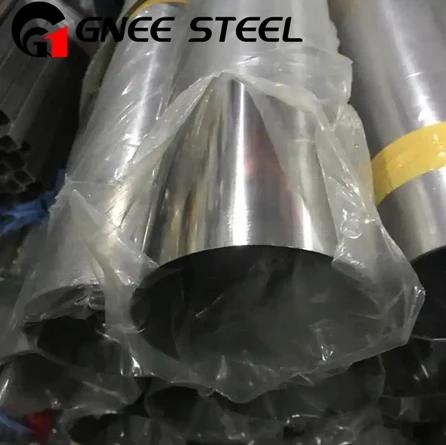


4. How to Identify Seamless Pipes?
Seamless pipes lack a visible weld seam on the inner or outer surface.
Welded pipes may show a faint line or bead where the edges were joined.
A cross-section of a seamless pipe appears uniform, while a welded pipe may show a slight seam or fusion line.
Pipes are often stamped with specifications (e.g., ASTM A106 Grade B), indicating their type and standard.
Mill test reports (MTRs) or certificates from the manufacturer confirm the pipe's seamless origin and grade.
Techniques like ultrasonic testing (UT) or magnetic particle inspection (MPI) can detect hidden welds.
Seamless pipes typically have a smoother, more uniform surface finish than welded pipes.
Critical applications (e.g., high-pressure/high-temperature systems) often require seamless pipes due to their superior integrity.



