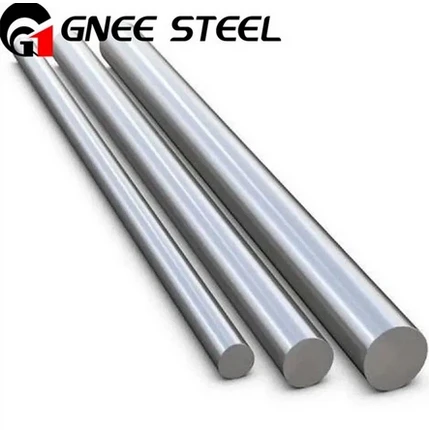
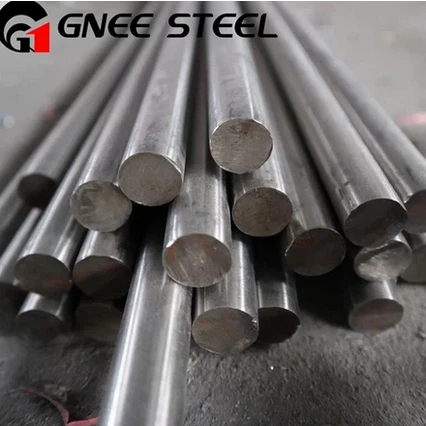
1. The Gold Standard: What Makes Ti-6Al-4V (Grade 5) the Most Widely Used Titanium Alloy, Especially in Rod Form?
Ti-6Al-4V's dominance, particularly in the form of rods, bars, and billets, stems from its unparalleled and balanced combination of properties that meet the demanding requirements of high-end industries. It is often called the "workhorse" or "gold standard" of titanium alloys for several key reasons:
Optimal Strength-to-Weight Ratio: With a density of about 4.43 g/cm³, it is roughly 40% lighter than steel but can be heat-treated to achieve similar tensile strengths (up to 1170 MPa or 170 ksi). This weight savings is a primary driver in aerospace, where every kilogram reduced translates directly into improved fuel efficiency, greater payload, or enhanced performance.
Excellent Mechanical Property Balance: It is not just about strength. Grade 5 offers a superb balance of:
High Fatigue Strength: Critical for components undergoing repeated cyclic loading (e.g., aircraft wings, engine blades).
Good Fracture Toughness: It resists crack propagation, providing a margin of safety against catastrophic failure.
Moderate Creep Resistance: It can maintain its mechanical integrity at elevated temperatures up to approximately 400°C (750°F).
Superior Corrosion Resistance: It inherits excellent resistance to atmospheric, marine, and many industrial environments from its titanium base. It forms a tenacious, self-healing oxide layer (TiO₂) that protects it from corrosion.
Biocompatibility: In its ELI (Extra Low Interstitial) form, it is biocompatible, making it the premier choice for critical surgical implants like joint replacements and spinal fusion devices.
The rod form is fundamental as it serves as the starting stock for countless critical components. These rods are forged, machined, and turned into everything from aircraft landing gear beams and engine components to surgical implant stems and high-performance automotive parts.
2. The Alpha-Beta Microstructure: How Does the Phase Composition of Ti-6Al-4V Define Its Properties and Processability?
Ti-6Al-4V is an alpha-beta (α-β) alloy, meaning its microstructure at room temperature is a mixture of two distinct crystal phases. This two-phase nature is the fundamental key to its versatility.
The Two Phases:
Alpha (α) Phase: A hexagonal close-packed (HCP) structure, stabilized primarily by the 6% Aluminum content. This phase provides:
Strength and Creep Resistance: It is the stronger, more stable phase at lower temperatures.
Beta (β) Phase: A body-centered cubic (BCC) structure, stabilized by the 4% Vanadium. This phase provides:
Ductility and Toughness: It is more ductile, improving the alloy's formability and fracture resistance.
Hardenability: It allows the alloy to be strengthened via heat treatment.
How Microstructure Drives Properties:
The size, shape, and distribution of these alpha and beta phases, controlled during the manufacturing of the rod, dictate the final mechanical properties. A fine, equiaxed (globular) alpha structure in a transformed beta matrix results in the best combination of strength, ductility, and fatigue life.
Impact on Processability:
Hot Working: The alloy is most easily forged and rolled at temperatures within the alpha-beta phase field (typically ~955°C / 1750°F and below). This allows for precise control over the microstructure.
Heat Treatment: This is where its alpha-beta nature shines. It can be solution treated and aged (STA). The process involves heating the rod to a temperature where some beta phase dissolves (solution treating), quenching it to create a metastable structure, and then "aging" it at a lower temperature to precipitate fine alpha particles, dramatically increasing strength.
Weldability: The rapid cooling after welding can lead to a brittle martensitic phase in the heat-affected zone, often necessitating post-weld heat treatment.
3. The Machinability Challenge: Why is Machining Ti-6Al-4V Rod So Difficult, and What are the Best Practices?
Machining Ti-6Al-4V rod is notoriously challenging and is a significant factor in the high cost of finished components. The difficulties arise from the alloy's inherent properties:
Key Challenges:
Low Thermal Conductivity: Titanium's poor ability to conduct heat (about 1/6th that of steel) means the heat generated during cutting is not carried away by the chips or the workpiece. Instead, it concentrates on the cutting tool edge, leading to extremely high temperatures (over 1000°C) and rapid tool wear.
High Strength at Elevated Temperature: It maintains its strength even at the high temperatures encountered in the cutting zone, increasing the cutting forces required.
Chemical Reactivity: At high temperatures, titanium reacts chemically with tool materials (like carbide), leading to diffusion wear and galling.
Low Elastic Modulus: Its "springiness" can cause the workpiece to deflect away from the tool, leading to chatter and dimensional inaccuracy unless setups are very rigid.
Best Practices for Success:
Tool Selection: Use sharp, uncoated or AlTiN/TiAlN-coated carbide tools. For finishing, Polycrystalline Diamond (PCD) tools offer exceptional life.
Tool Geometry: A positive rake angle and a large relief angle are critical to reduce cutting forces and heat generation.
Cutting Parameters:
Low Cutting Speeds: To manage heat generation.
High Feed Rates: To help the tool get under the work-hardened surface and engage fresh material.
Adequate Depth of Cut: To prevent rubbing and work hardening.
High-Pressure Coolant: This is non-negotiable. Coolant pressures of 1000 psi (70 bar) or higher are often used to effectively evacuate chips and remove heat from the tool-workpiece interface.
Rigidity: The machine tool, workpiece, and fixture must be extremely rigid to counteract titanium's low modulus and prevent chatter.
4. Heat Treatment Versatility: How Can Heat Treatment Transform the Properties of a Ti-6Al-4V Rod?
One of the most powerful advantages of Ti-6Al-4V is its responsiveness to heat treatment, allowing engineers to tailor the properties of a rod for a specific application. The two primary conditions are:
1. Mill Annealed (MA):
Process: The rod is heated to a temperature below the beta transus (the temperature at which the alloy becomes 100% beta) and then air-cooled. This is the most common and standard condition.
Resulting Properties: This produces a good combination of strength, ductility, and toughness. It is a stable condition with low residual stress.
Typical Mechanical Properties:
Ultimate Tensile Strength: ~895 MPa (130 ksi)
Yield Strength: ~828 MPa (120 ksi)
Elongation: ~10%
Applications: Used for a vast majority of applications where high strength and good damage tolerance are required.
2. Solution Treated and Aged (STA):
Process:
Solution Treating: The rod is heated to a temperature near the beta transus (typically 955-970°C / 1750-1800°F), held, and then rapidly quenched in water or oil.
Aging: The quenched rod is then reheated to a lower temperature (480-595°C / 900-1100°F) for several hours and air-cooled.
Resulting Properties: This process precipitates fine alpha particles within the matrix, creating a significant increase in strength, albeit with some reduction in ductility and fracture toughness.
Typical Mechanical Properties:
Ultimate Tensile Strength: ~1170 MPa (170 ksi)
Yield Strength: ~1100 MPa (160 ksi)
Elongation: ~8%
Applications: Reserved for the most highly stressed components where maximum strength is the primary design criterion, such as critical aerospace fasteners and certain surgical implants.
5. From Rod to Component: What are the Key Industries and Specific Applications that Rely on Ti-6Al-4V Rods?
Ti-6Al-4V rods are the foundational raw material for critical components across several high-tech industries. The rod form is essential as it is often processed through forging, machining, or turning to create the final part.
Aerospace (The Largest Consumer):
Airframe Components: Wing structures, fuselage sections, landing gear beams, and engine mounts. The rods are often forged into these shapes.
Jet Engines: Fan disks, compressor blades, spacers, and housing components. These require the high-temperature strength and fatigue resistance of Grade 5.
Spacecraft: Critical for pressure vessels, satellite components, and rocket motor cases due to its strength-to-weight ratio at cryogenic and elevated temperatures.
Medical & Surgical Implants:
Orthopedics: Femoral stems for hip replacements, tibial trays for knee replacements, and trauma plates and screws. The ELI (Extra Low Interstitial) grade is used here for enhanced fracture toughness and biocompatibility.
Dental Implants: As abutments and implant bodies.
Surgical Instruments: For specialized, reusable tools where lightness and corrosion resistance are beneficial.
High-Performance Automotive & Racing:
Engine Components: Connecting rods, valves, and valve springs, where reducing reciprocating mass increases engine RPM and efficiency.
Chassis & Suspension: Pushrods, springs, and fasteners, where unsprung weight reduction improves handling and traction.
Marine & Offshore:
Naval Vessels: Propeller shafts, submarine ball valves, and other critical components on ships and submersibles where resistance to seawater corrosion is paramount.
Consumer Goods:
High-End Sports Equipment: Bicycle frames, golf club heads, and mountain climbing equipment, where performance benefits justify the material cost.