


What are the differences between Inconel 600 and X-750 alloys?

What are the differences between Inconel 600 and X-750 alloys?
Inconel 600 is a solid-solution strengthened nickel-chromium alloy with good high-temperature corrosion and oxidation resistance, but it can only be strengthened through cold working; Inconel X-750, on the other hand, contains added titanium (Ti) and aluminum (Al), allowing it to be strengthened through precipitation hardening, resulting in higher strength and creep resistance at temperatures up to 1300°F (700°C). Therefore, it is ideal for high-stress aerospace/turbine components, while Inconel 600, with its simpler structure, is suitable for applications where strength requirements are less demanding.
Is Inconel X-750 magnetic?
This material exhibits excellent creep resistance and is non-magnetic. It retains enhanced strength properties at high temperatures up to 1300°F (700°C) and has good oxidation resistance up to 1800°F (983°C). Inconel® X-750 is resistant to a variety of industrial corrosive media under both oxidizing and reducing conditions.
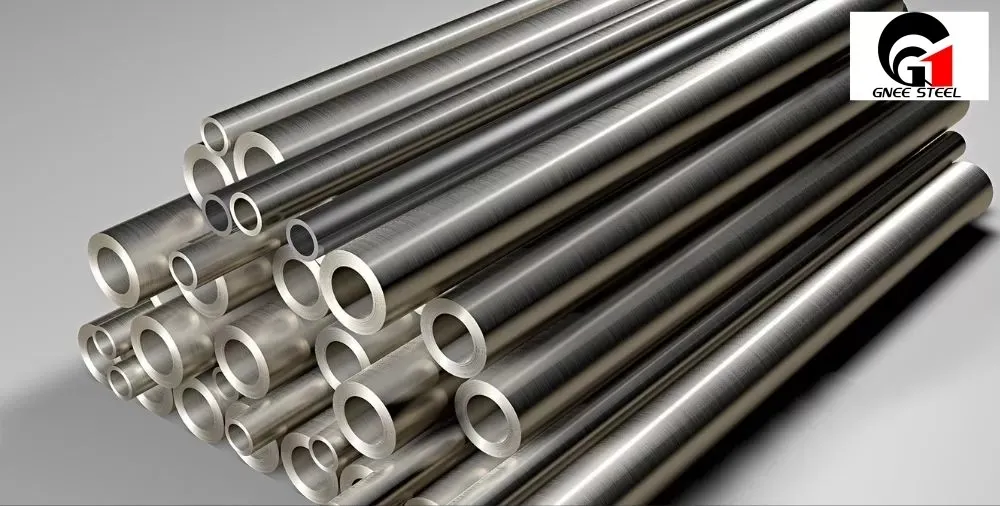
Inconel 600 is a nickel-chromium-iron solid-solution strengthened high-temperature alloy, renowned for its exceptional high-temperature oxidation resistance (up to approximately 1150°C), excellent resistance to chloride ion stress corrosion cracking, and outstanding stability in alkaline and high-temperature pure water environments. It is widely used in heat treatment equipment, chemical processing, nuclear power plant steam generators, and aerospace applications – critical areas where materials must maintain performance under extreme temperatures and corrosive media. It is a fundamental high-performance nickel-based alloy for demanding operating conditions.
Inconel X-750 is a precipitation-hardened nickel-chromium-iron-based high-temperature alloy achieved through the addition of aluminum and titanium. Its core characteristics include maintaining extremely high strength, excellent creep and relaxation resistance at temperatures up to approximately 815°C, while also possessing good corrosion and oxidation resistance. It is primarily used in the manufacture of critical springs, fasteners, turbine blades, gas turbine components, and nuclear reactor structural components that are subjected to high stress and high temperatures. It is a top-tier precipitation-hardened alloy for aerospace, energy, and chemical industries requiring materials with both high-temperature strength and long-term reliability.
Comparison of the chemical composition of Inconel 600 and Inconel X-750
| Element | Inconel 600 (UNS N06600) | Inconel X-750 (UNS N07750) |
|---|---|---|
| Nickel (Ni) | ≥ 72.0 % | ≥ 70.0 % |
| Chromium (Cr) | 14.0 – 17.0 % | 14.0 – 17.0 % |
| Iron (Fe) | 6.0 – 10.0 % | 5.0 – 9.0 % |
| Titanium (Ti) | – | 2.25 – 2.75 % |
| Aluminum (Al) | – | 0.40 – 1.00 % |
| Niobium (Nb) | – | 0.70 – 1.20 % |
| Cobalt (Co) | – | ≤ 1.00 % |
| Carbon (C) | ≤ 0.15 % | ≤ 0.08 % |
| Manganese (Mn) | ≤ 1.0 % | ≤ 1.00 % |
| Silicon (Si) | ≤ 0.5 % | ≤ 0.50 % |
| Copper (Cu) | ≤ 0.5 % | ≤ 0.50 % |
| Sulfur (S) | ≤ 0.015 % | ≤ 0.01 % |
| Phosphorus (P) | – | ≤ 0.02 % |
Differences between Inconel 600 and Inconel 750 – Corrosion Resistance
In terms of corrosion resistance, both alloys perform excellently in their respective application areas. Inconel 600 exhibits particularly strong resistance to corrosion in alkaline and sulfide-containing environments, making it an ideal choice for the production and use of corrosive alkali metals. On the other hand, Inconel 750 demonstrates strong corrosion resistance to a variety of corrosive media, including nitric acid, sulfuric acid, salts, and acids, and is particularly effective in resisting corrosion caused by chloride ions and sulfides, especially in marine environments.
Differences between Inconel 600 and Inconel 750 – Machining Characteristics
These two alloys also differ in their machining characteristics. Inconel 600 has good hot and cold working properties and can be easily formed and welded using various techniques. Its excellent heat treatment stability ensures consistent performance after processing. Inconel 750 also has good machinability and can be easily cut, welded, and bent. Its welding performance is particularly noteworthy, as it can be joined using a variety of welding methods, such as tungsten inert gas welding and laser welding.
Summary of the main differences between Inconel 600 and Inconel X-750
Strength: Due to the ability of X-750 to be strengthened through heat treatment (precipitation hardening), its strength is significantly higher at high temperatures.
Composition: X-750 adds Al and Ti to the Inconel 600 alloy, enabling this strengthening effect.
Application focus: Inconel 600 alloy excels in corrosion resistance/oxidation resistance for general high-temperature components, while Inconel X-750 alloy is suitable for high-stress, high-strength applications (e.g., springs, turbine blades).
Why Choose Gnee as Your Nickel-Based Alloy Supplier
✅ Over 18 years of export experience, products sold to more than 80 countries
✅ Certified by ISO, SGS, and BV
✅ Global inventory of Inconel, Hastelloy, Incoloy, and Monel alloy tubing, plates, and bars
✅ Custom processing services available – including cutting, polishing, CNC machining, and packaging
✅ Fast delivery within 7-15 days, supported by global logistics partners
📦 Packaging and Shipping
All stainless steel products are packaged using the following methods:
Wooden pallets or crates
Moisture-proof packaging
Labels with furnace number, standard, and size labels
Shipped worldwide by sea, air, or express
Gnee Steel is a supplier of inconel 600 alloy, offering a wide range of products including: seamless pipe (sizes: 4-219 mm; thickness: 0.5-20 mm); welded pipe (sizes: 5.0-1219.2 mm; thickness: 0.5-20 mm); plates (thickness: 0.1 to 100 mm; width: 10-2500 mm); strips; alloy round bars (diameter: 3-800 mm); flat bars (thickness: 2-100 mm; width: 10-500 mm); hexagonal bars (size: 2-100 mm); wire rods; and extruded profiles. We collaborate with steel mills to provide our customers with inconel 600 alloy products that meet or exceed numerous leading industry standards, including ASTM, ASME, SAE, AMS, ISO, DIN, EN, and BS standards.
Gnee Steel stocks and sells inconel 600, pipes, plates, strips, round bars, flat bars, forged billets, hexagonal steel, wire rods, and extruded profiles. Please feel free to contact us at ss@gneesteel.com for a quote.




