


1. what are the ASTM Codes for Welded Pipe?
ASTM A53: Covers carbon steel pipes, allowing both seamless and welded (ERW or submerged arc welding) production.
ASTM A312: Specifies stainless steel pipes, including welded (e.g., ERW or laser-welded) and seamless types.
ASTM A213: Applies to seamless and welded stainless steel tubes for high-temperature service (welded tubes must meet specific welding and testing requirements).
ASTM A106: Covers seamless carbon steel pipe for high-temperature applications (welded pipe is not permitted under this standard).
2. what are the Types of Stainless Steel Used in Welded Pipe?
Austenitic grades (e.g., 304, 304L, 316, 316L): Highly weldable and widely used in corrosion-resistant applications (food processing, pharmaceuticals, chemical industry).
Ferritic grades (e.g., 430): Less commonly welded due to brittleness but suitable for low-stress applications.
Duplex stainless steels (e.g., 2205): Used in high-corrosion/high-strength environments; require careful welding techniques to maintain ductility.


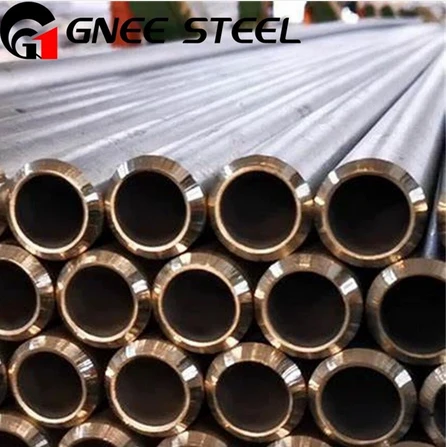

3. Seamless vs. Welded Pipe Fittings: Which Is Better?
Seamless Pipe Fittings:
Advantages: Uniform structure, no weld seam, ideal for high-pressure/high-temperature systems (e.g., oil & gas, power plants) or critical safety applications (e.g., aerospace).
Disadvantages: More expensive, limited in large diameters, heavier.
Welded Pipe Fittings:
Advantages: Cost-effective, widely available, suitable for low-to-moderate pressure systems (e.g., water supply, HVAC, structural supports). Modern welding techniques (e.g., orbital welding) and non-destructive testing (NDT) ensure reliability.
Disadvantages: Weld seam may be a weak point under extreme stress; requires careful inspection for critical uses.
Seamless is better for high-risk, high-performance applications.
Welded is preferable for cost-sensitive, non-critical uses where performance requirements are met.
4. Why Are Welded Pipes Preferred Over Seamless?
Cost Efficiency: Production is simpler (rolling and welding flat sheets), making them 20–50% cheaper than seamless pipes, especially for large diameters.
Faster Availability: Mass-produced in standard sizes, ideal for large-scale projects (e.g., municipal water lines, construction).
Design Flexibility: Easily manufactured in various materials (including stainless steel) and complex shapes (e.g., rectangular tubing).
Suitability for Low-Stress Applications: Perfect for non-critical uses like drainage, scaffolding, or automotive exhausts, where seamless strength is unnecessary.
Reduced Material Waste: Uses flat sheets, minimizing scrap compared to seamless pipe production (which starts from solid billets).
5. what is the Thickness Tolerance for Welded Pipe?
ASTM A53 (carbon steel):
For wall thickness ≤ 0.237 inches: ±12.5% of specified thickness.
For wall thickness > 0.237 inches: ±10% of specified thickness.
ASTM A312 (stainless steel):
Typically ±10% of specified wall thickness, but stricter tolerances (e.g., ±5%) may apply for high-precision applications (e.g., pharmaceutical tubing).
ASTM A213 (boiler tubes):
Tolerances vary by size but often require tight control (e.g., ±10% or better) for critical heat transfer applications.



