


Nickel Alloy Alloy 825 (2.4858)
Nickel Alloy Alloy 825 (2.4858)
Definition:
2.4858 is a nickel-iron-chromium alloy containing molybdenum, copper and titanium.
Density: 8.14 g/cm³
Melting Range: 1370-1400°C
Specific Heat: 0.105 J/kg(°C)
Curie Temperature: -196°C
Magnetic Permeability at 200 Oersted (15.9 kA/m): 1.005
Coefficient of Thermal Expansion: 14.0 (21 - 93°C µm/m-°C)
Thermal Conductivity: 11.1 W/m(°C)
Resistivity: 1.13 mm²/m
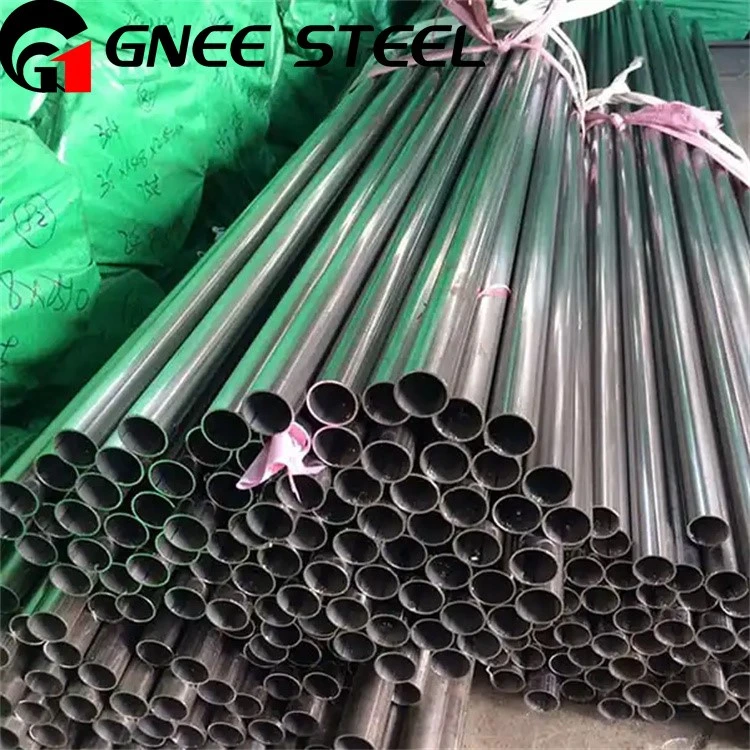

Physical and Thermal Properties:
UNS N08825 / W.Nr. 2.4858 is designed to resist a variety of corrosive environments, particularly those containing chlorides.
The nickel content of the alloy provides resistance to chloride ion stress corrosion cracking.
Molybdenum and copper, along with nickel, provide resistance to reducing environments, such as those containing sulfides and phosphates.
Molybdenum also provides resistance to pitting and crevice corrosion.
The chromium content provides resistance to oxidizing species, such as nitric acid, nitrites, and oxidizing salts.
The addition of titanium helps stabilize the alloy and reduce susceptibility to intergranular corrosion during welding.
Mechanical Properties (Annealed):
Tensile Strength: 100 ksi (690 MPa)
Yield Strength (0.2% offset): 45 ksi (310 MPa)
Elongation: 45%
Chemical Composition Analysis:
Nickel (Ni): 38.0-46.0%
Iron (Fe): 22.0% minimum
Chromium (Cr): 19.5-23.5%
Molybdenum (Mo): 2.5-3.5%
Copper (Cu): 1.5-3.0%
Titanium (Ti): 0.6-1.2%
Carbon (C): 0.05% maximum
Manganese (Mn): 1.0% maximum
Silicon (Si): 0.5% maximum
Aluminum (Al): 0.2% maximum
Applications:
Alloy 825 is widely used in chemical processing, pollution control, oil and gas recovery, acid production, desalination operations, nuclear fuel reprocessing, and radioactive waste treatment.
Alloy 825 (2.4858) is widely used in various industrial environments due to its excellent corrosion resistance and wide range of applications, especially under high temperature and corrosive conditions.



