

Core Differences Between Monel Alloy, Stainless Steel and Regular Nickel-based Alloys
Monel alloy: It is a nickel-copper alloy system, with nickel content ranging from 50% to 67% and copper content from 28% to 34%, along with trace elements such as iron, manganese, and silicon. Its core feature is the absence of chromium, which distinguishes it from most stainless steels and some nickel-based alloys.
Stainless steel: Primarily an iron-based alloy, with a minimum chromium content of 10.5% as the key alloying element. Depending on the grade, it may also contain nickel, molybdenum, titanium, etc. (e.g., 304 stainless steel contains about 8% nickel, while 316 stainless steel adds molybdenum on this basis).
Regular nickel-based alloys: Nickel serves as the base metal (with nickel content generally exceeding 50%), and they are reinforced by adding chromium, molybdenum, tungsten, cobalt, etc. Their composition is more complex than Monel alloy, designed for specific high-temperature or corrosion-resistant scenarios.
Monel alloy: Exhibits outstanding corrosion resistance in reducing media, especially in hydrofluoric acid, seawater, salt solutions, and dilute sulfuric acid environments. It also resists stress corrosion cracking and pitting corrosion in marine atmospheres.
Stainless steel: Corrosion resistance relies on the dense chromium oxide film formed on the surface. It performs well in oxidizing media (e.g., nitric acid), but its resistance to reducing acids and chloride ion corrosion is inferior to Monel alloy (e.g., 304 stainless steel is prone to pitting corrosion in high-chloride environments).
Regular nickel-based alloys: Tailored for extreme corrosion conditions. For example, alloys containing high molybdenum and chromium can resist strong corrosive media such as hot concentrated sulfuric acid, hydrochloric acid, and mixed acids. Their corrosion resistance is more targeted and often stronger than Monel alloy in specific harsh environments.
Monel alloy: Has moderate high-temperature strength, with a usable temperature generally below 500℃. Beyond this range, its mechanical properties decline significantly.
Stainless steel: The high-temperature performance varies by grade. Austenitic stainless steel (e.g., 310S) can be used at temperatures up to 1000℃, but its creep strength is lower than nickel-based alloys at high temperatures.
Regular nickel-based alloys: Excel in high-temperature performance, with excellent creep resistance, oxidation resistance, and thermal stability. Many grades can operate stably at temperatures above 1000℃, making them suitable for high-temperature components in aerospace, petrochemical, and other industries.
Monel alloy: Features high strength, good toughness, and excellent ductility at room temperature. It can be cold-worked to enhance strength and has good weldability and machinability.
Stainless steel: Mechanical properties differ by grade. Austenitic stainless steel has good toughness and formability, while martensitic stainless steel has high hardness and strength after heat treatment. However, its toughness at low temperatures is generally weaker than Monel alloy.
Regular nickel-based alloys: Possess high tensile strength, fatigue strength, and creep strength, especially maintaining stable mechanical properties at high temperatures. Some precipitation-hardened nickel-based alloys can achieve ultra-high strength through heat treatment.
Monel alloy: Moderate cost compared with high-end nickel-based alloys, widely used in marine engineering (e.g., ship propellers, seawater pipelines), chemical equipment (e.g., hydrofluoric acid handling equipment), and fasteners in corrosive environments.
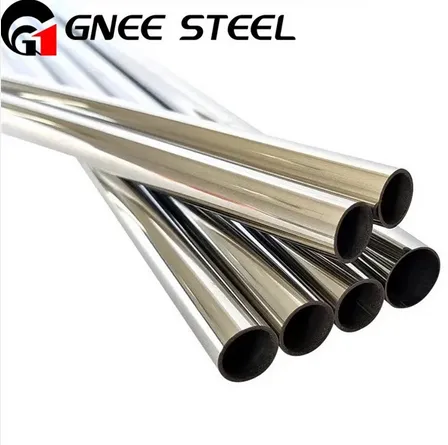
Stainless steel: Low cost and wide availability, the most commonly used corrosion-resistant alloy in daily life, construction, and general chemical industries, such as kitchen utensils, building decoration, and ordinary pressure vessels.
Regular nickel-based alloys: High cost due to complex composition and manufacturing processes, mainly applied in high-end fields with extreme requirements, such as aero-engine turbine blades, nuclear reactor components, and equipment for processing strong corrosive media.


