


What is Inconel 625?
Inconel 625 (UNS N06625) is a nickel‑chromium‑molybdenum‑niobium (Nb) solid‑solution‑strengthened wrought nickel‑based superalloy developed by Special Metals Corporation (INCO, International Nickel Company of the United States) in the early 1960s.
Unlike Inconel 617, which achieves solid‑solution strengthening via the combined effect of cobalt and molybdenum, Inconel 625 gains solid‑solution strengthening by adding high‑content molybdenum (8%–10%) and niobium (Nb+Ta: 3.15%–4.15%) into the nickel‑chromium matrix. Meanwhile, niobium can form metastable γ″ phase (Ni₃Nb) within a specific temperature range to deliver extra precipitation‑hardening effect. This combined strengthening mechanism of solid‑solution hardening and precipitation hardening enables the alloy to obtain high strength without age‑hardening treatment, greatly simplifying the heat‑treatment procedure.
Its Chinese equivalent grades include GH3625 (new designation, former grade GH625) and NS336 (adopted by partial manufacturers). It is designated as UNS N06625 under the US standard, W.Nr. 2.4856 / NiCr22Mo9Nb under the German DIN standard, with fully‑matched chemical composition and mechanical properties against the international‑spec Inconel 625.
The high‑nickel matrix guarantees microstructural stability; the synergistic molybdenum‑niobium solid‑solution system delivers ultra‑high strength; the high chromium content forms a dense, protective oxide film. The core chemical composition is listed as follows:
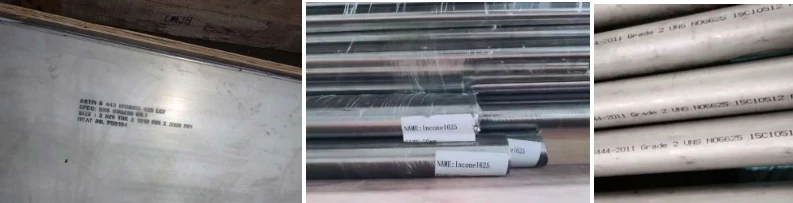
Inconel 625 Element Composition & Function Table (wt%)
| Element | Content (wt%) | Core Function |
|---|---|---|
| Nickel (Ni) | ≥ 58.0% (Balance) | Stabilizes the austenite matrix, delivers toughness over a wide temperature range and resistance to chloride‑induced stress‑corrosion cracking |
| Chromium (Cr) | 20.0% ~ 23.0% | Forms a dense Cr₂O₃ oxide film, serving as the core barrier against oxidation and corrosion |
| Molybdenum (Mo) | 8.0% ~ 10.0% | Key solid‑solution strengthening element, improves resistance to pitting and crevice corrosion |
| Niobium + Tantalum (Nb+Ta) | 3.15% ~ 4.15% | Provides solid‑solution strengthening and forms metastable γ″ phase (Ni₃Nb), the critical contributor to strength improvement |
| Iron (Fe) | ≤ 5.0% | Content‑controlled to optimize cost efficiency while maintaining microstructural stability |
| Carbon (C) | ≤ 0.10%(Low‑carbon version ≤ 0.03%) | Forms carbides for grain‑boundary strengthening; low‑carbon grade for severe welding conditions |
| Aluminum (Al) | ≤ 0.40% | Auxiliary element for oxidation resistance |
| Titanium (Ti) | ≤ 0.40% | Auxiliary strengthening effect |
| Manganese (Mn) | ≤ 0.50% | Strictly controlled to guarantee good workability |
| Silicon (Si) | ≤ 0.50% | Strictly controlled to secure microstructural stability |
| Sulfur (S) | ≤ 0.015% | Stringently restricted to avoid hot brittleness |
| Phosphorus (P) | ≤ 0.015% | Stringently restricted to avoid hot brittleness |
Four Core Properties of Inconel 625
Compared with Inconel 600, Inconel 601 and certain precipitation‑hardening nickel‑based alloys, the core advantages of Inconel 625 focus on four key dimensions: ultra‑wide temperature adaptability, comprehensive corrosion resistance, superior high‑temperature strength and excellent processability.
1.High strength and toughness across an ultra‑wide temperature range - "All‑temperature‑range champion" from ‑196 °C to 980 °C
This is the primary advantage that distinguishes Inconel 625 from most superalloys. Benefiting from combined solid‑solution strengthening by molybdenum and niobium, Inconel 625 maintains desirable tensile strength and fatigue performance over an extremely broad temperature window ranging from the cryogenic temperature of ‑196 °C up to approximately 980 °C. At room temperature, its tensile strength exceeds 827 MPa, yield strength reaches 414 MPa, with an elongation of 30%. At 650 °C, the yield strength remains around 310 MPa. Favourable strength retention is still available at 980 °C. Under service conditions of 538 °C / 103 MPa, it can operate stably for 100 000 hours without obvious creep deformation. No brittleness occurs at ultra‑low temperatures down to ‑200 °C, with stable toughness.
In contrast to Inconel 601, Inconel 625 delivers a dramatic upgrade in strength while retaining outstanding oxidation resistance, extending its service envelope from discrete high‑temperature points to full‑range temperature coverage.
2.Outstanding universal corrosion resistance - "Multi‑purpose corrosion‑resistant nickel‑based alloy"
This is the most competitive hallmark of Inconel 625. The combination of high chromium (20–23 %), high molybdenum (8–10 %) and high nickel content provides excellent resistance to both oxidising and reducing media. Its pitting resistance equivalent number (PREN) > 45. It exhibits remarkable resistance to pitting corrosion, crevice corrosion and chloride‑induced stress‑corrosion cracking in seawater and chloride‑bearing fluids, with nearly immunity to chloride SCC, vastly outperforming 300‑series stainless steels and Inconel 600.
A dense Cr₂O₃ oxide film rapidly forms on its surface at 982 °C, offering oxidation resistance up to roughly 1100 °C. The alloy withstands nitric acid, phosphoric acid, sulfuric acid (low‑to‑medium concentration, below boiling point), hydrochloric acid (low‑to‑medium concentration at moderate‑low temperatures) and mixed acid environments. It performs excellently in sour oil‑gas service containing hydrogen sulfide and carbon dioxide (meeting NACE MR‑01‑75 Class VII requirements). Immersed in 10 % sulfuric acid solution at 80 °C, its corrosion rate is only 0.02 mm/year, far lower than conventional stainless steel.
3.Excellent Fatigue Resistance and Stress‑Relaxation Resistance
Inconel 625 delivers superior resistance to fatigue crack propagation, making it suitable for service conditions under cyclic loading. It features a low preload relaxation rate and retains clamping force for long‑term service when manufactured into high‑temperature fasteners. Outstanding thermal‑fatigue strength ensures stable and reliable performance under sharply fluctuating temperatures.
4.Superior High‑Temperature Microstructural Stability and Fabricability
The alloy possesses a fully austenitic face‑centred cubic (FCC) matrix with a single‑phase gamma (γ) austenitic microstructure in the solution‑annealed condition. It exhibits exceptional microstructural stability and creep resistance within the temperature range of 650 °C to 900 °C. Most importantly, Inconel 625 offers excellent weldability; it can be welded via multiple processes including GTAW (Gas Tungsten Arc Welding) and GMAW (Gas Metal Arc Welding). No susceptibility to intergranular corrosion occurs in the weld heat‑affected zone - an incomparable advantage over many precipitation‑hardening nickel‑based alloys.
Typical Application Scenarios of Inconel 625
Inconel 625 is widely adopted in rigorous industrial fields where ultra‑wide temperature range, severe corrosion and high stress coexist.

Aerospace Industry
High‑temperature hot‑section components for jet engines, including exhaust systems, combustion chamber liners, turbine sealing rings, propeller blades, engine nozzles, liquid‑fuel rocket parts, heat shields and other critical hot‑end assemblies.
Offshore & Marine Engineering
Ship exhaust pipes, seawater cooling circuits, propeller shafts, housings for deep‑sea exploration equipment and offshore platform hardware. It delivers long‑term resistance against seawater, salt spray and marine biological corrosion.


Power & Energy Sector
Control‑rod drive mechanisms for nuclear reactors, nuclear‑power steam piping, critical gas‑turbine components, and highly corrosive downhole hardware used in unconventional oil and gas extraction.
Petrochemical Industry
Chemical reaction vessels, piping systems, heat exchangers, liners for flue‑gas desulfurization (FGD) units and pollution‑control equipment. Its outstanding resistance to mixed acids, pitting corrosion and stress corrosion extends the service life of process equipment.

Available Product Forms of Inconel 625 from GNEE ALLOY
Most suppliers on the market only offer conventional profiles such as round bars and steel plates, which fail to meet customers' diverse precision‑machining and custom‑made requirements.
Relying on a complete industrial chain covering precision casting, forging and rolling, GNEE ALLOY provides a one‑stop supply of Inconel 625 / GH3625 / NS336 / UNS N06625 products in multiple forms including sheets, medium & heavy plates, bars, seamless tubes, forgings and strips / square plates. Customers can avoid multi‑vendor procurement, and our products fully adapt to various machining and construction scenarios.
Sheets / Medium & Heavy Plates
Thickness: 0.5~50 mm and above; Width ≤ 1500 mm. Custom cutting, bending and precision machining are available. Manufactured in strict accordance with international standards including ASTM B443 / ASME SB‑443 / AMS 5599. Typical applications: Liners for flue‑gas desulfurization systems, chemical reactor vessels, plates for seawater heat exchangers.
Tubes / Seamless Pipes
Outer diameter: 6~219 mm; Wall thickness: 0.5~30 mm. Compliant with ASTM B444 / ASME SB‑444. Typical applications: Hydraulic tubing, instrument tubing, seawater pipelines, corrosive‑fluid transmission lines.
Round Bars / Solid Bars
Diameter: 6~300 mm. Custom lengths, grinding and turning services are available on request. Conforms to ASTM B446 / ASME SB‑446. Typical applications: High‑temperature shaft components, valve stems, fastener blanks, special profiles.
Forgings
Custom‑built flanges, rings and special‑shaped forging blanks; drawing‑based fabrication is supported. Standard: ASTM B564 / ASME SB‑564. Typical applications: High‑pressure flanges, tube sheets, high‑temperature load‑bearing bolts, irregular structural parts.
Core Advantages of Choosing GNEE ALLOY
Full‑range product supply
Covers a complete portfolio of product forms including plates, bars, pipes, forgings, strips, square plates and powder. We deliver all required Inconel 625 profiles and accessories from a single source, saving your costs on multi‑supplier quotation and procurement coordination.
Flexible minimum order quantity
Small‑lot orders are acceptable for standard profiles (minimum order starting from 1 kg), meeting your demands for sample testing, pilot production and mass manufacturing.
Reliable and controllable delivery lead time
Supported by our local integrated processing chain, we provide stock items and custom‑length fabrication with traceable and predictable delivery schedules.
Strictly traceable quality assurance
Raw materials are inspected at the source. Spectral composition reports and mechanical test certificates are available for each batch. Third‑party re‑inspection is supported to eliminate non‑standard or counterfeit materials.
Professional technical support
Free material‑selection consultation, drawing & process review, welding procedure guidance and application‑matching recommendations are provided throughout the whole project to resolve your challenges in material selection, fabrication and field service.
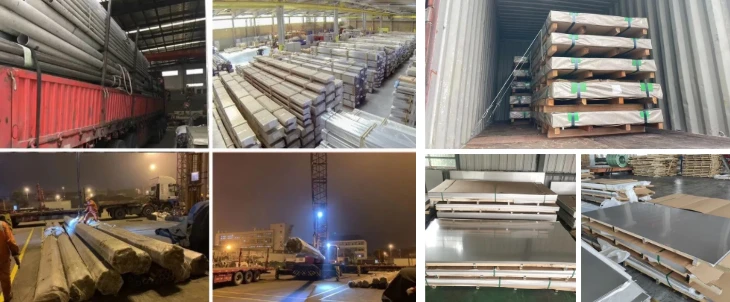
Packaging and Shipping
Products Description

Contact us for the latest export price quote for Inconel 625
For the latest Monel 400 pricing, application-specific material selection advice, or technical datasheets, please submit your required specifications and operating parameters. Our technical experts will provide tailored material matching to optimize your project costs.
FAQ:
What are the key differences between Inconel alloy 600 and 625?
Inconel 600 and Inconel 625 are both high-performance nickel-based superalloys, but Inconel 625 offers significantly higher strength and superior resistance to pitting and acids due to molybdenum and niobium additions, while Inconel 600 relies on a simpler nickel-chromium-iron makeup for high-temperature oxidation and furnace stability.
How expensive is Inconel 625?
Inconel 625 typically costs between $26 and $50 per pound ($55 to $110 per kilogram) for raw mill products like sheet, bar, or pipe.
What is the main difference between Inconel 625 and Inconel 825?
The main difference between Inconel 625 and Incoloy 825 is their chemical composition and base structure, with Inconel 625 being a nickel-based superalloy featuring much higher nickel, molybdenum, and niobium content for extreme strength and chloride resistance, while Incoloy 825 is an iron-nickel-chromium alloy containing copper for superior resistance to reducing acids.
What is the equivalent material for Inconel 625?
The direct equivalent material for Inconel 625 is Alloy 625 (designated as UNS N06625), which is the generic name for the exact same nickel-chromium-molybdenum composition.
Can Inconel 625 be welded?
Yes, Inconel 625 can be successfully welded, most commonly using the Tungsten Inert Gas (TIG) process, though it requires careful technique and preparation because it is prone to thermal distortion and hot cracking.



