


With 18 years of industry experience as a nickel alloy supplier, Gnee Alloy offers high-quality Inconel 625 round bars (UNS N06625). This solid-solution strengthened nickel-chromium-molybdenum-niobium superalloy maintains exceptional corrosion resistance and high strength across a wide temperature range-from cryogenic to elevated temperatures-without the need for precipitation hardening.

We stock a full range of standard-sized Inconel 625 products and offer custom manufacturing based on precise drawing specifications
1. 625 Alloy Bar Size Range
Diameter: 5 mm – 110 mm (3/16" – 4.25") as standard stock; larger sizes available on custom order
Standard length: 3000 mm – 4200 mm (120" – 168"); cut-to-length service available with tight tolerance
Tolerance options: Hot-rolled tolerance, rough-turned tolerance, cold-drawn precision tolerance
2. UNS N06625 bar supply condition
Annealed (solution annealed)
Hot-rolled & pickled
Cold-drawn / cold-finished
Rough-turned (peeled)
Centerless ground (for precision shaft applications)


Need a non-standard size or special surface finish?
Tell us your requirements and our engineering team will evaluate feasibility and lead time for you
Inconel 625 Round Bar: A Comprehensive Guide to Composition, Specifications, Properties, and Applications

Inconel 625 Round Bar: A Comprehensive Guide to Composition, Specifications, Properties, and Applications
Inconel 625 round bar is a nickel-based alloy (nickel content ≥58%) characterized by exceptional strength and corrosion resistance. Key mechanical properties include a tensile strength of 120–160 ksi (827–1103 MPa), a yield strength of 60–110 ksi (414–758 MPa), an elongation of 30–50%, and a density of 8.44 g/cm³. Its chemical composition-featuring 20–23% chromium, 8–10% molybdenum, and 3.15–4.15% niobium-confers outstanding resistance to oxidation, pitting, and crevice corrosion; the alloy has a melting point of 1290–1350°C, a Rockwell C hardness of 30–40, and maintains excellent performance at temperatures up to 980°C. It offers excellent weldability without the need for post-weld heat treatment, as well as superior fatigue and stress resistance, making it widely used in aerospace (jet engines, turbine blades), marine engineering (propeller blades, offshore pipelines), chemical processing (storage tanks, heat exchangers), and power generation (boilers, fuel nozzles).
UNS N06625 Alloy Bar Standards and Compliance
Our Inconel 625 round bar is manufactured and tested to internationally recognized standards. We can supply material to meet:
| Specification / Standard | Designation |
|---|---|
| UNS Number | UNS N06625 |
| ASTM / ASME | ASTM B446 / ASME SB-446 |
| Aerospace | AMS 5666 |
| Oil & Gas Sour Service | Compatible with NACE MR0175 / ISO 15156 (upon request) |
| EU Standards | EN 2.4856 equivalent |
We can also provide low-sulfur, low-phosphorus premium grades for highly critical applications.
Chemical Composition (UNS N06625)
Every heat of our Inconel 625 round bar is tested and controlled within standard mass-percent limits. Below are the official composition ranges per ASTM B446:
| Element | Min (wt%) | Max (wt%) | |
|---|---|---|---|
|
|
Nickel (Ni) | 58.0 | Balance |
| Chromium (Cr) | 20.0 | 23.0 | |
| Molybdenum (Mo) | 8.0 | 10.0 | |
| Niobium + Tantalum (Nb+Ta) | 3.15 | 4.15 | |
| Iron (Fe) | - | 5.0 | |
| Carbon (C) | - | 0.10 | |
| Cobalt (Co) | - | 1.0 | |
| Manganese (Mn) | - | 0.5 | |
| Silicon (Si) | - | 0.5 | |
| Aluminum (Al) | - | 0.4 | |
| Titanium (Ti) | - | 0.4 | |
| Phosphorus (P) | - | 0.015 | |
| Sulfur (S) | - | 0.015 | |
| Nitrogen (N) | - | 0.05 |

Our quality commitment: Each batch is verified via spectral analysis before shipment. We can provide full element reports and support third-party inspection upon request.
Mechanical Properties and Temperature Limits of Inconel 625 Alloy Rods
Properties vary depending on diameter, supply condition, and heat treatment process. The following are typical values for our standard Gnee Alloy 625 stock bars:
1. Room-temperature mechanical properties of Alloy 625 bar
| Bar Type | Tensile Strength (MPa) | 0.2% Yield Strength (MPa) | Elongation (%) | Hardness |
|---|---|---|---|---|
| Small cold-drawn rod | 700 – 900 | 350 – 600 | 30 – 45 | 95 – 110 HRB |
| Large annealed bar | 480 – 650 | 200 – 450 | 40 – 60 | 90 – 100 HRB |
Other physical properties:
Density: 8.44 g/cm³
Melting range: 1290 – 1350°C
Note: Smaller cold-finished bars typically show higher strength than large fully annealed bars. For design-critical projects, we will provide exact mill test report (MTR) values for your selected heat.
2. High-Temperature and Long-Term Performance of Alloy 625 Bars
Continuous service temperature: Up to ~982°C (1800°F) in oxidizing environments.
Stress-rupture: Excellent rupture life at intermediate high temperatures thanks to Mo and Nb solid-solution strengthening.
Fatigue resistance: Superior fatigue endurance vs. common stainless steels in corrosive and thermal cycling conditions.
For creep-critical or fatigue-sensitive designs, we can supply official high-temperature creep and fatigue data upon request.
Click to download the Inconel 625 alloy PDF datasheet
Corrosion Resistance of Alloy 625 Bars
1. Applicable Service Environments
Seawater environments: Particularly suitable for marine engineering components susceptible to crevice corrosion and localized corrosion.
Acidic process media: Capable of withstanding organic and inorganic acid environments that are unsuitable for standard stainless steels.
High-temperature oxidizing atmospheres: Chromium (Cr) and nickel (Ni) facilitate the formation of a protective oxide film, making the material suitable for high-temperature, oxidation-resistant applications.
2. Limitations and Special Operating Conditions
The material may still undergo corrosion in strongly reducing halogen environments, molten salts, and fluorine-containing fluids; therefore, preliminary corrosion testing is required.
Special assessment is required for high-temperature environments containing sulfur (sulfides); direct use without prior validation is prohibited.
3. Corrosion Testing Standards
Standard performance verification employs methods such as ASTM salt spray tests, pitting potential tests, and coupon exposure tests. For "sour service" environments in the oil and gas industry, relevant standards such as NACE MR0175 / ISO 15156 must be followed.
Typical Industrial Applications of Inconel 625 Round Bars
With 18 years of supply experience, our Inconel 625 round bars serve a wide range of demanding industries:
Aerospace: Turbine engine shafts, fasteners, studs, actuator components, exhaust system parts
Oil & gas: Downhole tooling, valve stems, wellhead components, sour-service fasteners
Marine engineering: Seawater pump shafts, valve stems, marine fasteners, offshore platform components
Chemical processing: Pump shafts, agitator shafts, pressure vessel internals, acid-handling components
Power generation: Flue gas desulfurization components, boiler hardware, high-temperature fasteners


Guide to the Fabrication and Machining of Inconel 625 Alloy
Inconel 625 is machinable but has higher work-hardening tendency than 300-series stainless steels. Based on feedback from thousands of machining customers, we share these best practices:

Machining Tips
Use rigid setups and sharp carbide tooling to minimize chatter and work hardening.
Adopt light depth of cut with relatively high feed rates; use generous cutting fluid to reduce heat buildup.
Use positive-rake inserts and avoid dwell time at the cutting edge.
For drilling and countersinking, peck drilling is recommended for reliable chip evacuation.
Forming & Welding
Cold forming requires higher force; intermediate annealing is recommended for heavy deformation.
Excellent weldability via GTAW, GMAW and SMAW processes, using matching FM-625 filler wire.
Preheating is generally unnecessary; post-weld heat treatment is not required for most applications.
We can provide detailed machining parameters and welding procedure recommendations on request.
Click to contact us and view our comprehensive certifications
Selection and Comparison of Inconel 625 and Other Related Alloys
| Parameter | 316L Stainless Steel | Duplex 2205 | Super Duplex 2507 | Alloy 825 | Inconel 625 | Hastelloy C276 |
|---|---|---|---|---|---|---|
| UNS Number | S31603 | S31803 / S32205 | S32750 | N08825 | N06625 | N10276 |
| Material Type | Austenitic Stainless Steel (Cr-Ni-Mo) | Duplex Stainless Steel (Austenitic-Ferritic) | Super Duplex Stainless Steel (Austenitic-Ferritic) | Ni-Fe-Cr-Mo-Cu Alloy (Titanium-Stabilized) | Ni-Cr-Mo-Nb Alloy (Solid-Solution Strengthened) | Ni-Cr-Mo-W Alloy (Solid-Solution Strengthened) |
| Primary Strengthening Mechanism | Cold Work | Cold Work + Ferrite Phase | Cold Work + Ferrite Phase | Solid Solution | Solid Solution (Mo + Nb) | Solid Solution (Mo + W) |
| Typical Applications | General marine piping, moderate corrosion service, fresh water, cooling water | Seawater piping, offshore platform structural components, heat exchangers | Subsea connectors, HPHT piping, seawater lift pumps, high-chloride service | Sour service (NACE MR0175), chemical processing, marine exhaust systems, acid service | Deepwater subsea equipment, sour service (NACE MR0175), aerospace, HPHT wellheads, seawater systems | Severe sour service (NACE MR0175), chemical processing, FGD, high-chloride + high-temperature acid service |
| NACE MR0175 Compliance | Not compliant (sour service) – risk of SSC | Limited – Grade depends on hardness; often limited | Limited – Grade depends on hardness; often limited | Yes (annealed, hardness ≤ 35 HRC) | Yes (annealed, hardness ≤ 35 HRC) | Yes (annealed, hardness ≤ 35 HRC) |
| Relative Cost | Low (Baseline) | Medium (~2× 316L) | Medium (~2.5× 316L) | Medium-High (~4× 316L) | High (~5–6× 316L) | Very High (~7–8× 316L) |
| Typical Service Temperature (Continuous) | Up to ~ 425°C | Up to ~ 280°C | Up to ~ 280°C | Up to ~ 540°C | Up to ~ 980°C | Up to ~ 870°C |
When resistance to both severe corrosion and high temperatures is required, Inconel 625 is often the preferred engineering solution.
Click to contact us for recommendations
Inconel 625 Round Bar Quality Assurance and Inspection

Inconel 625 Round Bar Quality Testing
Gnee Alloy provides the following product-related documents to professional buyers:
| Material Certification | Inspection Reports | Additional Requirements |
|---|---|---|
| EN 10204 3.1 Certificate | PMI (Positive Material Identification) | NACE MR0175 Compliance |
| EN 10204 3.2 Certificate (if required) | Mechanical Testing Report | ISO 15156 Compliance |
| Chemical Analysis Report | Third-Party Inspection (SGS, BV, TUV, DNV) | |
| Ultrasonic Testing (UT) | ||
| Visual Inspection Report | ||
| Dimensional Inspection Report |
Contact our experts to recommend the right alloy for your project
Considerations Regarding Gnee Alloy Inconel 625 Delivery Lead Times
Typical production cycles include:
| Product Type | Lead Time |
|---|---|
| Standard Stock Sizes | Immediate to 2 Weeks |
| Hot Rolled Bars | 3-6 Weeks |
| Forged Bars | 6-10 Weeks |
| Large Diameter Forgings | 10-20 Weeks |
| AMS Aerospace Grade | 12-20 Weeks |
Production cycles vary depending on material availability, dimensions and specifications, and certification requirements.
Contact us for the latest 2026 export prices for Inconel 625

Whether you require standard stock bars available for immediate shipment or custom-sized Inconel 625 round bars for a specific project, we are here to assist you.
To receive a quick, detailed quote, please provide the following information:
Alloy grade and specifications (e.g., UNS N06625, ASTM B446)
Diameter, length, and tolerance requirements
Condition (annealed, cold-drawn, rough-turned, etc.)
Quantity and delivery location
Any special requirements (certification, NDT, NACE compliance, etc.)
Why Choose Gnee as Your Nickel-Based Alloy Supplier
✅️Direct Factory Price: Eliminate middleman markups and secure the best rates for Wholesale Supply.
✅️MTC 3.1 Traceability: Every order includes a full heat-analysis certificate and mechanical property verification.
✅️100% NDT Verification: Every meter of tubing undergoes Ultrasonic and Eddy Current testing to ensure zero surface or internal flaws.
✅️Global Logistics: Fast shipping to the USA, Europe, and Asia in reinforced export-standard crates.

Gnee Alloy Inconel 625 Certificate
Click to view our professional certifications for Inconel 625 alloy
📦 Packaging and Shipping
All Nickel Based Alloy products are packaged using the following methods:
Wooden pallets or crates
Moisture-proof packaging
Labels with furnace number, standard, and size labels
Shipped worldwide by sea, air, or express

Gnee Alloy Alloy 625 Product Packing
Contact us to select your preferred packaging and shipping method
⚒️Gnee Alloy Production Line Equipment and Product Testing
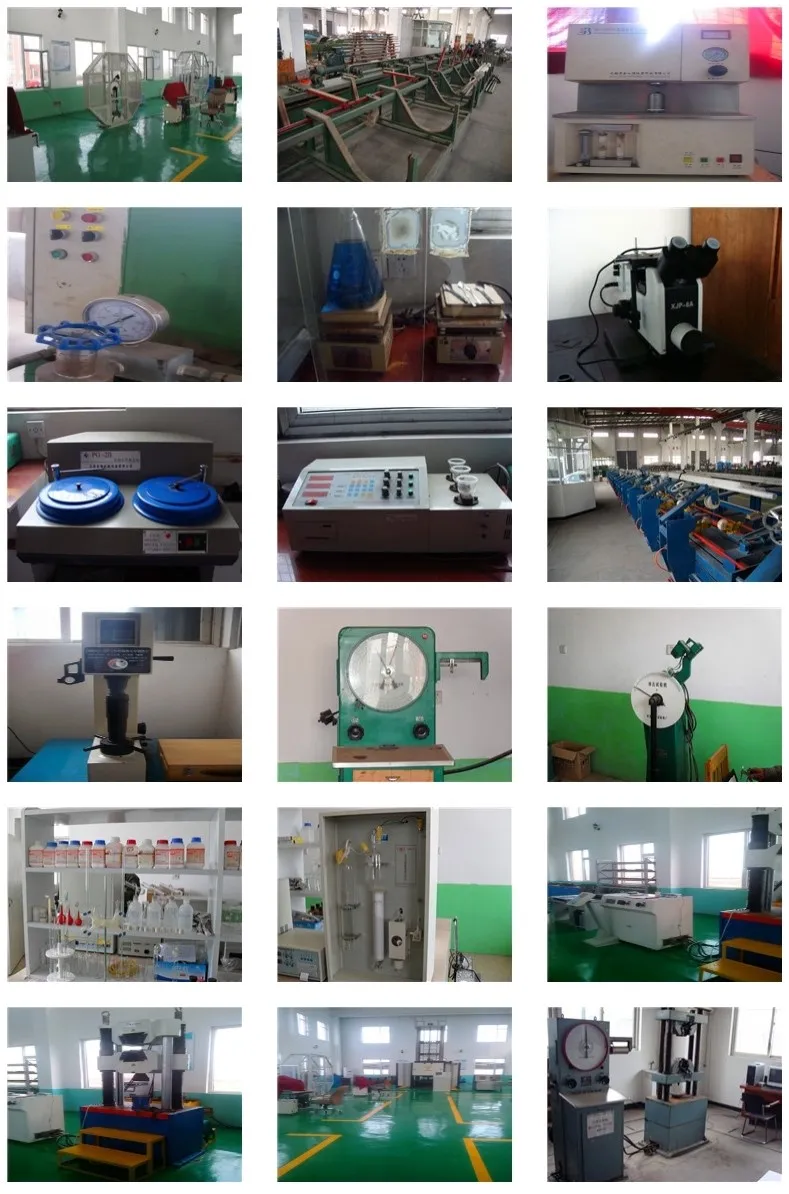
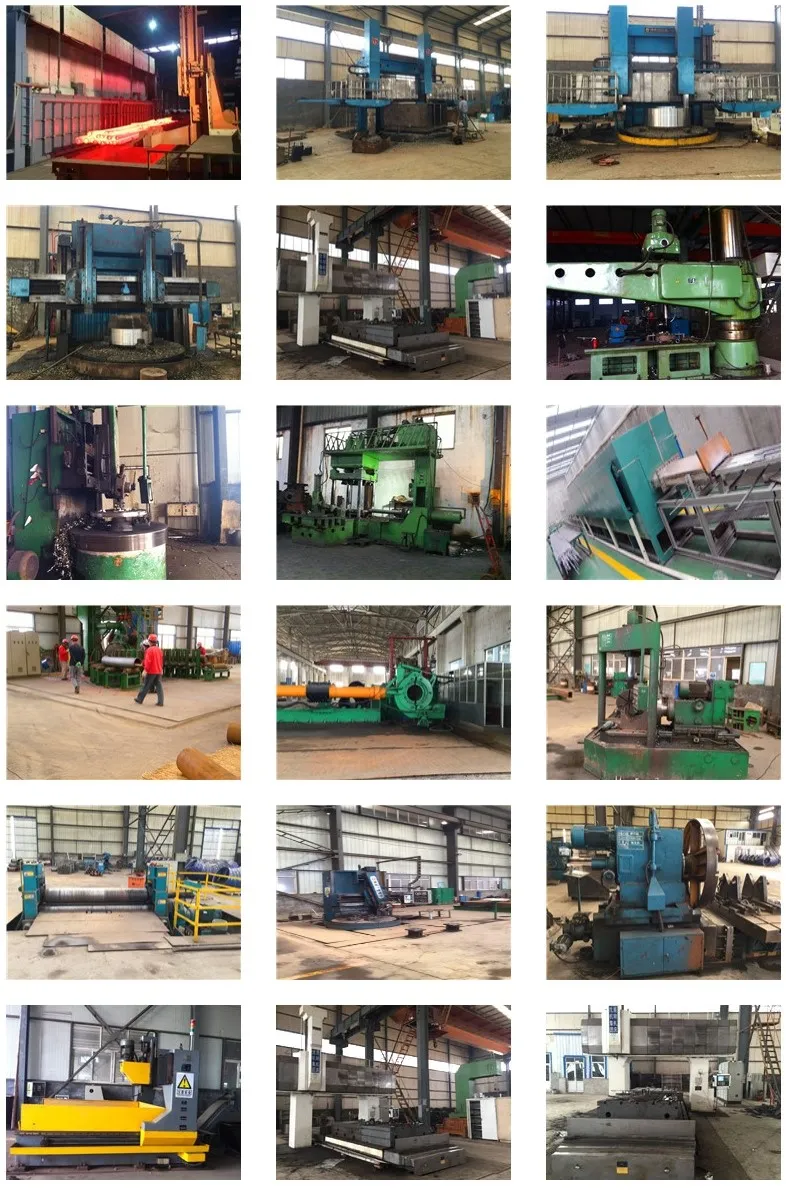
Contact us for the latest export price quote for 625 Alloy
FAQ
1. Is Inconel 625 magnetic?
In the annealed condition, it has an austenitic microstructure and is essentially non-magnetic. Cold working may induce weak magnetism in localized areas, but it is generally treated as a non-magnetic material in engineering applications.
2. Can Inconel 625 be hardened by heat treatment?
No. The alloy relies primarily on solid-solution strengthening, and no effective precipitation hardening heat treatment process is available. Heat treatment can only be used for annealing / solution treatment and cannot achieve the precipitation strengthening effect seen in alloys like 718.
3. What specifications should be called out when ordering bar stock?
For general applications, specify ASTM B446; for aerospace applications, specify AMS 5666. Supplement with the UNS N06625 designation for clarity.
4. Is Inconel 625 difficult to weld?
It has good weldability and can be welded with matching filler wire FM625. Preheating is usually unnecessary, and post-weld heat treatment is not mandatory. However, welding procedure qualification is required for critical parts.
5. How to specify testing requirements for corrosion-sensitive applications?
Coupon exposure tests and pitting potential determination can be required, with relevant industry corrosion standards specified. For oil & gas sour service, reference NACE MR0175 / ISO 15156.
6. How does bar diameter affect mechanical properties?
Small-diameter cold-drawn / cold-finished bars typically have higher yield and tensile strengths than large-diameter fully annealed bars. Specific values shall be based on the mill test report for the corresponding heat.
7. Will Inconel 625 corrode in seawater?
It performs excellently in most seawater scenarios, especially with outstanding crevice corrosion and pitting resistance. However, local factors such as temperature, oxygen content, biofouling and flow rate may affect performance. Coupon testing is recommended for verification.
8. Is the machining cycle longer than that of stainless steel?
Generally yes, with higher tool wear. Machining efficiency can be optimized by using recommended carbide tooling and rigid fixturing.
9. Can Inconel 625 bar be used for cryogenic service?
Yes. The alloy retains toughness at cryogenic temperatures and is suitable for low-temperature scenarios where corrosion resistance meets requirements.
10. Where can authoritative technical data be obtained?
Refer to official technical bulletins from Special Metals, material data sheets from Rolled Alloys, MatWeb / ASM material databases, and the original standards of ASTM B446 and AMS 5666.



