


How to choose between Inconel 600 and 601 Alloy?

How to choose between Inconel 600 and 601 Alloy?
In chemical processing or marine applications, Inconel 600 exhibits excellent resistance to high-temperature corrosion and chloride stress corrosion cracking (SCC). However, for applications requiring extremely high resistance to high-temperature oxidation and creep strength, such as furnace components or hot working, Inconel 601 should be chosen due to its higher aluminum content. In short, 601 performs better at extreme temperatures, while 600 offers broader and more economical application prospects in equally demanding environments with less stringent corrosion requirements.
What are the differences between Inconel 600 and 718?
Inconel 600 offers excellent corrosion resistance and formability, making it suitable for chemical and marine applications. Inconel 718, on the other hand, boasts superior high-temperature strength and creep resistance, making it the material of choice for aerospace and oil and gas applications.
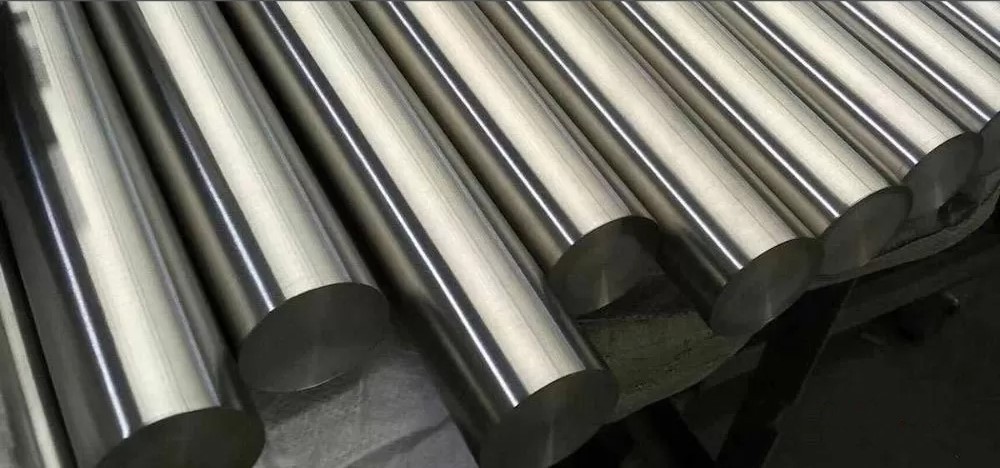
Inconel 600 is a nickel-chromium-iron solid solution strengthened superalloy, renowned for its exceptional high-temperature oxidation resistance (up to approximately 1150°C), excellent resistance to chloride ion stress corrosion cracking, and outstanding stability in alkaline and high-temperature pure water environments. It is widely used in critical fields such as heat treatment equipment, chemical processing, nuclear power plant steam generators, and aerospace, where materials must maintain performance in extreme temperatures and corrosive media. It is a fundamental high-performance nickel-based alloy for handling harsh conditions.
Inconel 601 is a nickel-chromium-iron alloy that achieves high-temperature strengthening and protection through aluminum addition. Its core characteristic is its exceptional resistance to oxidation, carburization, and sulfidation at extreme temperatures up to approximately 1250°C, while maintaining excellent high-temperature strength and thermal stability. It is specifically designed for environments requiring long-term exposure to high-temperature corrosive atmospheres, such as high-temperature heat treatment equipment, industrial furnace components, combustion systems, petrochemical cracking pipes, and aerospace hot-end components. It is particularly suitable for harsh conditions involving alternating oxidation and reduction, making it a top-tier material for solving high-temperature oxidation and thermal fatigue problems.
Inconel 600 vs Inconel 601: A Comparison Table
| Feature | Inconel 600 | Inconel 601 |
| Composition | Ni (≥72%), Cr (14-17%), Fe (6-10%) | Ni (58-63%), Cr (21-25%), Al (1.0-1.7%) |
| Max Operating Temp | Up to 1175°C | Up to 1250°C |
| Oxidation Resistance | Excellent | Superior, due to added aluminum |
| Corrosion Resistance | Outstanding in acids, salts, and heat | Superior in high-temperature oxidizing environments |
| Applications | Heat exchangers, carburizing atmospheres | Furnace components, petrochemical industries |
| Weldability | Good | Excellent, with high stability |
| Formability | Moderate | High |
| Cost | Slightly more economical | Slightly more expensive due to enhanced durability |
Chemical composition comparison of Inconel 600 and Inconel 601
| Element (wt.%) | Inconel 600 | Inconel 601 |
|---|---|---|
| Ni | 72.0 min | Balance (approx. 58.0-63.0%) |
| Cr | 14.0 – 17.0 | 21.0 – 25.0 |
| Fe | 6.0 – 10.0 | Balance (approx. 10.0 – 15.0%) |
| C | 0.15 max | 0.10 max |
| Mn | 1.0 max | 1.5 max |
| S | 0.015 max | 0.015 max |
| Si | 0.5 max | 0.50 |
| Cu | 0.5 max | 1.0 max |
| Al | – | 1.0 – 1.7 |
Mechanical performance comparison between Inconel 600 and Inconel 601
|
Property |
Inconel 600 |
Inconel 601 |
|
Tensile Strength (MPa) |
550-690 |
600-750 |
|
Yield Strength (MPa) |
240-350 |
300-450 |
|
Max Service Temp (°C) |
925 |
1,100 |
Comparison of Inconel 600 and Inconel 601 Corrosion Resistance
| Corrosive Environment | Inconel 600 | Inconel 601 |
| Oxidation | Excellent up to 1093°C | Superior up to 1260°C |
| Sulfuric Acid | Good | Moderate |
| Hydrochloric Acid | Limited resistance | Limited resistance |
| High-Temperature Gases | Excellent | Excellent |
| Aqueous Corrosion | Good in alkaline solutions, less effective in acidic environments | Good but more suited to high-temperature corrosion |
Comparison of Inconel 600 and Inconel 601 Applications
| Application Area | Inconel 600 | Inconel 601 |
| Chemical Processing | Heat exchangers, evaporator tubes, reactor vessels | Furnace liners, catalyst support grids |
| Aerospace | Jet engine components, turbine blades | Combustion chambers, exhaust systems |
| Nuclear Industry | Reactor control rods, heat shields | Heat-treating baskets, nuclear reactor internals |
| Power Generation | Steam generators, boiler components | Heat recovery systems, gas turbine components |
| Petrochemical Industry | Ethylene production, petrochemical heaters | Radiant tubes, thermal reactors |
| Heat Treatment | Annealing and carburizing equipment | Furnace muffles, retorts, radiant tubes |
Due to its excellent corrosion resistance and heat resistance, Inconel 600 alloy is commonly used in the chemical, aerospace, and nuclear industries. Inconel 601 alloy, on the other hand, has even stronger oxidation resistance and mechanical strength, making it more suitable for high-temperature environments, such as furnace components and gas turbines.
Reasons to choose Inconel 600:
Corrosion Resistance: Excellent resistance to a variety of media, especially excellent resistance to chloride-induced stress corrosion cracking (SCC).
Applications: Chemical processing, oil refining, marine environments, and certain high-temperature furnace applications.
Cost/Availability: Generally more common, and the price may be lower if its performance meets requirements.
Reasons to choose Inconel 601:
Excellent Oxidation Resistance: Higher aluminum content gives it better resistance to high-temperature oxidation and scaling.
Creep Strength: Superior performance under sustained high-temperature stress.
Applications: Heat treatment equipment, heat treatment furnaces, radiant tubes, and aerospace components.
Why Choose Gnee as Your Nickel-Based Alloy Supplier
✅ Over 18 years of export experience, products sold to more than 80 countries
✅ Certified by ISO, SGS, and BV
✅ Global inventory of Inconel, Hastelloy, Incoloy, and Monel alloy tubing, plates, and bars
✅ Custom processing services available – including cutting, polishing, CNC machining, and packaging
✅ Fast delivery within 7-15 days, supported by global logistics partners
📦 Packaging and Shipping
All stainless steel products are packaged using the following methods:
Wooden pallets or crates
Moisture-proof packaging
Labels with furnace number, standard, and size labels
Shipped worldwide by sea, air, or express
Gnee Steel is a supplier of Inconel 600 alloy, offering a wide range of products including: seamless pipe (sizes: 4-219 mm; thickness: 0.5-20 mm); welded pipe (sizes: 5.0-1219.2 mm; thickness: 0.5-20 mm); plates (thickness: 0.1 to 100 mm; width: 10-2500 mm); strips; alloy round bars (diameter: 3-800 mm); flat bars (thickness: 2-100 mm; width: 10-500 mm); hexagonal bars (size: 2-100 mm); wire rods; and extruded profiles. We collaborate with steel mills to provide our customers with Inconel 600 alloy products that meet or exceed numerous leading industry standards, including ASTM, ASME, SAE, AMS, ISO, DIN, EN, and BS standards.
Gnee Steel stocks and sells Inconel 600, pipes, plates, strips, round bars, flat bars, forged billets, hexagonal steel, wire rods, and extruded profiles. Please feel free to contact us at ss@gneesteel.com for a quote.




