Aug 27, 2025 Leave a message

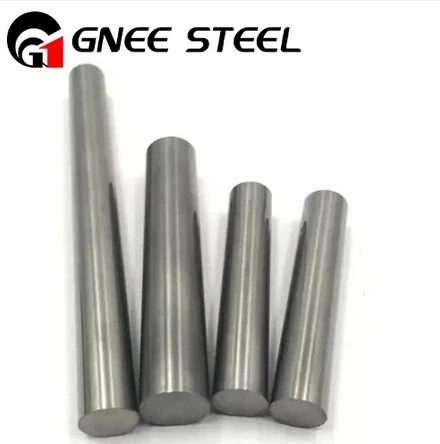
Grade 2 and Grade 3 Titanium

The Difference Between Grade 2 and Grade 3 Titanium

Titanium Grade 2 and Grade 3 are both classified as commercially pure titanium (CP Ti) and share core characteristics like excellent corrosion resistance (derived from a stable titanium oxide film) and low density (~4.51 g/cm³). However, they differ significantly in chemical composition, mechanical properties, formability, and typical applications-primarily due to controlled variations in impurity content (especially oxygen). Below is a detailed breakdown of their key differences:

1. Chemical Composition

The primary distinction lies in the oxygen content (a critical interstitial impurity that impacts strength and ductility) and minor differences in other trace elements. Both grades have ≥99% titanium as the base metal, with no intentional alloying elements.
Element (by Weight, wt%) Titanium Grade 2 (ASTM B265) Titanium Grade 3 (ASTM B265) Key Implication
Oxygen (O) 0.10 – 0.18% 0.18 – 0.25% Grade 3 has ~40% higher oxygen, directly increasing its strength but reducing ductility.
Carbon (C) ≤0.08% ≤0.08% Identical limit; prevents brittle carbide (TiC) formation.
Hydrogen (H) ≤0.015% ≤0.015% Strictly controlled in both to avoid hydrogen embrittlement (brittle cracking under stress).
Nitrogen (N) ≤0.03% ≤0.03% Identical limit; nitrogen boosts strength but may reduce toughness if excessive.
Iron (Fe) ≤0.30% ≤0.30% Identical limit; minor iron impurity slightly enhances strength without major corrosion impacts.
Titanium (Ti) Balance (≥99.0%) Balance (≥99.0%) Base metal; ensures core corrosion resistance.

2. Mechanical Properties (Annealed State)

Annealing (a heat treatment to relieve stress and optimize formability) is the most common state for both grades. Their mechanical performance differs sharply, driven by oxygen content:
Property Titanium Grade 2 Titanium Grade 3 Key Comparison
Tensile Strength 345 – 550 MPa (50,000 – 80,000 psi) 480 – 620 MPa (70,000 – 90,000 psi) Grade 3 is ~25–40% stronger in tensile strength.
Yield Strength 275 – 485 MPa (40,000 – 70,000 psi) 370 – 485 MPa (54,000 – 70,000 psi) Grade 3 has 35–50% higher yield strength (resistance to permanent deformation).
Elongation (50 mm Gauge) 20 – 30% 15 – 25% Grade 2 is more ductile (easier to bend, stretch, or form) due to lower oxygen.
Hardness (Rockwell B) ~70 – 80 HRB ~80 – 90 HRB Grade 3 is slightly harder, aligning with its higher strength.

3. Formability & Machinability

Titanium Grade 2: Known as the "workhorse" of pure titanium, it offers excellent formability. It can be easily cold-worked (e.g., bending, rolling, drawing, stamping) and welded without significant cracking risk. Its high ductility also simplifies fabrication into complex shapes (e.g., thin sheets, small-diameter tubes).

Titanium Grade 3: Formability is moderate-inferior to Grade 2 but still viable for basic forming (e.g., simple bending or extrusion). Higher oxygen content makes it stiffer; excessive cold-working may cause cracking, so it often requires controlled processing (e.g., intermediate annealing to restore ductility).

For machinability, both grades are challenging (titanium's low thermal conductivity causes heat buildup at cutting tools), but Grade 3's higher strength adds slight difficulty-slower cutting speeds or harder tooling may be needed.
info-440-444info-443-441
info-443-441info-440-437

4. Corrosion Resistance

Both grades exhibit exceptional corrosion resistance in most environments, thanks to their pure titanium matrix and self-healing oxide film. They perform well in:

Seawater and marine environments (resists pitting and crevice corrosion).

Oxidizing acids (e.g., nitric acid) and neutral/weakly alkaline solutions.

Industrial chemicals (e.g., chlorides, sulfates).

There is no meaningful difference in corrosion resistance between them-impurity levels in both are too low to compromise the oxide film's stability.

5. Typical Applications

Their distinct strength-ductility balances drive different use cases:
Titanium Grade 2 Titanium Grade 3
- Chemical processing: Tank liners, pipes, and valves (requires formability for complex shapes).
- Medical: Surgical instruments, orthopedic pins, and dental fixtures (biocompatible and easy to shape).
- Marine: Lightweight fasteners, hull components, and heat exchangers (corrosion-resistant + formable).
- Consumer goods: Watch cases, eyeglass frames (malleable for intricate designs).
- Chemical engineering: High-pressure valves, pump components, and reactor parts (needs higher strength for stress-bearing roles).
- Marine: Heavy-duty fasteners, propeller shafts, and offshore platform components (strength + corrosion resistance).
- Aerospace: Low-stress structural parts (e.g., cabin frames, ducting) where weight savings and moderate strength are critical.
- Medical: Dental implants and surgical tools requiring higher load-bearing capacity (e.g., bone screws).

Send Inquiry

whatsapp

Phone

E-mail

Inquiry